How to Become a PAT Tester in the UK: Complete Career Guide
Quick answer: How do you become a PAT Tester? To....

Quick answer: How do you become a PAT Tester? To become a PAT Tester in the UK, you typically learn the principles of electrical safety, complete suitable PAT testing training, develop practical inspection and testing skills, and gain enough knowledge and experience to perform the work competently. There is no general statutory licence called a PAT testing qualification, but anyone carrying out testing must be competent for the work they undertake.
Quick Overview
Becoming a PAT tester in the UK involves completing suitable training, developing practical inspection and testing skills, and gaining enough knowledge and experience to work competently. A specific PAT testing qualification is not generally required by law, but competence is essential.
This guide covers:
✅ How to become a PAT tester
✅ PAT testing training and qualifications
✅ Skills and practical experience required
✅ PAT testing legislation and safety requirements
✅ PAT tester jobs, earnings and self-employment
✅ Choosing the right PAT testing course and continuing your professional development
How to Become a PAT Tester: Step-by-Step
If you are researching how to become a PAT tester UK employers can rely on, the key concept is competence rather than simply collecting a particular certificate. Training is an important starting point, but you also need to understand electrical equipment, recognise defects, select appropriate tests and interpret the results correctly.
1. Learn the Fundamentals of PAT Testing
Start by understanding electrical hazards, appliance construction, plugs, cables, earthing, insulation, equipment classes and the differences between a user check, a formal visual inspection and combined inspection and testing.
You should also understand one of the biggest misconceptions surrounding PAT testing: the law does not generally require every appliance to receive an electronic test once a year.
Anyone wondering how do I become a PAT tester should therefore begin by understanding the principles behind risk-based maintenance, rather than memorising a universal testing schedule that does not exist.
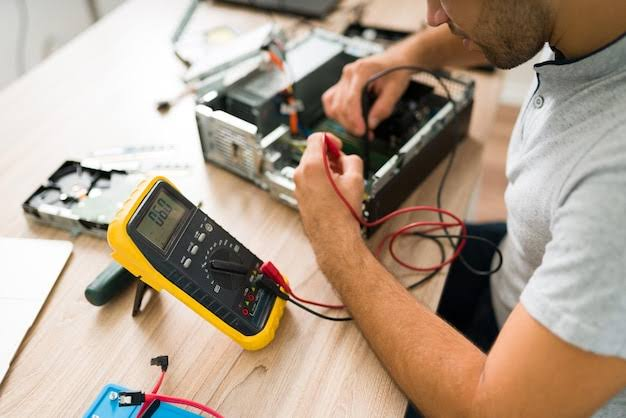
2. Choose and Complete a PAT Testing Course
A suitable PAT testing course can provide structured knowledge of inspection procedures, appliance classifications, testing equipment, risk assessment, legislation and record keeping.
Online learning can be particularly convenient for studying the theory. Someone searching for how to train to be a PAT tester can complete knowledge-based training remotely, but online study alone should not automatically be treated as evidence that they can safely perform every practical testing task.
When choosing a course, consider whether it provides the right balance of theoretical knowledge and practical understanding for the type of PAT testing work you intend to carry out.
3. Develop Essential PAT Testing Skills
Learning how to operate a PAT tester is only one part of the job. A competent tester should understand why a test is being performed, recognise whether it is suitable for the equipment and interpret the results correctly.
This is particularly important for anyone looking to become a PAT tester professionally. Understanding how testing equipment works is useful, but knowing when to carry out a particular test, when a test may be inappropriate and when a result requires further investigation is equally important.
This also matters when considering how to become a qualified PAT tester or how to become a certified PAT tester. A course certificate can demonstrate completion of training, but practical competence comes from an appropriate combination of knowledge, training and experience.
4. Gain Hands-On PAT Testing Experience
Practical experience helps turn theoretical PAT testing training into workplace competence.
Ideally, beginners should practise with suitable equipment under appropriate supervision before taking sole responsibility for unfamiliar appliances or complex test results. Experience should include carrying out visual inspections, identifying equipment, operating testing equipment, recording results and recognising situations that require escalation to someone with greater electrical expertise.
Hands-on experience can also help build confidence and ensure that testing procedures are carried out consistently and safely.
5. Continue Your Professional Development
Electrical equipment, guidance and testing technology can change over time. A competent PAT tester should therefore continue reviewing relevant HSE guidance, industry standards and developments such as the IET Code of Practice for In-service Inspection and Testing of Electrical Equipment.
Continued learning is particularly valuable if you plan to work independently or expand into more complex electrical services.
Ultimately, how to become a PAT tester UK employers can trust comes down to developing the right knowledge, training and practical competence. A certificate can be an important part of your training journey, but it is your ability to inspect equipment, choose appropriate tests, understand results and work safely that demonstrates genuine competence.
What Is PAT Testing?
A PAT test, or Portable Appliance Test, is an examination of electrical equipment intended to determine whether it remains safe to use. Depending on the appliance and the level of risk, the process may involve user checks, a formal visual inspection and, where appropriate, electrical testing using suitable test equipment.
A person carrying out this work may be referred to as a PAT tester. If you are interested in this career, you may also want to learn how to become a PAT tester online, how to become a qualified PAT tester, or how to become a certified PAT tester. Completing a suitable PAT testing course can help you develop the knowledge and practical skills needed to carry out inspection and testing safely and competently.
Why Is PAT Testing Carried Out?
Portable and movable electrical equipment can deteriorate through normal use, impact, moisture, contamination, damaged cables or misuse.
Inspection and testing can help identify faults before they contribute to electric shock, burns, fires or other harm. However, electrical testing is only one part of effective electrical maintenance. The Health and Safety Executive (HSE) specifically emphasises the importance of visual inspection because some problems are visible but may not be detected by an electrical tester.
What Are the PAT Testing Requirements?
There is no blanket rule stating that every workplace appliance must receive a PAT test every 12 months.
In Great Britain, employers and other dutyholders must maintain electrical equipment where necessary to prevent danger. The appropriate maintenance system depends on factors such as:
- The type and construction of the equipment
- How often it is moved or used
- The likelihood of damage
- Environmental conditions
- Manufacturer information
- Previous inspection and testing results
This means that PAT testing is fundamentally risk-based, rather than being governed by a fixed annual testing requirement.
How Often Should You PAT Test?
Testing frequency should be determined according to the level of risk rather than by automatically applying an annual testing date.
| Situation | Typical consideration |
| Office IT that is rarely moved | Generally lower risk; formal testing may be infrequent or unnecessary for some Class II equipment |
| Hand-held equipment | More frequent visual inspection may be appropriate |
| Earthed Class I appliances | Combined inspection and testing may form part of the maintenance regime |
| Construction tools | Usually require substantially more frequent checks because of harsh use |
| Equipment hire | Inspection and testing may be needed before equipment is issued |
These are general examples and do not represent mandatory testing intervals for every workplace. Maintenance arrangements should be reviewed whenever there are changes in faults, usage, environmental conditions or other factors that could affect electrical safety.
For anyone considering PAT testing as a career, understanding the principles of risk assessment, visual inspection and electrical testing is essential. A suitable PAT testing course can provide a structured way to develop this knowledge and may be useful for those researching how to become a PAT tester online, how to become a qualified PAT tester, or how to become a certified PAT tester.
What Does a PAT Tester Do?
A PAT tester examines electrical equipment, identifies visible defects, carries out appropriate electrical tests where required, interprets the results and records whether equipment is suitable for continued use.
What Is the Role of a PAT Tester?
Typical responsibilities may include checking plugs, cables, casings and other accessible components; identifying equipment classes; selecting suitable test methods; operating testing instruments; recording results; labelling equipment where the organisation chooses to do so; and reporting failed or unsafe equipment.
PAT testers should also recognise their limits. Finding a problem does not automatically mean the tester is competent or authorised to repair it.
Completing suitable PAT testing training or PAT test training can help individuals develop the knowledge and practical skills needed to carry out these responsibilities safely and effectively.
Who Can Carry Out PAT Testing?
A person does not necessarily have to be a qualified electrician to carry out every type of portable appliance inspection or test.
The HSE distinguishes between simpler procedures using straightforward pass/fail equipment and more sophisticated testing where readings require electrical interpretation. The level of competence required therefore depends on the type and complexity of the task.
Appropriate training can help a person understand their responsibilities and recognise when a particular inspection or test falls outside their level of competence.
What Makes Someone Competent at PAT Testing?
Competence means having sufficient knowledge, training and experience to undertake the particular work safely.

A competent person should know how to use the test equipment, understand test results and recognise when a procedure or appliance falls outside their ability.
This is why the answer to do you need to be qualified to PAT test is more nuanced than a simple yes or no. A particular formal PAT testing qualification is not generally mandated for every type of PAT testing work, but the person carrying out the work must have the appropriate level of competence for the task.
Who Is Responsible for Ensuring Equipment Safety?
The legal duty normally falls on the relevant employer, landlord, equipment controller or other dutyholder, rather than automatically transferring to the individual PAT tester.
However, the tester remains responsible for carrying out the work they accept competently and safely. Appropriate PAT testing training and experience can help ensure that testers understand their responsibilities, work within their level of competence and identify situations where further electrical expertise is required.
Do You Need a Qualification to Become a PAT Tester?
No single nationally required PAT testing qualification is imposed on everyone who undertakes portable appliance testing. What matters legally is whether the person carrying out the work is competent for the tasks they undertake.
Do You Need a PAT Testing Qualification?
A recognised training programme can strengthen your knowledge and make it easier to demonstrate that you have received relevant instruction, particularly when applying for jobs or starting your own business.
However, a PAT testing certificate or PAT tester certificate should not be described as a government licence unless it genuinely has that status.
A completion certificate from a private training provider is evidence that you have completed the relevant course. It is not automatically proof of practical competence. Employers and clients may also consider your practical experience, knowledge and ability to carry out a PAT test safely and correctly.
What Training Do You Need to Become a PAT Tester?
Good PAT testing training should cover both why testing is performed and how testing decisions are made. Relevant subjects include electrical hazards, equipment classes, formal visual inspection, test instruments, interpreting results, risk assessment and record keeping.
Anyone asking how to train to be a PAT tester should also look for opportunities to practise inspection and testing, rather than relying entirely on theory. Practical experience can help develop the confidence and judgement needed to carry out PAT testing safely.
How Long Does It Take to Become a PAT Tester?
There is no legally fixed training period for becoming a PAT tester.
Introductory courses may be completed relatively quickly, but becoming competent can take longer because practical confidence and experience develop over time. Someone who is already familiar with electrical work may progress differently from a complete beginner.
The number of course hours should therefore not be confused with the time required to become occupationally competent.
How to Become a Self-Employed PAT Tester
If you are considering how to become a self employed PAT tester, training is only one part of the process. You should also consider gaining practical experience, choosing suitable testing equipment, understanding your responsibilities, keeping accurate records and deciding how you will provide your services to customers.
You should work within your level of competence and avoid taking on electrical work that requires skills or qualifications beyond your training and experience. Building practical competence alongside appropriate business knowledge can help you provide a reliable and professional PAT testing service.
PAT Testing Legislation and Legal Requirements
PAT testing is a commonly used method of helping organisations maintain electrical equipment safely. However, UK legislation generally focuses on achieving safe electrical systems and equipment rather than prescribing a universal PAT testing regime.
What Does PAT Testing Legislation Say?
In England, Scotland and Wales, the Electricity at Work Regulations 1989 form a central part of the workplace electrical safety framework. Regulation 4 includes requirements relating to electrical systems and their maintenance.
Northern Ireland has separate Electricity at Work Regulations (Northern Ireland) 1991.
The important practical point is that neither framework creates a simple rule requiring every portable appliance to receive an annual PAT test. Instead, employers and dutyholders should adopt a suitable approach based on the risks associated with their electrical equipment and working environment.
For those interested in a career in electrical equipment inspection, understanding PAT testing legislation is an important part of learning how to become a PAT tester. If you are researching how to train to be a PAT tester, it is important to understand not only how to inspect and test equipment but also the legal responsibilities surrounding electrical safety. Online training can also be an option for people researching how to become a PAT tester online, provided the course offers appropriate and relevant training.
What Are the Legal Obligations for Electrical Equipment Safety?
Dutyholders should ensure that electrical equipment remains safe to use and that people carrying out relevant electrical work are competent to perform their duties safely.
Other legislation may also apply depending on the workplace, type of equipment and specific circumstances.
There are also sector-specific requirements. For example, in England, electrical safety regulations require social landlords to arrange checks of electrical equipment they provide under relevant tenancies at least every five years, subject to the detailed requirements and any applicable transitional arrangements.
What Are the Penalties for Not Meeting Legal Obligations?
Breaches of electrical safety legislation can result in enforcement action and, depending on the legislation and seriousness of the breach, prosecution and substantial fines.
The consequence is not a fixed “PAT testing fine”. Enforcement relates to the underlying failure to meet applicable health and safety and electrical safety duties.
Businesses should therefore focus on maintaining electrical equipment safely and implementing an appropriate inspection and testing regime, rather than treating a dated PAT sticker as automatic proof of compliance.
For anyone considering this as a career, learning the relevant legislation should form part of the process of becoming competent to carry out PAT testing. Understanding how to train to be a PAT tester and how to become a PAT tester online can help you identify suitable training routes and develop the knowledge required to perform the role responsibly.
What Skills Do You Need to Become a PAT Tester?
If you are researching how to train to be a PAT tester, look for a course that provides relevant theoretical knowledge as well as practical understanding.
Electrical Safety Knowledge
To become a PAT tester, you should understand basic electrical hazards, earthing, insulation, plugs, cables, fuses and equipment construction to a level appropriate for the work you perform.
You should also understand the purpose of different inspection and testing procedures and recognise when an appliance requires further investigation or specialist attention.
PAT Testing and Inspection Skills
A PAT tester needs to carry out systematic visual inspections and understand how to use testing equipment appropriately.
The ability to identify a failed test is important, but so is recognising when a particular test should not be performed. Good PAT testing training should help you develop the knowledge needed to make these decisions safely.
Risk Assessment and Attention to Detail
A small cable split, loose plug, unsuitable environment or evidence of a previous repair may indicate a significant safety issue.
Good PAT testers consider how equipment is actually used rather than relying only on test readings. They should be able to identify potential hazards and understand when equipment should be removed from service or referred to someone with greater electrical expertise.
Record-Keeping and Reporting Skills
The HSE does not impose a universal legal requirement to maintain a PAT testing log or attach a label after every test. However, useful records can help organisations monitor their electrical equipment maintenance programmes.
Clear and accurate records are particularly valuable for commercial PAT testers who provide services to multiple clients. Records should make it easy to identify equipment, understand inspection or test results and report any issues that require attention.
How to Choose the Right PAT Testing Course
The best course depends on your existing knowledge and the type of work you intend to undertake. If you are researching how to train to be a PAT tester, look for a course that provides relevant theoretical knowledge as well as practical understanding.
What Should a PAT Testing Course Cover?
Look for subjects including electrical safety, legislation, appliance classes, risk assessment, formal visual inspection, testing principles, equipment selection, interpretation of results and documentation.
A good course should also explain the importance of working within your level of competence and recognising when further electrical expertise is required.
What Practical Experience Should a PAT Course Provide?
If your objective is to become a PAT tester professionally, practical exercises can be especially valuable.
Learners should ideally gain experience identifying appliances, conducting inspections and using appropriate test instruments. An online course can build useful knowledge, but watching demonstrations is different from demonstrating practical performance yourself.

This distinction is particularly important for anyone considering how to become a PAT tester online. Online learning can be a convenient way to study the theory, but it should not automatically be treated as a substitute for relevant practical experience.
What Should You Look for When Comparing PAT Testing Courses?
Compare the actual curriculum rather than relying only on terms such as “certified” or “accredited”.
Consider:
- Whether the learning outcomes match your intended work.
- Whether practical training is included.
- How assessment is carried out.
- The level of tutor or learner support available.
- Course access arrangements and duration.
- Whether there are additional certificate fees.
- The status and scope of any accreditation.
- Whether the course clearly distinguishes between completing training and demonstrating professional competence.
Choosing a course based on its content, practical value and relevance to your intended work can help you develop the skills needed to carry out PAT testing safely and competently.
How to Carry Out a PAT Test
A full technical procedure is beyond the purpose of this career guide. Testing should only be performed where you are competent to select and carry out the appropriate procedure safely.
Conduct a Formal Visual Inspection
A formal visual inspection generally considers the condition of the equipment, plug, cable, casing and connections, as well as any signs of misuse, overheating or environmental damage.
Visible defects can be just as important as electronic test results, so a thorough visual inspection should not be overlooked.
Carry Out Combined Inspection and Testing
Where testing is justified, an appropriate PAT instrument may be used to perform tests relevant to the appliance’s construction and class.
The tester must understand how to use the instrument, select the appropriate test and interpret the meaning of the result correctly.
For a detailed procedure, use a dedicated How to Perform a PAT Test guide rather than treating a career overview as a substitute for practical instruction.
When Is Specialised Testing Required?
More complex appliances, unusual equipment or ambiguous results may require greater electrical knowledge or different test equipment.
A competent PAT tester knows when to stop and refer the matter to an electrician or another suitably competent person.
What Are PAT Testing Best Practices?
Good practice includes following a consistent inspection process, using suitable calibrated or verified equipment, keeping useful records, removing unsafe items from use and avoiding unnecessary tests that could damage sensitive equipment.
What Are Electrical Classes in PAT Testing?
Electrical equipment may have different protective arrangements.
Class I equipment generally relies on protective earthing, while Class II equipment uses double or reinforced insulation. Class III equipment operates from separated extra-low voltage.
The equipment class influences which inspections and electrical tests are appropriate.
Safety Switch Testing
Residual Current Devices (RCDs) provide additional protection by disconnecting the electrical supply under certain fault conditions.
Testing RCDs and other protective devices requires appropriate knowledge and should not be confused with simply plugging an appliance into a basic PAT tester.
What Equipment Do You Need for PAT Testing?
The central tool is an appropriate PAT testing instrument, but the equipment required depends on the types of appliances and tests you intend to handle.
Different Types of PAT Testers and Their Features
| Tester type | Suitable use |
| Basic pass/fail tester | Straightforward routine testing where little interpretation is required |
| Tester displaying numerical results | Useful where a competent user can interpret measurements |
| Downloadable/database tester | Helpful for larger commercial workloads and digital record keeping |
| Advanced multifunction equipment | Suitable for broader or more specialised work where the operator has appropriate competence |
You may also need suitable leads, adaptors, labels or identification systems and record-management software, depending on the type and scale of work.
Avoid buying equipment solely on price. Consider test functions, usability, data storage, technical support, calibration arrangements and whether the equipment is appropriate for the appliances you expect to encounter.
How Much Can a PAT Tester Earn?
PAT tester earnings can vary depending on experience, location, employment type and the range of services you provide.
What Is the Average PAT Tester Salary?
As of 14 August 2026, Indeed reported an average UK PAT Tester base salary of approximately £28,464 per year, based on 390 reported salaries.
Treat this as a current market indicator rather than a guaranteed earning level. Job-board figures can change frequently.
What Factors Affect PAT Tester Earnings?
Pay can depend on experience, location, employer, productivity expectations and whether the employee has wider electrical or compliance skills.
Self-employed testers may charge clients directly, but turnover should not be confused with personal income because equipment, travel, insurance, administration, tax and other business costs must be covered.
How to Find PAT Testing Jobs
Finding PAT testing jobs involves identifying suitable employers, building relevant experience and presenting your training and practical skills clearly.
Where Can PAT Testers Find Work?
PAT testers may work for electrical contractors, compliance companies, facilities-management providers, universities, housing organisations, schools, hospitality businesses and specialist testing services.
Job sites may advertise roles under titles such as PAT Tester, Electrical Test Technician, Portable Appliance Test Engineer or Electrical Compliance Technician.
If you want to become a PAT tester, gaining relevant training and practical experience can help you demonstrate that you have the knowledge and competence required for the roles you apply for.
Is PAT Testing a Good Full-Time Career?
PAT testing can support full-time employment, particularly where organisations manage large numbers of appliances or where the worker combines PAT testing with related electrical or compliance duties.
Career prospects depend on local demand, your skills and the range of services you can competently provide. Continuing to develop your knowledge can also help you take on broader responsibilities over time.
How to Start a PAT Testing Business
Starting a PAT testing business involves developing the right competence, investing in suitable equipment and putting reliable business systems in place.
What Do You Need to Start a PAT Testing Business?
If you want to become a PAT tester and work independently, technical ability is only part of the preparation.
You will need suitable testing equipment, a record-keeping system, business registration and tax arrangements, appropriate insurance, pricing, terms of business and a reliable method of documenting your work.
Before offering services, make sure you have sufficient knowledge, training and practical experience to carry out the work you intend to undertake safely.
Working as a Self-Employed PAT Tester
Anyone researching how to become a self-employed PAT tester should consider both competence and commercial responsibilities.
You need to understand the limits of the services you provide, maintain suitable equipment and records, manage travel and appointments, communicate findings clearly and avoid presenting yourself as qualified to carry out electrical work beyond your competence.
If you are considering how to train to be a PAT tester, choose training that is relevant to the type of work you plan to offer and look for opportunities to develop practical experience alongside theoretical knowledge.
Finding Your First PAT Testing Clients
Potential markets include offices, landlords, schools, charities, workshops, hospitality businesses and other organisations that use electrical equipment.
Building trust through clear quotations, dependable records, sensible scheduling and professional communication is generally more sustainable than competing solely on the lowest price.
For those considering how to become a PAT tester online, online courses can provide a convenient way to develop theoretical knowledge. However, practical experience remains important when you need to inspect equipment, use testing instruments and interpret results safely.
Continue Your Professional Development
Why Is Continuing Professional Development Important?
PAT testing is not something you learn once and never revisit. Testing instruments, appliance technology, guidance and standards continue to evolve. Your experience may also expose you to equipment or testing situations that were not covered during your initial training.
Continuing professional development (CPD) helps you keep your knowledge and practical skills up to date, allowing you to carry out PAT testing safely and competently.
How Can PAT Testers Keep Their Knowledge Up to Date?
Useful CPD can include refresher courses, manufacturer training, HSE guidance, electrical safety publications and the latest applicable edition of the IET Code of Practice.
If you expand your work into repairs, fixed installations or more advanced testing, make sure you obtain appropriate additional training. Do not assume that PAT testing competence automatically transfers to other types of electrical work.
Why Choose Our PAT Testing Training?
Competehigh currently offers an online Portable Appliance Testing (PAT Testing) Training course aimed at learners seeking introductory or developing knowledge of PAT testing.
For anyone researching how to become a PAT tester online, an online course can provide a flexible way to build a foundation of theoretical knowledge. The current course page describes approximately eight hours of self-paced content covering subjects including an introduction to PAT testing, relevant statutory provisions, risk assessment, controlling risks, equipment classes, the inspection process and testing instruments. It also includes an assignment and advertises lifetime course access.
Competehigh states that a CPD-IQ-accredited certificate is available following completion, with certificate options charged separately at the time checked. This certificate should be understood as evidence of completing the course. It is not a regulated PAT testing qualification, statutory licence or automatic proof that a learner is practically competent to carry out every form of electrical inspection and testing.
For learners considering how to train to be a PAT tester, online study can provide a useful theoretical foundation. However, those intending to work professionally should complement their learning with appropriate practical experience and ensure they are competent to undertake each testing activity they carry out.
Understanding the training and experience required is an important part of learning how to become a PAT tester. A suitable course can help you understand the principles behind PAT testing, while practical training and experience can help you develop the skills needed to use testing equipment safely and effectively.
Start Your PAT Testing Career Today
The pathway to become a PAT tester is relatively accessible compared with many areas of electrical work, but accessibility should not be confused with the absence of responsibility.
Start by developing a sound understanding of electrical safety and inspection principles. Complete suitable training, develop hands-on skills with the equipment you intend to use, and gain relevant experience before accepting work beyond your capabilities.
A course can provide a useful knowledge foundation, but competence develops when that learning is combined with suitable practical training, experience and continued professional development.
Frequently Asked Questions About Becoming a PAT Tester
Can Anyone Become a PAT Tester?
Potentially, yes, provided the person develops the competence required for the work. There is no general statutory rule limiting PAT testing to electricians. However, anyone carrying out PAT testing must have sufficient knowledge, training and experience to perform the relevant procedures safely and interpret the results correctly.
Do I Need to Be an Electrician to Become a PAT Tester?
No. You do not automatically need to be a qualified electrician to carry out routine portable appliance testing. The HSE recognises that straightforward tests using simple equipment may be performed by appropriately trained people. More complex testing and interpretation require a greater level of electrical knowledge and competence.
Do I Need a PAT Testing Qualification?
There is no single mandatory PAT testing qualification required for every PAT tester. Employers and dutyholders must instead ensure that testing is carried out by someone who is competent for the task. Completing suitable training can help demonstrate your knowledge, but a certificate alone should not be treated as proof of complete occupational competence.
How Long Does It Take to Become a PAT Tester?
There is no fixed timeframe for becoming a PAT tester. Introductory training can sometimes be completed within hours or days, but developing practical competence can take longer. Your previous electrical knowledge, the complexity of the equipment you intend to test and the amount of supervised experience available will all affect how quickly you can work independently.
If you are researching how to train to be a PAT tester, it is important to look beyond course completion and consider how you will develop the practical skills and experience required for the work.
How Much Can a PAT Tester Earn?
Indeed reported an average UK PAT Tester salary of around £28,464 per year in August 2026. Actual pay can be lower or higher depending on location, experience, employer and additional skills. Self-employed earnings can vary even more because pricing, workload and business costs all affect eventual income.
Can PAT Testing Be a Full-Time Career?
Yes. Specialist compliance businesses and organisations with substantial amounts of electrical equipment employ people in full-time PAT testing roles. Others combine portable appliance testing with electrical maintenance, facilities management or compliance duties, which can broaden employment opportunities.
Can I Start a PAT Testing Business?
Yes, provided you are competent to provide the services you sell and meet the normal requirements of running a business. Before offering commercial services independently, you should consider suitable testing equipment, insurance, record keeping, pricing, tax arrangements, client contracts and ongoing training.
For those considering whether to become a PAT tester on a self-employed basis, understanding both the technical responsibilities and the business requirements is essential.
How Often Should Electrical Equipment Be PAT Tested?
There is no universal annual PAT testing interval. The HSE recommends a risk-based approach that considers the equipment, environment, frequency of use and previous inspection and testing results. Equipment exposed to harsh conditions may require much more frequent inspection than low-risk office equipment, while some appliances may not require routine combined inspection and testing at all.
Key Takeaways
Becoming a PAT tester is primarily about developing sufficient competence to inspect and, where necessary, test electrical equipment safely.
PAT testing combines visual examination with electrical testing where the level of risk and type of equipment justify it. There is no general legal requirement for every appliance to be PAT tested annually, and there is no single statutory certificate that automatically makes someone a qualified PAT tester.
The typical route is to learn electrical safety fundamentals, complete a suitable PAT testing course, develop practical testing skills, gain hands-on experience and keep your knowledge up to date. A PAT testing certificate can support your training record, but it should not be confused with a professional licence or automatic evidence of competence.
For learners researching how to become a PAT tester online, online training can offer a flexible way to develop foundational theoretical knowledge. However, online study should be complemented by appropriate practical training and experience where required to ensure you are competent for the testing activities you undertake.
Employment routes include specialist PAT testing companies, facilities management providers, electrical contractors and organisations maintaining their own equipment. Alternatively, experienced testers may establish independent services once they understand both the technical responsibilities of PAT testing and the practical requirements of running a business.
Ultimately, how to become a PAT tester UK employers and clients can trust comes down to more than passing a course. Appropriate training, practical ability, accurate record keeping, risk awareness and understanding the limits of your own competence are what turn introductory learning into responsible professional practice.