HVAC Technician & Operator Training
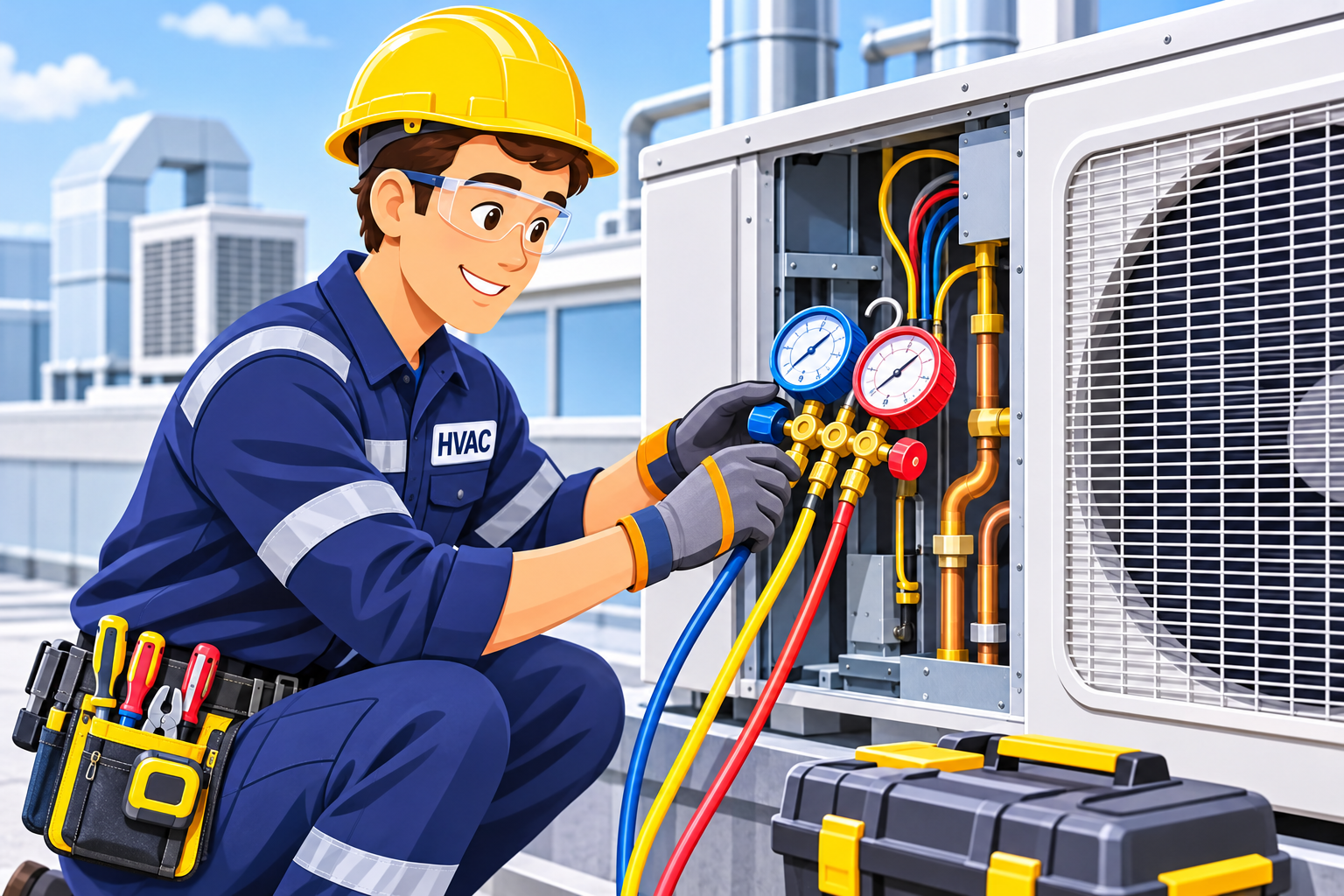
- Lifetime Access
- All Levels
- PDF Certificate
Learn with Confidence






Overview
Technician & Operator Course
Overview of the Technician & Operator Course
The Technician & Operator course is a fast-track, practical program designed to equip learners with the essential skills needed to excel as a skilled technician and operator in various technical fields. Unlike traditional courses that take months, this program is shorter, allowing participants to complete it and get a certificate incredibly fast.
This course focuses on job-ready skills in technical operations, electrical work, troubleshooting, and safe installation practices. By the end of the program, learners will be prepared to step confidently into technician and operator roles, improving employability and career prospects.
Course Description
The Technician & Operator course is designed to provide a complete understanding of the roles and responsibilities of a technician, emphasizing hands-on knowledge and industry-relevant skills.
Module 1 – What is an HVAC Technician introduces learners to the role of a technician, including the core responsibilities, skills required, and the scope of work in heating, ventilation, and air conditioning systems. This module sets the foundation for understanding technical operations and the practical applications of a technician and operator.
Module 2 – Working with Electricity teaches learners the basics of electrical systems, including safety protocols, wiring principles, and understanding electrical circuits. This is critical for anyone pursuing a career as a technician and operator.
Module 3 – Measurements and Schematics focuses on reading technical diagrams, measuring devices, and understanding schematics. Learners gain practical knowledge to interpret technical plans accurately, which is essential for effective installation and troubleshooting.
Module 4 – Safe Installation covers safe practices for installing technical systems, including HVAC units, electrical components, and control devices. Safety is a priority in the Technician & Operator course, ensuring learners understand and apply the correct procedures to avoid accidents.
Module 5 – Control Devices introduces learners to various control devices used in technical operations, including thermostats, sensors, relays, and other automation components. Understanding these devices is critical for monitoring, controlling, and maintaining systems efficiently.
Module 6 – Troubleshooting provides learners with the skills to identify, diagnose, and solve technical problems quickly and effectively. Troubleshooting is a core competency for any technician and operator, enabling learners to maintain and repair systems under real-world conditions.
The course concludes with an assignment, giving learners a chance to apply their knowledge and demonstrate competence in the core areas of the course. Upon successful completion, participants receive a recognized certificate that validates their skills and job readiness in the technical field.
Why Choose the Technician & Operator Course?
The Technician & Operator course is designed to deliver maximum learning in minimal time. Key benefits include:
-
Complete the course quickly and earn a certificate incredibly fast
-
Gain job-ready skills in technical operations, installation, and troubleshooting
-
Learn practical knowledge applicable to HVAC systems, electrical work, and technical control devices
-
Build confidence to work safely and effectively as a technician and operator
-
Enhance career opportunities in technical, mechanical, and operational roles
This course combines theoretical knowledge with practical applications to ensure learners are equipped to perform in professional technician and operator roles immediately.
Who Is This Course For?
The Technician & Operator course is suitable for:
-
Aspiring HVAC technicians and operators
-
Electrical and mechanical technicians
-
Individuals seeking job-ready skills in technical fields
-
Career changers entering technical or operational roles
-
Employees seeking promotion to technician and operator positions
-
Anyone aiming to enhance their technical knowledge and practical experience
No prior experience is required, making it accessible to beginners while still valuable for those with some technical background.
Career and Job-Readiness Benefits
Completing the Technician & Operator course provides learners with the skills and certification needed to advance their careers. Key benefits include:
-
Ready for technician and operator roles in HVAC, electrical, and technical maintenance
-
Ability to work safely and efficiently in technical environments
-
Gain job-ready practical skills recognized by employers
-
Immediate eligibility for employment or promotion in technical fields
-
Competitive advantage in the job market with a fast-track, certified course
The course ensures that learners leave not only with a certificate but also with confidence in their technical abilities, making them immediately employable.
Technician & Operator Salary in the UK (2026)
The Technician & Operator course introduces knowledge relevant to heating, ventilation and air conditioning (HVAC), electrical systems, measurements, installation, control devices and technical troubleshooting. These subjects are associated with several technical occupations in the UK, where salaries vary according to qualifications, practical experience, specialisation, employer and location.
The following comparison provides indicative UK salary information for technical careers related to the course curriculum.
UK Technician & Operator Salary Comparison Table
| Technical Career Role | Starter Salary (Annual) | Experienced Salary (Annual) | Relevant Technical Responsibilities |
|---|---|---|---|
| Heating and Ventilation Engineer (HVAC) | £20,000 | £40,000 | Installation, servicing, maintenance and troubleshooting of heating and ventilation systems |
| Refrigeration and Air Conditioning Installer | £25,000 | £45,000 | Installation, servicing and maintenance of cooling and air conditioning systems |
| Electrical Engineering Technician | £24,000 | £48,000 | Maintaining electrical equipment, interpreting diagrams and supporting control systems |
| Engineering Maintenance Technician | £27,000 | £48,000 | Diagnosing equipment faults, maintaining machinery and supporting operational reliability |
| Electrician | £26,000 | £45,000 | Electrical installation, inspection, maintenance and fault identification |
| Building Services Engineer | £28,000 | £51,000 | Designing, maintaining and coordinating building heating, lighting and power systems |
| Electronics Engineering Technician | £26,000 | £42,000 | Maintaining electronic systems, components and technical control equipment |
| Maintenance Fitter | £24,000 | £38,000 | Installing, servicing and repairing industrial machinery and mechanical equipment |
Understanding UK Technician and Operator Salaries
-
Entry-level opportunities: Indicative starting salaries in the related technical occupations range from approximately £20,000 to £28,000 annually. These figures are not specific to graduates of this course.
-
Experienced technician salaries: Experienced professionals in relevant technical occupations may earn approximately £38,000–£51,000 annually, depending on their role.
-
HVAC specialisation: Heating, ventilation and air conditioning professionals may develop expertise through additional technical training, qualifications and supervised workplace experience.
-
Electrical and control systems: Professionals with relevant electrical qualifications and practical skills may explore roles involving equipment maintenance, fault diagnosis and automation systems.
-
Maintenance and troubleshooting: Engineering maintenance technicians work with industrial equipment and may require advanced technical competence and relevant experience.
-
Career progression: Experienced technicians may progress towards supervisory, specialist or engineering positions after obtaining the appropriate qualifications and professional experience.
-
Employment conditions: Location, employer, working hours, shift patterns, on-call responsibilities and technical specialisation can influence earnings.
Salary information: The figures are indicative annual starter-to-experienced salary estimates published by the UK National Careers Service and referenced for 2026. They are not guaranteed earnings, and the roles listed can require recognised qualifications, apprenticeships, supervised practical training or professional experience beyond this course.
Career Development After Technician & Operator Training
The Technician & Operator course introduces technical concepts that may support further education and career exploration in HVAC systems, electrical engineering, equipment maintenance, technical installation and troubleshooting.
Learners interested in professional technical employment may explore vocational qualifications, apprenticeships and supervised workplace training. More specialised roles can require additional competencies, practical assessments or industry-specific certifications.
The supplied course description does not establish that its certificate is an independently accredited professional qualification or that completing the course alone demonstrates full workplace competence. Learners should confirm certification details and employer requirements before relying on the course for professional eligibility.
Frequently Asked Questions (FAQs) – Technician & Operator Course
1. What is the Technician & Operator course?
The Technician & Operator course is a fast-track technical training programme covering HVAC fundamentals, electrical systems, measurements, schematics, safe installation, control devices and troubleshooting. It is designed to introduce learners to essential technical concepts and responsibilities associated with technician and operator roles.
2. How long does the Technician & Operator course take?
The course is described as shorter than traditional technical training programmes, allowing learners to complete the materials and obtain a certificate relatively quickly. However, the supplied course information does not specify the exact duration, total learning hours or assessment timetable. Learners should confirm these details with the provider.
3. Is the Technician & Operator course suitable for beginners?
Yes. The course is presented as suitable for beginners and does not specify previous technical qualifications or professional experience as entry requirements. Learners are introduced to HVAC technician responsibilities, electrical fundamentals, measurements, installation principles, control devices and troubleshooting.
4. Can this Technician & Operator course help me get a job in the UK?
The course may support career development by introducing knowledge relevant to technical maintenance, HVAC operations, electrical systems and troubleshooting. However, completing the course does not guarantee employment or automatically qualify someone for professional technician work. Employers may require recognised qualifications, practical experience, apprenticeships or additional technical training.
5. Will I receive a certificate after completing the Technician & Operator course?
The course description states that learners receive a certificate after successfully completing the programme and its assignment. However, it does not identify an awarding organisation, regulated qualification or independent accreditation. Learners should confirm the certificate’s recognition and acceptance with the provider and prospective employers.
6. What will I learn in the Technician & Operator course?
The curriculum includes six main modules: What is an HVAC Technician, Working with Electricity, Measurements and Schematics, Safe Installation, Control Devices, and Troubleshooting. A final assignment provides an opportunity to review and apply the knowledge introduced during the course.
7. Does the Technician & Operator course include practical training?
The course description emphasises practical knowledge, hands-on skills and industry-relevant applications. However, it does not clearly establish whether supervised workshop sessions, practical assessments or workplace placements are included. Learners requiring hands-on technical competence should verify the training arrangements with the provider.
8. What does an HVAC technician do?
An HVAC technician works with heating, ventilation and air conditioning systems. Responsibilities may include installation, servicing, maintenance, inspection and identifying technical faults. Professional HVAC work requires appropriate technical competence, safety knowledge and, where applicable, specific qualifications or certifications.
9. How much does an HVAC technician earn in the UK?
According to the National Careers Service, heating and ventilation engineers have indicative annual salaries ranging from approximately £20,000 for starters to £40,000 for experienced professionals. Refrigeration and air conditioning installers have a separate indicative range of £25,000–£45,000. Actual earnings depend on qualifications, experience, employer and location.
10. What is the difference between an HVAC technician and an electrical technician?
An HVAC technician specialises in heating, ventilation, air conditioning and associated mechanical systems. An electrical technician focuses on electrical equipment, circuits, controls and maintenance. Both roles may involve technical diagrams, electrical principles and troubleshooting, but their training and professional requirements differ.
11. Does the course cover electrical systems and safety?
Yes. Module 2, Working with Electricity, introduces electrical systems, safety protocols, wiring principles and electrical circuits. The course also addresses safe installation in Module 4. Learners should not interpret theoretical study as authorisation to undertake electrical installation or repair work without appropriate qualifications, competence and supervision.
12. What are technical measurements and schematics?
Technical measurements involve determining and interpreting physical or electrical quantities relevant to equipment and installations. Schematics are diagrams representing systems, components and their connections. Module 3 introduces measurements and schematics to help learners understand technical information used in installation, maintenance and troubleshooting.
13. What control devices are covered in the Technician & Operator course?
Module 5 introduces technical control devices, including thermostats, sensors, relays and other automation components. These devices are used to monitor or regulate equipment and system operations. Understanding their general functions can provide a foundation for further HVAC, electrical and automation studies.
14. Does the course teach technical troubleshooting?
Yes. Module 6 focuses on troubleshooting and introduces concepts associated with identifying, diagnosing and resolving technical problems. This subject is relevant to equipment maintenance, HVAC systems and technical operations. Effective workplace troubleshooting also requires practical experience, technical competence and appropriate safety procedures.
15. What qualifications do I need to become an HVAC technician in the UK?
Common routes into HVAC-related careers include relevant college courses, building services apprenticeships and employer-supported technical training. Some roles also require specialist qualifications, practical experience and certification for particular systems or activities. Completing this course alone does not automatically meet professional entry requirements.
16. How much do electrical engineering technicians earn in the UK?
The UK National Careers Service lists indicative annual salaries of approximately £24,000 for starter electrical engineering technicians and £48,000 for experienced professionals. Actual earnings depend on technical qualifications, responsibilities, geographical location, employer and experience.
17. Can beginners become technicians without previous experience?
Beginners can enter technical career pathways through introductory education, trainee positions, apprenticeships or vocational training. However, many technician roles require supervised workplace experience and recognised technical competence before independent professional work. This course can introduce relevant concepts but should not be treated as a substitute for those requirements.
18. What career paths are relevant to Technician & Operator training?
Related career pathways include HVAC technician, refrigeration and air conditioning installer, electrical engineering technician, engineering maintenance technician, electrician and building services engineer. These occupations involve different responsibilities and qualifications. The course provides introductory technical knowledge that may support further education or professional development.
19. What is the difference between a technician and an operator?
A technician generally focuses on installing, inspecting, maintaining, testing or troubleshooting technical equipment. An operator typically concentrates on monitoring and operating machinery or systems within established procedures. Responsibilities can overlap depending on the industry, organisation and equipment involved.
20. Does the course cover safe installation practices?
Yes. Module 4, Safe Installation, introduces safety considerations associated with installing technical systems, including HVAC equipment, electrical components and control devices. However, the supplied course description does not establish that learners receive assessed practical installation competence or authorisation to carry out regulated technical work.
21. Can the Technician & Operator course support career progression?
The course may support professional development by expanding understanding of HVAC systems, electrical fundamentals, technical diagrams, control devices and troubleshooting. These subjects can be relevant to further training or career exploration. Actual progression depends on qualifications, workplace performance, practical competence and employer requirements.
22. Is the Technician & Operator certificate recognised by UK employers?
The supplied course description refers to a recognised certificate but does not identify its awarding organisation, accreditation status or acceptance by particular employers. Recognition should therefore be verified before enrolment. UK employers may require specific vocational qualifications, apprenticeships or evidence of practical competence for technician positions.
23. What is the difference between Technician & Operator training and an apprenticeship?
The Technician & Operator course introduces selected technical subjects through a fast-track learning programme. An apprenticeship normally combines structured learning with paid employment, supervised practical experience and assessment against an occupational standard. The two routes are not automatically equivalent, and this course does not establish completion of an apprenticeship.
24. Can I become an engineering maintenance technician after completing this course?
The course may introduce knowledge relevant to engineering maintenance, particularly electrical systems, measurements, control devices and troubleshooting. However, professional engineering maintenance roles generally require further technical education, practical experience or appropriate vocational qualifications. Completing the course alone does not establish professional eligibility.
25. How do I choose the right Technician & Operator training course?
When choosing a Technician & Operator course, consider the curriculum, delivery format, practical learning opportunities, assessment methods, certificate recognition and relevance to your career goals. Learners seeking employment in HVAC, electrical installation or technical maintenance should verify the additional qualifications and supervised experience required for their intended roles.
Course Content
Module 1 What is an HVAC technician
-
What is an HVAC technician
00:00
Module 2 Working with Electricity
Module 3 Measurements and Schematics
Module 4 Safe Installation
Module 5 Control devices
Module 6 Troubleshooting
Assignment

Hear from Our Successful Learners


The experience has been excellent from the start to the present. The support team is proactive and always helpful with any queries or requests.

I've taken several courses through Reed and have been completely satisfied with each one. The pricing is outstanding.

I've completed numerous courses through Reed and have been fully satisfied with each one. The courses are excellent.

I'm truly impressed by One Education's remarkable ability to understand its learners and go the extra mile for them.

I had been searching for a Level 3 course for a while—it felt like mission impossible. Discovering that Reed offers a wide range of career-focused providers was a pleasant surprise.

The course was incredibly insightful and easy to navigate. I truly enjoyed it—thank you so much.


Booking was simple and the course content was clear and well structured from day one.

Great value for money and the certificate arrived quickly after I finished my assessment.

Customer support answered my questions the same day. Would definitely recommend to a friend.

Flexible learning that fit around my job. The video lessons were easy to follow.

Second course I've taken with them now. Consistent quality every time.

Clear instructions, fair pricing, and the exam prep really helped me pass first time.
Frequently Asked Questions
Get Your Certificate Today
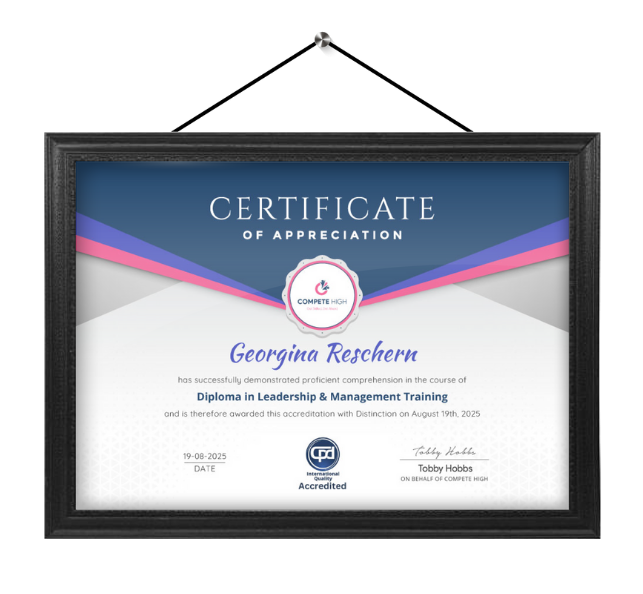
Celebrate your achievement with a CPD-IQ accredited certificate from Compete High! Perfect for showcasing your skills, boosting your career, and enhancing your professional profile. Choose the format that works best for you: PDF Certificate (£9.99) – Download instantly to add to your portfolio, résumé, LinkedIn, or share on social media. Printed Hard Copy (£29.99) – A beautifully designed certificate delivered to your door, ready to proudly display in your office or home. Both PDF & Printed Hard Copy (£31.99) – Get the best of both worlds!
Order Now