Level 3 Diploma in Health and Social Care
- Lifetime Access
- All Levels
- PDF Certificate
Learn with Confidence







Overview
Level 3 Diploma in Health and Social Care
The Level 3 Diploma in Health and Social Care equips learners with essential knowledge and skills relevant to care delivery, professional practice and supervisory responsibilities within the UK health and social care sector. Designed to reflect workplace demands, this CPD-focused course covers key topics including person-centred care, communication, safeguarding, mental health awareness, medication administration, infection prevention and health and safety. Through structured learning materials, assignments and quizzes, learners can develop a stronger theoretical understanding of healthcare practices, professional responsibilities and the principles of delivering safe, compassionate and effective care.
This Level 3 Diploma in Health and Social Care is ideal for individuals exploring healthcare careers, existing care workers seeking professional development, and learners interested in progressing towards senior care or supervisory positions. With flexible online learning options, tutor support and industry-relevant content, the course offers an accessible way to strengthen knowledge of health and social care services. It can also support further learning and career planning within the UK’s health and social care sector, where employers value communication skills, safeguarding awareness and person-centred approaches.
Learning Outcomes:
Upon completing the Level 3 Diploma in Health and Social Care, learners will be able to:
-
Understand and apply the principles of person-centred care in different health and social care settings.
-
Demonstrate an understanding of effective professional communication with patients, service users, colleagues and other stakeholders.
-
Identify key health, safety and safeguarding responsibilities within care environments.
-
Explain how healthcare and social care professionals collaborate to improve service delivery.
-
Understand professional practice, relevant legislation and ethical responsibilities in health and social care.
-
Recognise common mental health conditions and the importance of appropriate care and support.
-
Develop knowledge of infection prevention, medication safety awareness and healthcare documentation.
Who Is This Course For?
This Level 3 Diploma in Health and Social Care is designed for individuals working in or aspiring to enter the health and social care sector, including those interested in roles such as care workers, support workers, healthcare assistants and community care workers. It is also suitable for existing professionals seeking to expand their understanding of care practices, safeguarding, communication and workplace responsibilities.
Whether you are beginning your learning journey, currently working in a care environment or exploring future supervisory opportunities, this course provides a foundation of knowledge relevant to health and social care services in the UK. Learners seeking particular regulated qualifications or practical workplace competencies should check the requirements of their intended career pathway.
Course Curriculum:
-
The Principles and Values of Health and Social Care
-
Communication Skills
-
Health and Social Care Policies and Legislation
-
Health and Social Care Delivery
-
Professional Practice in Health and Social Care
-
Substance Use Disorders (SUD)
-
Caring for Mental Health
-
Methods of Mental Health Treatment
-
Depression and Bipolar Disorders
-
Anxiety Disorders
-
Physical Healthcare
-
Mental Healthcare
-
Public Healthcare
-
Healthcare-Related Sector
-
Healthcare Worker
-
Economics of Healthcare
-
Social Work
-
Relationship of Social Work Practice
-
Introduction to Dementia
-
Person-Centred Care
-
Introduction to Medication Administration
-
Medication and Administration Equipment and Techniques
-
Medication Documentation and Record Keeping
-
Introduction to Anatomy and Physiology
-
Care Certificate Standards 1–15
-
Introduction to Infectious Diseases in the Workplace
-
Common Infectious Diseases in the Workplace
-
Personal Protective Equipment (PPE)
-
Hygiene Practices to Prevent the Spread of Infectious Diseases
-
Vaccinations and Immunisations
-
Health and Safety Policies and Procedures
Career Paths in the UK
Completing the Level 3 Diploma in Health and Social Care can support learners in exploring a wide range of career opportunities across the UK’s healthcare and social care sector. With healthcare services delivered through the NHS, private care organisations, residential care homes and community-based providers, individuals with relevant knowledge, practical skills and recognised qualifications can pursue different professional pathways.
Depending on previous experience, employer requirements and additional training, learners may consider the following health and social care careers.
1. Social Care
-
Care Worker: Provide person-centred care and support to individuals in residential care homes, supported living environments or domiciliary settings.
-
Support Worker: Assist individuals with daily activities, promote independence and support their physical, emotional and social wellbeing.
-
Community Care Worker: Help individuals living in their own homes or local communities access appropriate care and support services.
2. Healthcare
-
Healthcare Assistant: Support healthcare professionals with patient care, personal care activities and routine responsibilities in hospitals or other healthcare environments.
-
Nursing Assistant: Assist registered nursing staff with patient care and everyday clinical support responsibilities within the limits of the role.
-
Health Administration Officer: Support healthcare operations through administrative duties, patient records management, appointment scheduling and communication.
3. Management and Leadership
-
Senior Care Worker: Support junior care staff, contribute to care planning and help maintain high standards of service delivery.
-
Care Coordinator: Assist with coordinating care plans, scheduling services and facilitating communication between care teams, service users and families.
4. Specialised Roles
-
Personal Assistant: Provide individualised assistance to people with specific care and support needs, promoting independence and daily living skills.
-
Community Development Officer: Contribute to community initiatives designed to improve wellbeing, access to services and social support.
-
Charity Officer: Work with charitable or voluntary organisations supporting health, wellbeing and community care programmes.
These are potential career pathways rather than guaranteed outcomes. Some positions require additional accredited qualifications, practical experience, professional registration or employer-specific training.
Health and Social Care Jobs and Salaries in the UK (2026)
Health and social care careers in the UK offer opportunities across hospitals, residential care homes, community health services, social care organisations and private healthcare providers. Earnings depend on factors such as professional experience, job responsibilities, location, working hours and employer.
The following table provides a comprehensive overview of typical annual salaries for selected health and social care-related jobs in the UK, ranging from care and support positions to specialist and management roles.
| Health and Social Care Job Role | Annual Salary in the UK | Typical Workplace | Career Level |
|---|---|---|---|
| Care Worker / Care Assistant | £20,000–£25,000 | Care homes, home care services | Entry-level |
| Residential Support Worker | £22,000–£30,000 | Residential care, supported living | Entry to intermediate |
| Healthcare Assistant / Nursing Assistant | £25,000–£27,000 | NHS hospitals, private hospitals | Entry-level |
| Senior Care Worker | £24,000–£29,000 | Residential care, domiciliary care | Experienced / supervisory |
| Occupational Therapy Support Worker | £26,000–£31,000 | Hospitals, rehabilitation services | Support / intermediate |
| Family Support Worker | £24,000–£36,000 | Local authorities, family services | Intermediate |
| Health and Wellbeing Coach / Health Trainer | £24,000–£30,000 | Community health services | Entry to intermediate |
| Health Records Clerk | £25,000–£31,000 | NHS hospitals, GP surgeries | Entry to intermediate |
| Medical Secretary | £23,000–£30,000 | Hospitals, GP surgeries, clinics | Entry to intermediate |
| Healthcare Science Assistant | £25,000–£31,000 | Hospitals, laboratories | Support / intermediate |
| Community Development Worker | £22,000–£36,000 | Charities, councils, community organisations | Intermediate |
| Health Promotion Specialist | £25,000–£35,000 | Public health, community services | Specialist |
| Youth Worker | £24,000–£37,000 | Youth centres, charities, community services | Intermediate / specialist |
| Nursing Associate | £26,000–£31,000 | NHS hospitals, community healthcare | Registered professional* |
| Psychological Wellbeing Practitioner | £28,000–£39,000 | NHS Talking Therapies, mental health services | Specialist* |
| Social Worker | £32,000–£48,000 | Local authorities, social services | Registered professional* |
| Registered Nurse | £32,000–£48,000 | NHS hospitals, clinics, care homes | Registered professional* |
| Occupational Therapist | £32,000–£48,000 | Hospitals, rehabilitation centres | Registered professional* |
| Care Home Manager | £30,000–£65,000 | Residential care homes, care organisations | Management* |
Salary information: Figures represent indicative starter-to-experienced annual salary ranges published by the UK National Careers Service, checked in November 2026. Actual earnings depend on location, employment conditions, experience, hours and employer.
Career requirements: Roles marked with an asterisk (*) require additional approved professional education, registration, specialist training or substantial experience, as applicable. They are included to illustrate potential longer-term career pathways and are not positions for which this CPD course alone provides professional eligibility.
NHS Health and Social Care Pay Bands in 2026
Healthcare support positions within the NHS may follow the Agenda for Change pay structure. For NHS England, the 2026/27 annual basic salary rates include:
| NHS Pay Band | Annual Basic Salary (2026/27) |
|---|---|
| Band 2 | £25,272 |
| Band 3 | £25,760–£27,476 |
| Band 4 | £28,392–£31,157 |
Source: NHS Employers, 2026/27 Agenda for Change pay scales, effective from 1 April 2026.
These NHS pay bands apply to positions classified within the relevant bands. Actual salaries can vary according to the role, geographical pay supplements, working arrangements and applicable employment conditions.
Studying health and social care can help learners build relevant knowledge for career development. However, completing a CPD course does not automatically qualify an individual for a particular NHS pay band, professional position or regulated occupation.
Career Progression Opportunities with Level 3 Diploma in Health and Social Care
The Level 3 Diploma in Health and Social Care can provide a useful foundation for learners planning further education or professional development in healthcare and social care. Depending on their existing qualifications, professional experience and the admission criteria of their chosen institution, learners may explore advanced study opportunities, including Level 5 programmes or Level 7 Diplomas in Health and Social Care Management.
Further study, recognised qualifications and relevant workplace experience may support progression towards senior care, care coordination, healthcare administration and management responsibilities. Careers in regulated professions such as nursing and social work require specific approved qualifications and professional registration.
The Level 3 Diploma in Health and Social Care offers an opportunity to strengthen sector knowledge, understand important professional responsibilities and prepare for future learning within the UK’s health and social care industry.
Frequently Asked Questions:
1. What is a Level 3 Diploma in Health and Social Care?
A Level 3 Diploma in Health and Social Care is a course designed to develop knowledge of healthcare and social care practices in the UK. It covers person-centred care, safeguarding, communication, mental health, medication awareness, dementia care and workplace safety. The course is suitable for learners interested in health and social care careers or professional development.
2. What is a Level 3 Diploma in Health and Social Care equivalent to in the UK?
A regulated Level 3 qualification is at the same qualification level as A levels in the UK. However, a CPD course described as Level 3 is not automatically equivalent to an Ofqual-regulated diploma or A levels. Learners should check the awarding organisation, accreditation status and qualification requirements before enrolling.
3. Can I study Health and Social Care Level 3 online?
Yes, Level 3 Health and Social Care courses are available online in the UK. Online learning allows students to study subjects such as safeguarding, communication, person-centred care and health and safety remotely. However, courses requiring practical competency assessments or workplace placements may have additional in-person requirements.
4. How long does it take to complete a Level 3 Diploma in Health and Social Care?
The time required to complete a Level 3 Diploma in Health and Social Care depends on the course provider, curriculum, assessment requirements and study schedule. Flexible online courses may allow learners to progress at their own pace, while regulated qualifications can require specified learning hours and practical assessments.
5. What jobs can I get with a Level 3 Diploma in Health and Social Care?
A Level 3 Diploma in Health and Social Care can help learners develop knowledge relevant to roles such as care worker, support worker, healthcare assistant and community care worker. Experienced professionals may also use further study to support progression towards senior care or care coordination positions. Employment eligibility depends on the qualification’s recognition, practical experience and individual employer requirements.
6. How much can I earn in health and social care in the UK?
Health and social care salaries vary by role and experience. According to the UK National Careers Service, care workers typically earn £20,000–£25,000 annually, healthcare assistants earn approximately £25,000–£27,000, and senior care workers earn around £24,000–£29,000. Salaries may differ according to employer, location, working hours and responsibilities.
7. Can I work for the NHS with a Level 3 Health and Social Care course?
A Level 3 Health and Social Care course can provide relevant knowledge for certain NHS support roles, including healthcare assistant positions. However, NHS employers set their own recruitment criteria, which may include recognised qualifications, previous experience, safeguarding checks and workplace training. Completing a CPD course alone does not guarantee NHS employment.
8. Is a Level 3 Diploma in Health and Social Care recognised in the UK?
Recognition depends on the course provider, awarding organisation and qualification status. CPD courses support continuing professional development, while regulated qualifications are formally recognised through the relevant UK qualifications framework. Learners should verify whether a particular diploma appears on the Register of Regulated Qualifications if formal recognition is important for employment or further study.
9. What will I learn in a Level 3 Health and Social Care course?
Learners study communication, safeguarding, person-centred care, health and social care legislation, mental health awareness, dementia, medication administration awareness, infection prevention and workplace safety. The curriculum also introduces anatomy and physiology, social work, healthcare delivery and professional responsibilities within care environments.
10. Is the Level 3 Diploma in Health and Social Care suitable for beginners?
Yes, a Level 3 Health and Social Care course may be suitable for beginners interested in developing sector knowledge, depending on its entry requirements. It can also benefit existing care workers seeking to refresh their understanding of communication, safeguarding, healthcare practices and professional responsibilities.
11. Can international students study Health and Social Care courses online in the UK?
Yes, international learners can enrol in many UK-based online health and social care courses without attending a physical campus. Online learning can provide access to UK-focused healthcare and social care knowledge from abroad. However, completing an online course does not automatically provide UK professional registration, employment eligibility or visa sponsorship.
12. What is the difference between Level 2 and Level 3 Health and Social Care?
Level 2 Health and Social Care courses generally introduce fundamental care practices, communication and workplace responsibilities. Level 3 courses typically explore these subjects in greater depth, including safeguarding, person-centred care, legislation and professional practice. The exact differences depend on the awarding organisation, course content and qualification type.
13. Can I progress to Level 5 Health and Social Care after Level 3?
Progression from Level 3 to Level 5 Health and Social Care may be possible, depending on the entry requirements of the higher-level programme. Regulated Level 5 qualifications can require specific prior qualifications or relevant experience. Learners should confirm whether their Level 3 course meets the entry requirements of their intended Level 5 provider.
14. Are there free Health and Social Care courses in the UK?
Yes, some health and social care courses in the UK are available free of charge through eligible government-funded programmes, employers, charities or NHS-supported training initiatives. Funding eligibility may depend on age, location, employment status, residency and the qualification being studied. Private online CPD courses may charge enrolment or certification fees.
15. What is person-centred care in health and social care?
Person-centred care is an approach that respects an individual’s needs, preferences, dignity and independence. It involves listening to the person receiving care, supporting informed choices and adapting services to their circumstances. Person-centred care is an important principle in health and social care settings across the UK.
16. Why is safeguarding important in health and social care?
Safeguarding involves protecting children and adults at risk from abuse, neglect and other forms of harm. Health and social care workers must understand safeguarding responsibilities, recognise potential concerns and follow appropriate reporting procedures. Safeguarding training helps support safer care environments and professional accountability.
17. What is confidentiality in health and social care?
Confidentiality in health and social care means protecting personal, medical and sensitive information from unauthorised access or disclosure. Care professionals must handle information responsibly, follow applicable data protection laws and share details only when there is a lawful and appropriate reason.
Learn more in our guide to Confidentiality in Health and Social Care.
18. Is a Level 3 Health and Social Care course worth studying?
A Level 3 Health and Social Care course can be worthwhile for learners seeking a broader understanding of care practices, safeguarding, communication and healthcare responsibilities. It may support professional development, career exploration and preparation for further training. Its value depends on your career goals, the course content and whether employers or education providers recognise the specific certificate or qualification.
Course Content
The principles and values of health and social care
-
The principles and values of health and social care
00:00
Communication skills
Health and social care policies and legislation
Health and social care delivery
Professional practice in health and social care
Substance Use Disorders (SUD)
Caring for Mental Health
Methods of Mental Health Treatment
Depression and Bipolar Disorders
Anxiety Disorders
Physical Healthcare
Mental Healthcare
Public Health
Healthcare Related Sectors
Healthcare Worker
The Economics of Healthcare
Social Work
Relationships in Social Work Practice
Introduction to Dementia
Person-Centered Care
Introduction to Medication Administration
Medication Administration Equipment and Techniques
Medication Administration Documentation and Record Keeping
Introduction to Anatomy and Physiology
Your role and responsibilities
Your personal development
Safeguarding children
Safeguarding adults
Person-centered care
Infection prevention and control
Health and safety
Fluids and nutrition
Equality and diversity
Duty of care
Data protection and confidentiality
Communication
Basic life support
Caring for Mental Health
Privacy and Dignity
Introduction to Infectious Diseases in the Workplace
Common Infectious Diseases in the Workplace
Personal Protective Equipment (PPE)
Hygiene Practices to Prevent the Spread of Infectious Diseases
Vaccinations and Immunizations
Health and Safety Policies and Procedures

Hear from Our Successful Learners


The experience has been excellent from the start to the present. The support team is proactive and always helpful with any queries or requests.

I've taken several courses through Reed and have been completely satisfied with each one. The pricing is outstanding.

I've completed numerous courses through Reed and have been fully satisfied with each one. The courses are excellent.

I'm truly impressed by One Education's remarkable ability to understand its learners and go the extra mile for them.

I had been searching for a Level 3 course for a while—it felt like mission impossible. Discovering that Reed offers a wide range of career-focused providers was a pleasant surprise.

The course was incredibly insightful and easy to navigate. I truly enjoyed it—thank you so much.


Booking was simple and the course content was clear and well structured from day one.

Great value for money and the certificate arrived quickly after I finished my assessment.

Customer support answered my questions the same day. Would definitely recommend to a friend.

Flexible learning that fit around my job. The video lessons were easy to follow.

Second course I've taken with them now. Consistent quality every time.

Clear instructions, fair pricing, and the exam prep really helped me pass first time.
Frequently Asked Questions
Get Your Certificate Today
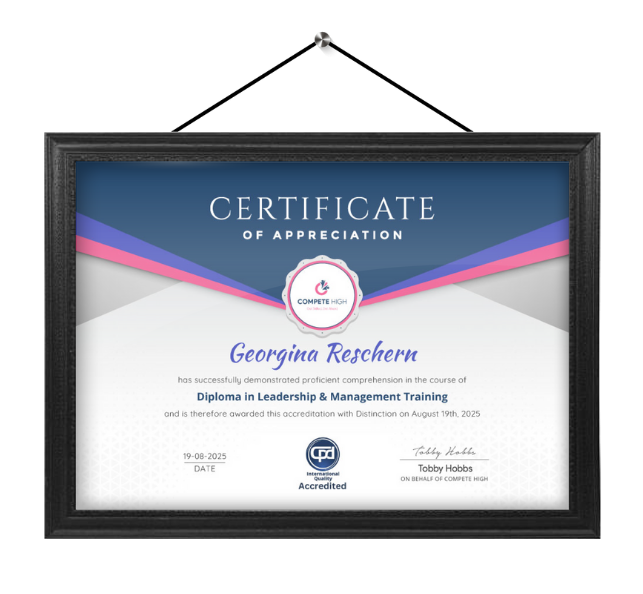
Celebrate your achievement with a CPD-IQ accredited certificate from Compete High! Perfect for showcasing your skills, boosting your career, and enhancing your professional profile. Choose the format that works best for you: PDF Certificate (£9.99) – Download instantly to add to your portfolio, résumé, LinkedIn, or share on social media. Printed Hard Copy (£29.99) – A beautifully designed certificate delivered to your door, ready to proudly display in your office or home. Both PDF & Printed Hard Copy (£31.99) – Get the best of both worlds!
Order Now