Level 3 DBT Awareness Training
- Lifetime Access
- All Levels
- PDF Certificate
Learn with Confidence










Overview
Level 3 DBT Awareness Training
Level 3 DBT Awareness Training introduces learners to Dialectical Behaviour Therapy (DBT), its principles and its relevance to mental health and therapeutic practice. This DBT course explores what DBT stands for, what DBT therapy involves and how DBT works through emotional regulation, mindfulness and its four core modules. You will also examine DBT in clinical practice and consider ethics and professionalism when working with DBT-related knowledge. The course is suitable for learners interested in mental health, psychology, counselling, healthcare, social care or related support environments. It provides structured foundational knowledge that can complement further study and professional development without claiming to qualify learners to practise DBT therapy independently.
Key topics covered:
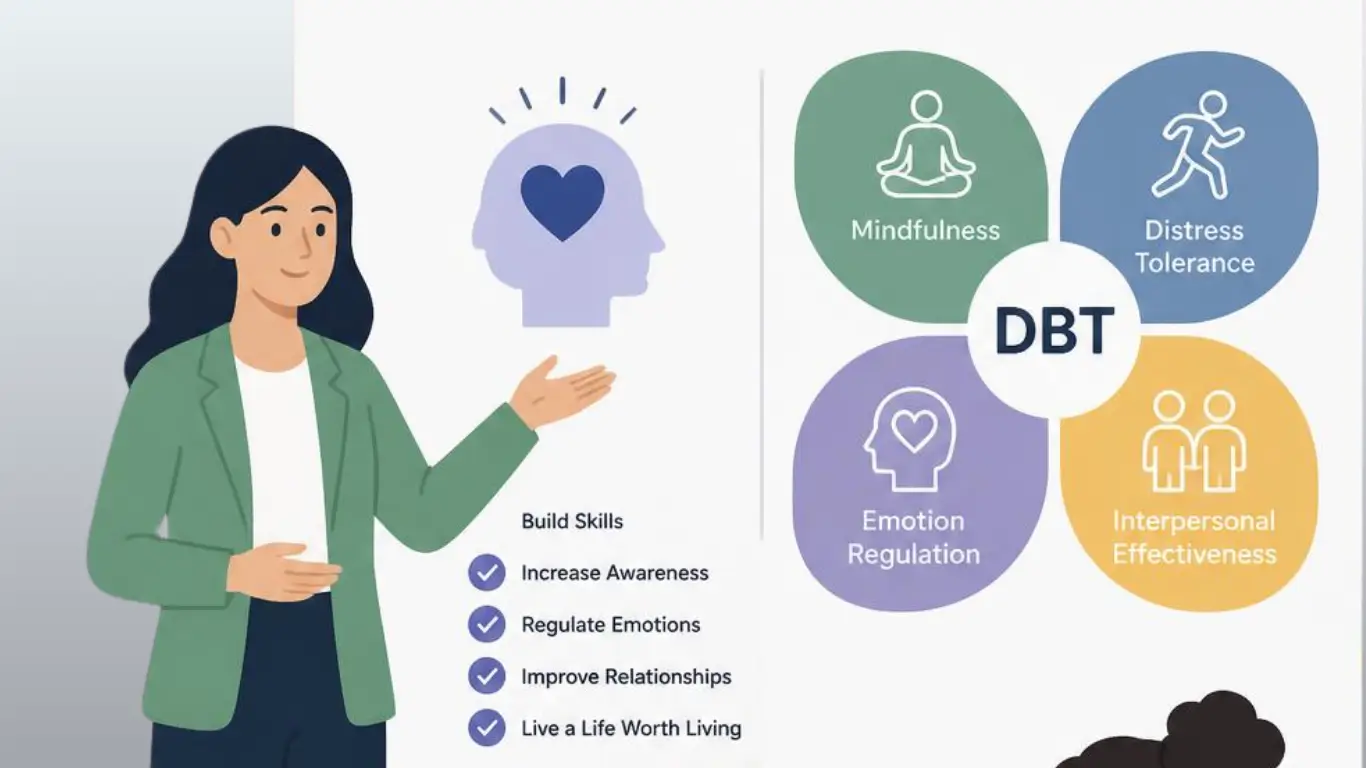
- Overview of DBT and its core principles
- Emotional regulation and mindfulness
- The four modules of DBT
- DBT in clinical practice
- Ethics and professionalism in DBT
Course Overview
Level 3 DBT Awareness Training provides foundational knowledge of Dialectical Behaviour Therapy and its relationship with mental health and therapeutic practice. Learners explore what DBT is, what DBT therapy means, how DBT works, and the principles behind emotional regulation, mindfulness and the four DBT modules.
This knowledge can be relevant to people interested in mental health support, healthcare, social care, counselling-related environments, psychology and other people-focused services. It may be useful for learners considering roles such as mental health support worker, family support worker, counsellor or other support-focused positions, where understanding emotional wellbeing and therapeutic approaches can complement wider training and experience.
The course does not qualify learners to independently practise DBT or enter regulated clinical professions. Instead, it can provide subject knowledge that supports further education, professional development and informed understanding of DBT within appropriate workplace contexts. It is particularly relevant for learners seeking an accessible introduction to an established therapeutic approach.
Description
This course takes learners through the fundamental concepts of Dialectical Behaviour Therapy in a logical sequence. You will begin with an overview of DBT, then examine emotional regulation and mindfulness before studying the four modules that form a central part of the DBT framework. The course then introduces DBT in clinical practice, helping learners connect theoretical concepts with professional contexts. The final module addresses ethics and professionalism, reinforcing the importance of appropriate boundaries and responsible use of DBT-related knowledge. An assignment provides an opportunity to consolidate learning from the course. Together, these modules create a focused foundation for understanding DBT and its relevance to mental health.
Course Curriculum
Module 1: Overview of DBT
This module introduces Dialectical Behaviour Therapy and establishes the foundation for understanding the subject. Learners explore the meaning and overall approach of DBT.
Main learning topics:
- Dialectical Behaviour Therapy
- Overview of DBT
- Core principles of DBT
- DBT and mental health
Module 2: Understanding Emotional Regulation and Mindfulness
This module examines two important concepts within DBT: emotional regulation and mindfulness. Learners develop an understanding of how these concepts contribute to the DBT approach.
Main learning topics:
- Emotional regulation
- Mindfulness
- Emotional awareness
- DBT skills and principles
Module 3: The Four Modules of DBT
This module introduces the four central skills areas of DBT and explains their place within the wider framework.
Main learning topics:
- Mindfulness
- Emotion regulation
- Distress tolerance
- Interpersonal effectiveness
Module 4: DBT in Clinical Practice
This module moves from foundational theory towards clinical application, introducing how DBT may be understood within professional and therapeutic settings.
Main learning topics:
- DBT in clinical practice
- Therapeutic application
- Clinical context
- Professional use of DBT knowledge
Module 5: Ethics and Professionalism in DBT
This module explores the importance of ethical and professional considerations when working with DBT-related knowledge.
Main learning topics:
- Ethics in DBT
- Professionalism
- Professional boundaries
- Responsible practice
Module 6: Assignment
The final module provides an assignment through which learners can consolidate and demonstrate their understanding of the course content.
Main learning topics:
- Course knowledge review
- DBT concepts
- Application of learning
- Knowledge consolidation
Who Is This Course For?
The course can be useful for learners who want to develop foundational knowledge of DBT and understand its relevance to mental health and people-focused work.
Mental Health Support Workers
Mental health support workers may find knowledge of DBT useful when developing their understanding of therapeutic approaches, emotional regulation and mindfulness. The course should complement, rather than replace, role-specific training and workplace supervision.
Family Support Workers
Family support workers work with people experiencing a range of personal and social challenges. Understanding DBT concepts may provide additional context when considering emotional wellbeing and support approaches.
Counselling-Interested Learners
People considering counselling-related education can use the course to explore DBT concepts before undertaking more advanced counselling or therapeutic training.
Healthcare and Social Care Professionals
Existing professionals in healthcare or social care may find the course useful as subject-specific professional development, particularly where their work involves supporting people experiencing mental-health-related difficulties.
Psychology and Mental Health Learners
Students and learners interested in psychology or mental health can use the course to build introductory knowledge of DBT, its four modules, emotional regulation, mindfulness and its clinical context.
Career Changers and Beginners
Those considering a move towards mental health, social care or support-focused work can use the course to explore DBT as part of their broader learning journey.
The course itself does not qualify someone to practise as a therapist, psychologist, mental health nurse or other regulated professional.
Requirements
No formal entry requirements have been supplied for Level 3 DBT Awareness Training.
The curriculum begins with an Overview of DBT, making it suitable as a foundational course for learners developing their knowledge of the subject.
Previous knowledge of DBT is therefore not stated as a formal requirement. Learners interested in mental health, emotional regulation, mindfulness, therapeutic approaches or related professional environments may find the subject particularly relevant.
Where a learner intends to progress into a regulated clinical or therapeutic profession, additional qualifications, supervised training, professional experience and/or registration may be required depending on the chosen career.
Skills You Can Develop
DBT Knowledge
Develop an understanding of Dialectical Behaviour Therapy, its principles and its relevance to mental health.
Emotional Regulation Awareness
Build knowledge of emotional regulation as a key concept within the DBT framework.
Mindfulness Awareness
Develop an understanding of mindfulness and its place within DBT.
Understanding of DBT Skills
Recognise the four core DBT areas: mindfulness, emotion regulation, distress tolerance and interpersonal effectiveness.
Clinical Practice Awareness
Develop an introductory understanding of how DBT relates to clinical practice.
Ethical Awareness
Understand why ethical considerations matter when working with DBT-related knowledge.
Professionalism
Develop awareness of professional conduct and responsible use of knowledge within DBT-related contexts.
Application of Course Knowledge
Use the assignment to consolidate and demonstrate understanding of the concepts introduced throughout the course.
Learning Outcomes
By the end of the course, learners should be able to:
- Explain what Dialectical Behaviour Therapy (DBT) is.
- Identify the key principles introduced within an overview of DBT.
- Explain the importance of emotional regulation within the DBT framework.
- Describe the role of mindfulness in DBT.
- Identify the four modules of DBT.
- Explain the purpose of mindfulness within the four-module framework.
- Describe emotion regulation as a core DBT area.
- Recognise distress tolerance and interpersonal effectiveness as central DBT skills areas.
- Explain how DBT relates to clinical practice and professional contexts.
- Recognise the importance of ethics and professionalism when working with DBT-related knowledge.
Career Paths
The course can provide foundational subject knowledge relevant to several mental health, social care, and support-focused career areas. It should not be treated as a standalone professional qualification for regulated clinical practice.
Mental Health Support Worker
Typical UK Salary: Salary varies considerably by employer, location, experience and setting.
How the course is relevant:
Understanding DBT, emotional regulation, mindfulness and the four DBT modules can complement broader mental health support knowledge. The course does not replace employer-specific training or professional qualifications where required.
Family Support Worker
Typical UK Salary: Around £22,000–£28,000 starting salary, according to Prospects’ 2026 social-care career information.
How the course is relevant:
Family support workers may work with people experiencing emotional and social difficulties. Knowledge of emotional regulation, mindfulness and DBT can complement wider support-work knowledge, while additional role-specific training and experience remain important.
Counselor
Typical UK Salary: Around £20,000–£26,000 at the start, according to Prospects; earnings vary by experience, setting and working arrangement.
How the course is relevant:
The course introduces DBT principles, emotional regulation, mindfulness, clinical practice and professional ethics. This can provide useful background knowledge for someone exploring counselling, but becoming a counsellor requires appropriate counselling training beyond this awareness course.
Psychological Wellbeing Practitioner
Typical UK Salary: Trainee PWPs currently start at £28,392, while qualified NHS PWPs typically start at £32,073 and can progress to £39,043.
How the course is relevant:
The course provides background knowledge relevant to mental-health and therapeutic approaches. However, becoming a PWP requires specific accredited low-intensity training; this DBT awareness course does not provide that professional qualification.
Mental Health Nurse
Typical UK Salary: Newly qualified NHS mental health nurses currently start at £31,049, with progression to higher NHS pay bands as experience and responsibility increase.
How the course is relevant:
DBT awareness can complement broader mental-health knowledge, particularly understanding emotional regulation, mindfulness and clinical practice. Mental health nursing itself requires the appropriate nursing education, registration and professional pathway; this course does not qualify someone as a nurse.
Social Worker
Typical UK Salary: Newly qualified social workers generally start at around £33,000–£37,000 in local authorities; NHS specialist mental-health social workers typically start at £38,682–£46,580.
How the course is relevant:
DBT awareness can complement knowledge used in mental-health and social-care environments, particularly around emotional regulation and therapeutic approaches. Social work requires its own recognised professional education and qualification pathway.
Salary information above is indicative rather than guaranteed. Pay varies according to employer, location, experience, responsibilities and sector, and the figures may change as UK pay scales are updated.
Frequently Asked Questions
1. What does DBT stand for?
DBT stands for Dialectical Behaviour Therapy. It is a therapeutic approach that focuses on areas such as mindfulness, emotional regulation, distress tolerance and interpersonal effectiveness.
2. What is DBT therapy?
DBT therapy is a structured approach that combines acceptance and behavioural change strategies. It helps develop practical skills for managing emotions, coping with distress and improving interpersonal relationships.
3. How does DBT work?
DBT works by teaching skills across four key areas: mindfulness, emotion regulation, distress tolerance and interpersonal effectiveness. These skills form an important part of the DBT framework.
4. What is DBT in mental health?
DBT in mental health refers to the use of Dialectical Behaviour Therapy principles and skills within appropriate therapeutic and mental-health settings. This course provides awareness-level knowledge rather than clinical therapist training.
5. What will I learn on the Level 3 DBT Awareness Training?
You will learn about the overview of DBT, emotional regulation and mindfulness, the four modules of DBT, DBT in clinical practice, and ethics and professionalism in DBT, followed by an assignment.
Course Content
Module 1_ Overview of DBT
-
Overview of DBT
00:00
Module 2_ Understanding Emotional Regulation and Mindfulness
Module 3_ The Four Modules of DBT
Module 4_ DBT in Clinical Practice
Module 5_ Ethics and Professionalism in DBT
Assignment

Hear from Our Successful Learners


The experience has been excellent from the start to the present. The support team is proactive and always helpful with any queries or requests.

I've taken several courses through Reed and have been completely satisfied with each one. The pricing is outstanding.

I've completed numerous courses through Reed and have been fully satisfied with each one. The courses are excellent.

I'm truly impressed by One Education's remarkable ability to understand its learners and go the extra mile for them.

I had been searching for a Level 3 course for a while—it felt like mission impossible. Discovering that Reed offers a wide range of career-focused providers was a pleasant surprise.

The course was incredibly insightful and easy to navigate. I truly enjoyed it—thank you so much.


Booking was simple and the course content was clear and well structured from day one.

Great value for money and the certificate arrived quickly after I finished my assessment.

Customer support answered my questions the same day. Would definitely recommend to a friend.

Flexible learning that fit around my job. The video lessons were easy to follow.

Second course I've taken with them now. Consistent quality every time.

Clear instructions, fair pricing, and the exam prep really helped me pass first time.
Frequently Asked Questions
Get Your Certificate Today

Celebrate your achievement with a CPD-IQ accredited certificate from Compete High! Perfect for showcasing your skills, boosting your career, and enhancing your professional profile. Choose the format that works best for you: PDF Certificate (£9.99) – Download instantly to add to your portfolio, résumé, LinkedIn, or share on social media. Printed Hard Copy (£29.99) – A beautifully designed certificate delivered to your door, ready to proudly display in your office or home. Both PDF & Printed Hard Copy (£31.99) – Get the best of both worlds!
Order Now