Care Certificate Standards (1 to 15)

- Lifetime Access
- All Levels
- PDF Certificate
Learn with Confidence






Overview
Care Certificate Standards (1 to 15)
🌟 Unlock Your Potential with the Care Certificate Standards (1 to 15) Course! 🌟
Are you passionate about making a difference in people’s lives? Do you aspire to a career where empathy, compassion, and skillful care are at the forefront? Look no further! Our comprehensive Care Certificate Standards (1 to 15) course is designed to equip you with the essential knowledge and skills needed to excel in the care sector. Gain a certificate fast.
📚 What You’ll Learn: In this dynamic course, you’ll delve into the fundamental principles and practices of care provision, covering a wide range of topics encapsulated within the Care Certificate Standards (1 to 15). From effective communication and safeguarding techniques to infection control and health and safety protocols, each module is meticulously crafted to empower you with the expertise required to deliver high-quality care with confidence and professionalism.
✨ Benefits of the Course:
-
Professional Growth: Gain a comprehensive understanding of the core principles of care, setting a solid foundation for your career advancement.
-
Enhanced Employability: Stand out in the competitive job market with a recognized certification demonstrating your commitment to excellence in care provision.
-
Increased Confidence: Develop the confidence and competence to tackle diverse challenges within the care environment, ensuring the well-being and safety of those in your care.
-
Personal Fulfillment: Experience the profound satisfaction of making a positive impact on individuals’ lives, fostering meaningful connections and nurturing holistic well-being.
👩⚕️ Who is this for?
Whether you’re a seasoned care professional looking to refresh your skills or an aspiring caregiver eager to embark on a fulfilling career path, this course is tailored to meet your needs. It’s perfect for:
-
Healthcare assistants
-
Support workers
-
Caregivers
-
Nurses
-
Social care workers
-
Home care providers
-
And anyone passionate about making a difference in the lives of others!
🚀 Career Path:
The Care Certificate Standards (1 to 15) course opens doors to a multitude of exciting career opportunities within the care sector. Upon completion, you’ll be equipped to pursue roles in various settings, including:
-
Hospitals and clinics
-
Residential care homes
-
Community care services
-
Mental health facilities
-
Rehabilitation centers
-
Hospices
-
And more!
Additionally, this course serves as a stepping stone for further professional development, paving the way for specialized training and advanced certifications in specialized areas of care.
Ready to embark on a rewarding journey of personal and professional growth? Enroll in our Care Certificate Standards (1 to 15) course today and take the first step towards a fulfilling career in the dynamic and rewarding field of care provision!
Unlock your potential. Transform lives. Start your journey with us today! 🌟
Care Certificate Career Opportunities and UK Salary Comparison (2026)
Understanding the Care Certificate standards can support learners interested in developing their knowledge of health and social care. Careers in this sector include care assistants, healthcare support workers, residential support workers and senior care professionals, with opportunities to progress into specialist and management roles through additional training, qualifications and practical experience.
The following table compares indicative annual UK salaries for relevant care occupations, using published National Careers Service salary guidance.
| Healthcare and Social Care Role | Starter Salary (Annual) | Experienced Salary (Annual) | Career Responsibilities and Opportunities |
|---|---|---|---|
| Care Assistant / Care Worker | £20,000 | £25,000 | Supporting individuals with daily activities, personal care and independent living |
| Healthcare Assistant / Nursing Assistant | £25,000 | £27,000 | Supporting patient care in hospitals, clinics and other healthcare settings |
| Support Worker (Adult Social Care) | £20,000 | £25,000 | Assisting individuals with everyday needs, wellbeing and community participation |
| Residential Support Worker | £22,000 | £30,000 | Supporting individuals in residential care settings and promoting their wellbeing |
| Senior Care Assistant / Senior Care Worker | £24,000 | £29,000 | Providing care while supervising or supporting other care workers |
| Registered Adult Nurse | £32,000 | £48,000 | Delivering professional nursing care following approved nurse education and professional registration |
| Care Home Manager | £30,000 | £65,000 | Managing residential care services, staff, care quality and operational responsibilities |
Understanding UK Care Sector Salaries
-
Entry-level care roles: Care assistants and support workers have an indicative salary range of £20,000–£25,000 annually, according to the National Careers Service.
-
Healthcare assistant opportunities: Healthcare assistants may earn approximately £25,000–£27,000 annually, depending on employment conditions, experience and employer.
-
Residential care positions: Residential support workers have an indicative range of £22,000–£30,000, reflecting differences in responsibilities and experience.
-
Senior care responsibilities: Experienced care professionals may progress into senior care worker positions, where supervision and additional responsibilities can influence earnings.
-
Nursing careers: Registered nursing positions require approved professional education and registration with the Nursing and Midwifery Council. Completing this introductory course does not qualify someone to practise nursing.
-
Management progression: Care home management positions generally require substantial experience, appropriate leadership competencies and relevant qualifications.
-
Additional payments: Shift patterns, weekends, night duties, overtime, location and employment contracts can affect actual earnings.
Salary information: These figures reflect UK National Careers Service starter-to-experienced salary estimates accessed in November 2026. They are guidance rather than guaranteed earnings. Support worker and care worker titles may overlap depending on the organisation. The higher-paying positions listed require additional qualifications, experience or professional registration, and completing this course does not independently qualify learners for employment.
Career Development After Care Certificate Training
Knowledge of the Care Certificate standards may support further learning in health and social care, particularly in communication, safeguarding, infection prevention, professional responsibilities and person-centred care.
Learners considering care-related employment may explore vocational education, workplace training, apprenticeships and employer-supported development. With appropriate experience and further qualifications, progression opportunities can include senior care work, specialist support roles, care supervision, registered nursing or care service management.
The Care Certificate is an employer-assessed set of standards rather than an automatic professional qualification awarded through online study alone.
Frequently Asked Questions (FAQs) – Care Certificate Standards (1 to 15)
1. What is the Care Certificate?
The Care Certificate is a set of standards defining the knowledge, skills and behaviours expected of healthcare support workers and adult social care workers. It covers essential areas such as duty of care, communication, safeguarding, privacy, dignity, health and safety, and infection prevention. The standards support workplace induction and help employers assess whether staff can provide safe, compassionate and person-centred care.
2. Who needs to complete the Care Certificate?
The Care Certificate is primarily intended for healthcare support workers and adult social care workers who are new to care. This includes care assistants, healthcare assistants, support workers and other staff whose responsibilities involve providing direct care or support. Employers determine the appropriate induction, training and assessment requirements according to individual roles and previous experience.
3. How many standards are included in the Care Certificate?
The original Care Certificate contained 15 standards. However, the official framework was updated in March 2025 and now includes 16 standards. The additional standard covers awareness of learning disability and autism. This course is titled Care Certificate Standards (1 to 15), so learners should confirm whether the provider also covers the updated sixteenth standard.
4. How long does it take to complete the Care Certificate?
The Care Certificate has traditionally been expected to take approximately 12 weeks for a full-time new care worker, although actual completion times vary. Workplace experience, individual learning needs, working hours and assessment opportunities can affect the duration. The time required to complete this particular online course has not been specified.
5. Is the Care Certificate mandatory in the UK?
The Care Certificate is not itself a universally mandatory statutory qualification for every care worker in the UK. However, employers are responsible for ensuring that staff have the knowledge, skills and competence required for their roles. Many health and social care organisations use the Care Certificate standards as part of induction, supervision and workplace assessment arrangements.
6. Can I complete the Care Certificate online?
Online learning can help individuals develop theoretical knowledge of the Care Certificate standards. However, completing online lessons alone does not automatically fulfil the requirements for the full Care Certificate. Employers must also ensure that workers demonstrate the relevant knowledge and practical competence through appropriate assessment in their workplace.
7. Is the Care Certificate a recognised qualification?
The Care Certificate is a sector-recognised framework of workplace standards, but it is not the same as an Ofqual-regulated vocational qualification. The separate Level 2 Adult Social Care Certificate qualification is regulated and includes formal assessment requirements. Learners should confirm whether their chosen online programme provides a course completion certificate, workplace assessment or access to a regulated qualification.
8. What will I learn in the Care Certificate Standards (1 to 15) course?
The course description highlights essential care knowledge, including effective communication, safeguarding, infection prevention and control, health and safety, and professional care practices. These subjects help learners become familiar with important responsibilities in health and social care. The exact module breakdown and assessment arrangements should be confirmed with the course provider.
9. Is the Care Certificate course suitable for beginners?
Yes. The Care Certificate Standards (1 to 15) course is presented as suitable for individuals beginning their learning in health and social care. It may help aspiring caregivers and support workers develop awareness of fundamental care principles. Existing care professionals may also find the material useful for refreshing their knowledge.
10. What is the difference between the Care Certificate and a Level 2 Adult Social Care Certificate?
The Care Certificate is a framework of workplace standards used to develop and assess essential care knowledge and competence. The Level 2 Adult Social Care Certificate is a separate, Ofqual-regulated qualification that builds on the same core standards through formal learning and assessment. Completing an online course about the Care Certificate does not automatically award either credential.
11. Can the Care Certificate help me get a job as a care assistant?
Knowledge of the Care Certificate standards may support applications for care assistant roles by demonstrating an understanding of important care principles. However, completing an online course does not guarantee employment. Employers may require appropriate background checks, workplace training, practical assessments and evidence of suitability for working with people receiving care.
12. How much does a care assistant earn in the UK?
According to the UK National Careers Service, care workers and care assistants have indicative annual salaries ranging from approximately £20,000 for starters to £25,000 for experienced workers. Actual pay depends on employer, location, working hours, experience and responsibilities. Some positions may offer additional payments for particular working patterns.
13. What is the difference between a care assistant and a healthcare assistant?
Care assistants commonly support people with daily living activities in residential, community or home care settings. Healthcare assistants often work in hospitals or other clinical environments, supporting patients and qualified healthcare professionals. Responsibilities can overlap, but specific duties, training requirements and employment arrangements depend on the organisation.
14. Does the Care Certificate cover safeguarding adults and children?
Yes. Safeguarding adults and safeguarding children are included in the Care Certificate framework. These standards address the importance of recognising safeguarding concerns, understanding professional responsibilities and following appropriate reporting arrangements. The course description also identifies safeguarding as one of its learning subjects.
15. Does Care Certificate training include infection prevention and control?
Yes. Infection prevention and control is one of the core Care Certificate standards. It addresses knowledge and behaviours relevant to reducing infection risks in health and social care environments. The Care Certificate Standards (1 to 15) course specifically identifies infection control as part of its learning content.
16. What does person-centred care mean in the Care Certificate?
Person-centred care means providing support that respects each individual’s needs, preferences, values and choices. It involves recognising the person receiving care as an individual and supporting their dignity, independence and involvement in decisions. Working in a person-centred way is a core principle of the Care Certificate framework.
17. Can existing healthcare professionals benefit from Care Certificate training?
Yes. Existing healthcare assistants, support workers, caregivers and social care professionals may benefit from revisiting core care principles such as communication, safeguarding, infection prevention and professional responsibilities. The course may provide a useful knowledge refresher, although employers must determine whether additional workplace training or assessment is necessary.
18. What career opportunities are associated with Care Certificate knowledge?
Knowledge of the Care Certificate standards is relevant to roles such as care assistant, healthcare assistant, community support worker and residential support worker. With additional qualifications, practical experience and workplace development, individuals may explore progression into senior care, nursing or care management positions. Completing this course alone does not establish eligibility for those careers.
19. What is the role of the Care Quality Commission (CQC) in the Care Certificate?
The Care Quality Commission regulates health and adult social care services in England. It assesses whether registered providers meet relevant legal and regulatory requirements, including those concerning staff competence and safe care. The Care Certificate standards can support staff development, but obtaining the Care Certificate is not the same as receiving CQC accreditation.
20. Can I use a Care Certificate from one employer when moving to another care job?
Previous Care Certificate achievement may provide useful evidence of knowledge and competence when changing employers. However, a new employer remains responsible for assessing whether a worker has the skills and training required for the new position. Additional induction, updated learning or workplace assessments may therefore be necessary.
21. What is the difference between the 15 Care Certificate standards and the updated 16 standards?
The previous Care Certificate framework included 15 standards covering core aspects of professional care. In March 2025, the framework was updated to include a sixteenth standard focused on awareness of learning disability and autism. Learners studying a course based on the original 15 standards should check how the provider addresses the updated requirements.
22. What is the assessment process for the Care Certificate?
The official Care Certificate assessment process evaluates both knowledge and practical workplace competence. Workers need to demonstrate that they understand the relevant standards and can apply them appropriately in their roles. Employers are responsible for the final assessment and sign-off, so completing online theoretical learning alone is insufficient for full achievement.
23. Can the Care Certificate support professional development in health and social care?
Yes. Learning about the Care Certificate standards can provide a foundation for professional development by introducing communication, safeguarding, person-centred care, safety and other core responsibilities. Workers may build on this knowledge through apprenticeships, vocational qualifications, workplace training and additional professional experience.
24. What are the benefits of studying Care Certificate Standards (1 to 15) online?
Studying Care Certificate Standards (1 to 15) online can provide a convenient introduction to essential care principles. The course may help learners strengthen their theoretical understanding, prepare for workplace learning and revisit important care-related topics. However, online course completion should not be confused with successful assessment against the full official Care Certificate framework.
25. How do I choose the right Care Certificate training course?
When choosing a Care Certificate training course, consider the subjects covered, delivery format, assessment arrangements, certification details and relevance to your intended role. Since the official Care Certificate now includes 16 standards, learners should check whether the programme reflects the updated framework. Anyone needing formal workplace sign-off should also confirm the assessment arrangements with their employer and training provider.
Course Content
Standard 1 – Your role and responsibilities
-
Your role and responsibilities
00:00
Standard 2 – Your personal development
Standard 3 – Safeguarding children
Standard 4 – Safeguarding adults
Standard 5 – Person-centered care
Standard 6 – Infection prevention and control
Standard 7 – Health and safety
Standard 8 – Fluids and nutrition
Standard 9 – Equality and diversity
Standard 10 – Duty of care
Standard 11 – Data protection and confidentiality
Standard 12 – Communication
Standard 13 – Basic life support
Standard 14 – Caring for Mental Health
Standard 15 – Privacy and Dignity
Assignment

Hear from Our Successful Learners


The experience has been excellent from the start to the present. The support team is proactive and always helpful with any queries or requests.

I've taken several courses through Reed and have been completely satisfied with each one. The pricing is outstanding.

I've completed numerous courses through Reed and have been fully satisfied with each one. The courses are excellent.

I'm truly impressed by One Education's remarkable ability to understand its learners and go the extra mile for them.

I had been searching for a Level 3 course for a while—it felt like mission impossible. Discovering that Reed offers a wide range of career-focused providers was a pleasant surprise.

The course was incredibly insightful and easy to navigate. I truly enjoyed it—thank you so much.


Booking was simple and the course content was clear and well structured from day one.

Great value for money and the certificate arrived quickly after I finished my assessment.

Customer support answered my questions the same day. Would definitely recommend to a friend.

Flexible learning that fit around my job. The video lessons were easy to follow.

Second course I've taken with them now. Consistent quality every time.

Clear instructions, fair pricing, and the exam prep really helped me pass first time.
Frequently Asked Questions
Get Your Certificate Today
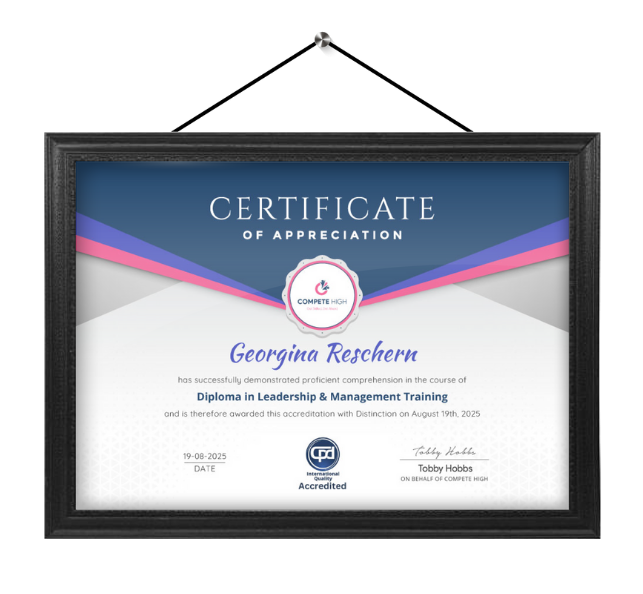
Celebrate your achievement with a CPD-IQ accredited certificate from Compete High! Perfect for showcasing your skills, boosting your career, and enhancing your professional profile. Choose the format that works best for you: PDF Certificate (£9.99) – Download instantly to add to your portfolio, résumé, LinkedIn, or share on social media. Printed Hard Copy (£29.99) – A beautifully designed certificate delivered to your door, ready to proudly display in your office or home. Both PDF & Printed Hard Copy (£31.99) – Get the best of both worlds!
Order Now