Electrical Safety Level 3
- Lifetime Access
- All Levels
- PDF Certificate
Learn with Confidence











Overview
Electrical Safety Level 3
Electrical Safety Level 3 is an electrical safety course designed to develop knowledge of safe practices when working around electrical systems, equipment and power transmission. Learners explore how to establish an effective electrical safety programme, inspect equipment, use protection and clothing, understand the physiological effects of electricity and follow electrical safety rules. The course also covers safe work practices, electrical equipment, accident and injury prevention, functional safety for electric power transmission and risk assessment. This online electrical safety training provides a structured foundation for learners seeking greater awareness of workplace electrical hazards, safety procedures and risk management in electrical environments.
- Effective Electrical Safety Programmes
- Equipment Inspection, Protection and Clothing
- Physiological Effects of Electricity
- Electrical Safe Work Practices
- Risk Assessment
Course Overview
Electrical Safety Level 3 provides foundational knowledge for learners interested in workplace electrical safety, electrical safety training and risk management. The course examines how organisations can establish an effective electrical safety programme and how equipment inspection, protection and appropriate clothing contribute to safer working environments. Learners also explore the physiological effects of electricity, electrical safety rules, safe work practices, accident and injury prevention, electrical equipment and functional safety for electric power transmission. Risk assessment forms an important part of the curriculum, helping learners understand how electrical hazards can be considered within a structured safety approach. This electrical safety course may be useful for workers, supervisors, managers and learners involved in construction, engineering, maintenance, manufacturing or other environments where electrical equipment is present. It provides awareness-level knowledge rather than authorising learners to carry out electrical work. Specific electrical occupations require appropriate technical qualifications, practical competence and compliance with relevant workplace requirements. It can complement further occupational training.
Description
This electrical safety training course follows a structured progression from establishing an effective safety programme to understanding electrical hazards, protective measures and safe working practices. Learners examine equipment inspection, protection and clothing before exploring the physiological effects of electricity and key electrical safety rules. The curriculum then addresses safe work practices planning, electrical equipment, accident and injury prevention, functional safety for electric power transmission and risk assessment. The course provides broad theoretical knowledge that can support awareness of electrical hazards and safer workplace decision-making. It is relevant to learners seeking online electrical safety training and foundational workplace safety knowledge around electrical environments.
Course Curriculum
Module 1: Establishing an Effective Electrical Safety Program
This module introduces the principles involved in establishing an effective electrical safety programme and provides a foundation for managing electrical safety within a workplace.
Main learning topics: Electrical safety programmes; safety management; workplace electrical safety; electrical safety planning.
Module 2: Equipment Inspection, Protection, and Clothing
This module focuses on equipment inspection and protective measures, including the importance of appropriate protective clothing when working around electrical hazards.
Main learning topics: Equipment inspection; equipment protection; protective clothing; electrical hazard protection.
Module 3: Physiological Effects of Electricity
This module examines the effects electricity can have on the human body and develops awareness of electrical hazards and potential injuries.
Main learning topics: Physiological effects; electrical hazards; electrical injuries; effects of electricity.
Module 4: Electrical Safety Rules
This module introduces electrical safety rules and their role in supporting safer practices when working around electrical systems and equipment.
Main learning topics: Electrical safety rules; safe behaviour; workplace safety requirements; electrical hazards.
Module 5: Electrical Safe Work Practices Plan
This module explores the development and importance of an electrical safe work practices plan for managing electrical work and associated hazards.
Main learning topics: Safe work practices; electrical safety planning; work practices plan; hazard management.
Module 6: Electrical Equipment
This module examines electrical equipment within the context of safety and helps learners develop greater awareness of equipment-related electrical hazards.
Main learning topics: Electrical equipment; equipment safety; electrical hazards; safe equipment use.
Module 7: Accident and Injury Prevention and Procedures
This module focuses on preventing electrical accidents and injuries and introduces procedures associated with electrical safety incidents.
Main learning topics: Accident prevention; injury prevention; safety procedures; electrical incidents.
Module 8: Functional Safety for Electric Power Transmission
This module introduces functional safety considerations associated with electric power transmission and develops awareness of safety within power transmission environments.
Main learning topics: Functional safety; electric power transmission; transmission safety; electrical systems.
Module 9: Risk Assessment
This module explores risk assessment and its importance when identifying and considering electrical hazards within workplace environments.
Main learning topics: Risk assessment; electrical hazards; risk management; workplace safety.
Who Is This Course For?
Electrical Safety Level 3 is suitable for learners who want to develop knowledge of electrical hazards, workplace electrical safety and safe working practices. It may be useful for employees, supervisors, managers and individuals working in environments where electrical equipment or systems are present.
The course can be relevant to people working in construction, engineering, manufacturing, maintenance, facilities management and industrial environments. It may also suit learners searching for an electrical safety awareness course, electrical safety training online or power tool safety training who want to strengthen their general understanding of electrical safety.
Workers whose duties involve electrical installation, maintenance, inspection or repair should understand that this course is not a substitute for the technical qualifications, supervised practical training or competency requirements applicable to their occupation. The National Careers Service notes that electricians require practical workplace experience and further on-the-job training to become fully qualified.
Requirements
No formal entry requirements have been supplied for Electrical Safety Level 3. Learners should therefore not assume that specific GCSEs, A levels, previous electrical qualifications, professional registration or workplace experience are required to study the course.
An interest in workplace safety, electrical hazards and risk assessment may be helpful, particularly for learners approaching electrical safety for the first time. However, this is a recommendation rather than a formal entry requirement.
The course provides safety knowledge and awareness. It should not be interpreted as a licence, authorisation or standalone technical qualification for carrying out electrical installation, maintenance, testing or repair work.
Skills You Can Develop
Electrical safety awareness — Develop knowledge of electrical hazards, safety rules and safer workplace practices.
Equipment inspection awareness — Understand the importance of inspecting electrical equipment and considering appropriate protection.
Protective equipment awareness — Develop knowledge of protection and clothing relevant to electrical safety.
Hazard recognition — Improve your ability to recognise electrical hazards and potential sources of injury.
Safe work planning — Develop awareness of planning safe work practices around electrical environments.
Accident prevention — Understand principles associated with preventing electrical accidents and injuries.
Risk assessment — Develop foundational knowledge of assessing electrical risks within workplace environments.
Safety programme awareness — Understand key considerations involved in establishing an effective electrical safety programme.
Power transmission safety awareness — Develop introductory knowledge of functional safety in electric power transmission.
Learning Outcomes
By completing the course, learners should be able to:
- Understand the principles involved in establishing an effective electrical safety programme.
- Identify key considerations when inspecting and protecting electrical equipment.
- Recognise the importance of appropriate protective clothing in electrical safety.
- Explain the potential physiological effects of electricity.
- Describe important electrical safety rules and their purpose.
- Explain the principles of an electrical safe work practices plan.
- Identify electrical equipment-related hazards and safety considerations.
- Recognise approaches to electrical accident and injury prevention.
- Describe functional safety considerations associated with electric power transmission.
- Apply foundational risk assessment concepts when considering electrical workplace hazards.
Career Paths
Electrician
Typical UK Salary: £26,000 starter to £45,000 experienced.
How the course is relevant: The curriculum develops awareness of electrical safety rules, equipment, hazards, safe work practices, accident prevention and risk assessment. This knowledge may complement an electrician’s wider training, but the course does not itself qualify someone as an electrician. The National Careers Service states that electricians need practical workplace experience and further on-the-job training to become fully qualified.
Electrical Engineering Technician
Typical UK Salary: £24,000 starter to £48,000 experienced.
How the course is relevant: Electrical engineering technicians install, repair and maintain electrical equipment, systems and controls. Knowledge of electrical safety, equipment protection, safe work practices and risk assessment can provide useful supporting knowledge, although additional technical education, practical experience and role-specific training are required.
Electrical Engineer
Typical UK Salary: £27,000 starter to £58,000 experienced.
How the course is relevant: Electrical engineers work with electrical systems, machinery and equipment across multiple industries. Electrical safety, risk assessment, equipment safety and power transmission are relevant subject areas, but professional electrical engineering roles require additional education and technical training.
Electricity Distribution Worker
Typical UK Salary: £23,000 starter to £42,000 experienced.
How the course is relevant: Electricity distribution workers maintain and repair power lines and cables connecting homes and businesses to the national grid. The course’s coverage of electrical safety, risk assessment and functional safety for electric power transmission provides relevant foundational awareness, but additional specialist training and practical competence are required for this type of work.
Electricity Generation Worker
Typical UK Salary: £24,000 starter to £35,000 experienced.
How the course is relevant: Electricity generation workers operate and maintain equipment in power stations. Knowledge of electrical safety, equipment, accident prevention and risk assessment may provide useful background for learners exploring this environment, but role-specific technical training and workplace competence remain necessary.
Salary figures are indicative UK figures and are not guaranteed earnings. Actual salaries vary according to experience, location, employer, responsibilities and the specific occupation.
FAQs
What is an Electrical Safety Level 3 course?
Electrical Safety Level 3 is an electrical safety course covering electrical safety programmes, equipment inspection, protection, electrical hazards, safe work practices, accident prevention, power transmission safety and risk assessment.
What does an electrical safety course cover?
This course covers nine modules, including electrical safety programmes, equipment inspection and protection, physiological effects of electricity, safety rules, safe work practices, electrical equipment, accident prevention, power transmission safety and risk assessment.
Is this an online electrical safety training course?
The course provides online theoretical learning about electrical safety. It should not be treated as a replacement for practical electrical training or occupational competency requirements where these are required.
Who can benefit from electrical safety training?
Workers, supervisors, managers and learners involved in construction, engineering, manufacturing, maintenance, facilities and other workplaces where electrical equipment is present may find electrical safety training useful.
Does this course qualify me to work as an electrician?
No. The course provides electrical safety knowledge but does not by itself qualify someone to work as an electrician. The National Careers Service states that electricians require practical workplace experience and further training to become fully qualified.
Course Content
Advanced Electrical Safety Module 1 – Establishing an Effective Electrical Safety Program
-
Establishing an Effective Electrical Safety Program
00:00
Advanced Electrical Safety Module 2 – Equipment Inspection, Protection, and Clothing
Advanced Electrical Safety Module 3 – Physiological Effects of Electricity
Advanced Electrical Safety Module 4 – Electrical Safety Rules
Advanced Electrical Safety Module 5 – Electrical Safe Work Practices Plan
Advanced Electrical Safety Module 6 – Electrical Equipment
Advanced Electrical Safety Module 7 – Accident and Injury Prevention and Procedures
Advanced Electrical Safety Module 8 – Functional Safety for Electric Power Transmission
Advanced Electrical Safety Module 9 – Risk Assessment

Hear from Our Successful Learners


The experience has been excellent from the start to the present. The support team is proactive and always helpful with any queries or requests.

I've taken several courses through Reed and have been completely satisfied with each one. The pricing is outstanding.

I've completed numerous courses through Reed and have been fully satisfied with each one. The courses are excellent.

I'm truly impressed by One Education's remarkable ability to understand its learners and go the extra mile for them.

I had been searching for a Level 3 course for a while—it felt like mission impossible. Discovering that Reed offers a wide range of career-focused providers was a pleasant surprise.

The course was incredibly insightful and easy to navigate. I truly enjoyed it—thank you so much.


Booking was simple and the course content was clear and well structured from day one.

Great value for money and the certificate arrived quickly after I finished my assessment.

Customer support answered my questions the same day. Would definitely recommend to a friend.

Flexible learning that fit around my job. The video lessons were easy to follow.

Second course I've taken with them now. Consistent quality every time.

Clear instructions, fair pricing, and the exam prep really helped me pass first time.
Frequently Asked Questions
Get Your Certificate Today
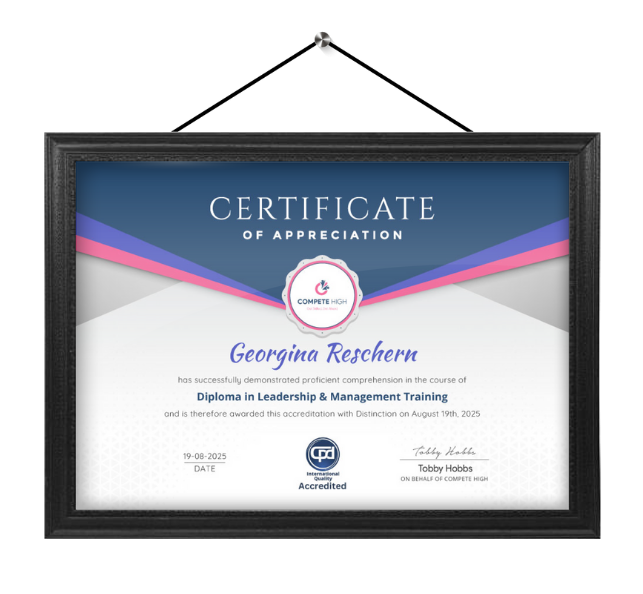
Celebrate your achievement with a CPD-IQ accredited certificate from Compete High! Perfect for showcasing your skills, boosting your career, and enhancing your professional profile. Choose the format that works best for you: PDF Certificate (£9.99) – Download instantly to add to your portfolio, résumé, LinkedIn, or share on social media. Printed Hard Copy (£29.99) – A beautifully designed certificate delivered to your door, ready to proudly display in your office or home. Both PDF & Printed Hard Copy (£31.99) – Get the best of both worlds!
Order Now