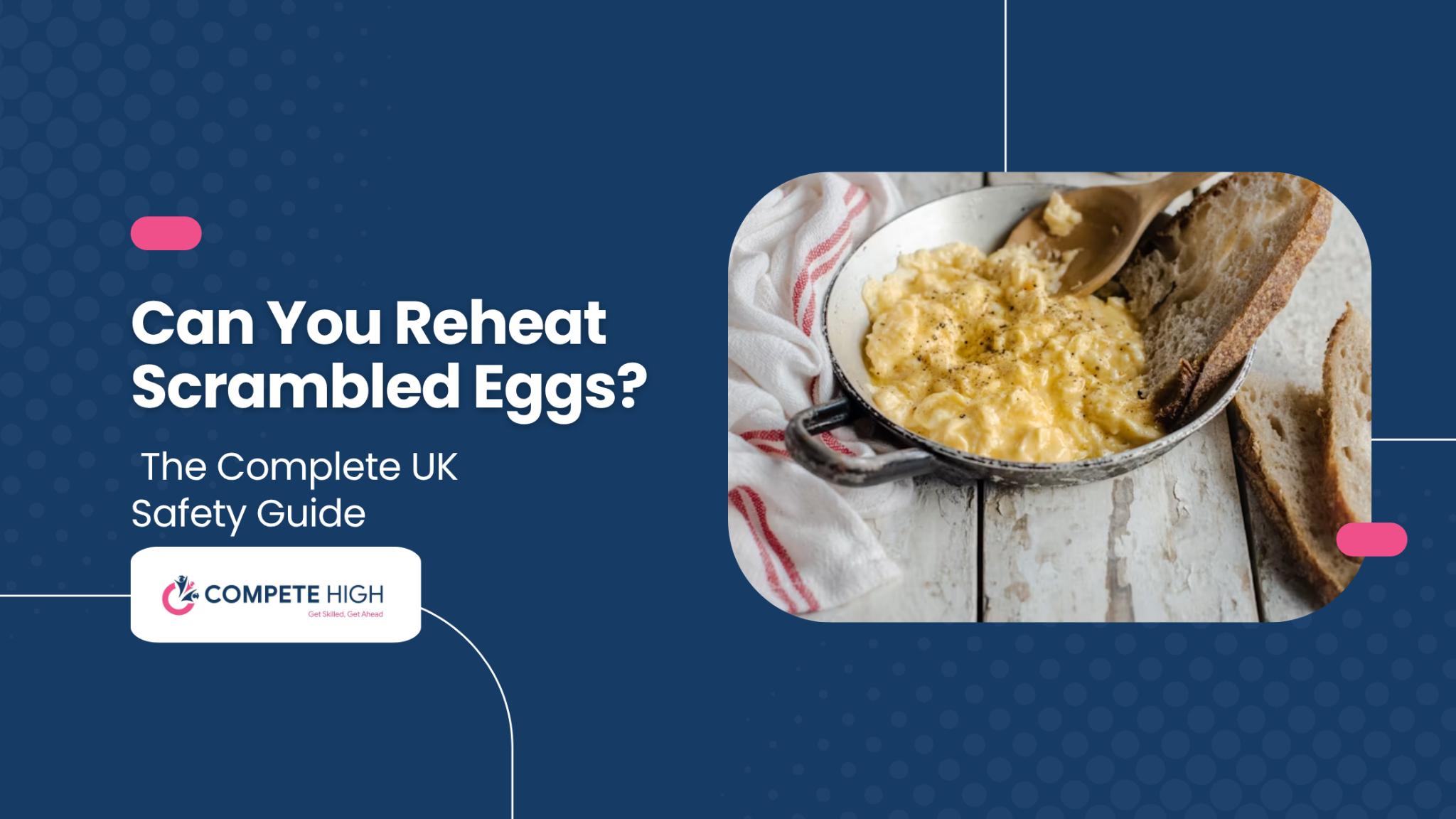
Can you reheat scrambled eggs? Yes, you can reheat scrambled eggs, and it is perfectly safe to do so, provided you follow a few straightforward rules for storage and reheating. The bigger question is not whether you can reheat them, but how to do it without ending up with rubbery, dry eggs.
Quick Overview
From a food safety perspective, can you reheat scrambled eggs depends mainly on correct storage and avoiding repeated reheating, as advised by the UK Food Standards Agency (FSA). Leaving eggs at room temperature for too long or reheating more than once increases the risk of bacterial growth.
Whether you are reheating leftovers the next day or preparing food in advance, this guide explains everything you need to know, including:
✅ How to safely reheat scrambled eggs using the microwave, stovetop, oven, air fryer, or hot water bath
✅ Key food safety rules such as correct refrigeration, safe storage times, and reheating only once
✅ Common mistakes to avoid, including leaving eggs at room temperature too long or reheating unevenly
Scrambled eggs are a breakfast staple across the UK, but they are also a high-protein, perishable food that the Food Standards Agency (FSA) classifies as high risk if not stored and handled correctly. That means proper food safety practices matter—not only to reduce the risk of foodborne illness, but also to preserve the best possible texture and flavour when you come back to them the next day.
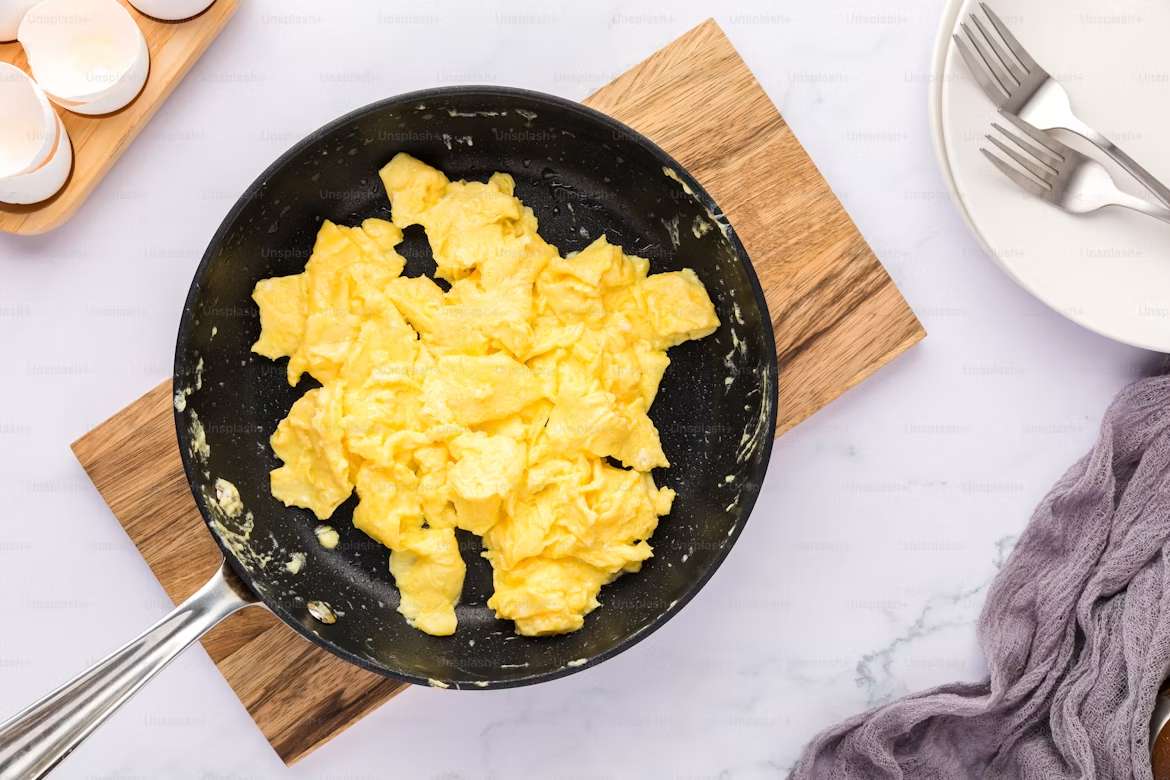
This guide explains everything you need to know, including food safety recommendations from the FSA and NHS, the best methods for reheating scrambled eggs, how long they keep in the fridge and freezer, and practical advice for meal preppers, parents preparing food for babies, and anyone reheating scrambled eggs with added ingredients such as cottage cheese.
1. Can You Reheat Scrambled Eggs? The Short Answer
Yes — you can reheat scrambled eggs safely once, provided they were fully cooked initially, cooled properly, and refrigerated within two hours of cooking. They should also be stored in the fridge for no more than two days.
When reheating, the UK Food Standards Agency (FSA) advises that food must be heated until it is steaming hot all the way through. Scrambled eggs should only be reheated once, and previously reheated eggs should never be frozen.
So, if you are wondering “can you reheat scrambled eggs”, the answer is yes — but only if correct food safety steps are followed.
To reheat scrambled eggs safely, you should:
- Cook them thoroughly before storing
- Cool and refrigerate within two hours of cooking
- Store in the fridge for no more than two days
- Reheat until steaming hot throughout
- Only reheat once
Scrambled eggs are not like rice, where the main concern is heat-resistant toxins. Instead, the primary risk comes from bacteria such as Salmonella, which can multiply if eggs are left at room temperature or stored incorrectly.
When handled properly, leftover scrambled eggs can be a safe and convenient meal-prep option.
The main challenge with reheating scrambled eggs is not safety, but texture. Egg proteins are sensitive to heat, and overheating causes them to tighten and release moisture, leading to dry or rubbery eggs. Fortunately, using the correct reheating method can significantly reduce this.
This also answers a common follow-up question: can you reheat scrambled eggs in the microwave nicely — yes, but only if you use gentle heat and short intervals.
2. UK Food Safety Rules You Must Know
According to the UK Food Standards Agency (FSA), reheated food must be piping hot all the way through before consumption. In practical terms, this means steaming hot, not just warm.
For food businesses in England, the legal benchmark is a core temperature of 70°C for two minutes or 75°C for 30 seconds. At home, the FSA advises reheating food until it is visibly steaming throughout.
Food should only be reheated once.
Why the one-reheat rule matters
Each time cooked food passes through the “danger zone” — between 8°C and 63°C — bacteria can multiply rapidly. Reheating multiple times increases the risk of bacterial growth before the food reaches a safe temperature again.
The FSA estimates there are around 2.4 million cases of food poisoning in the UK each year, many linked to improper food handling at home. With eggs, the main concern is Salmonella enteritidis, which may be present on or inside eggs.
British Lion eggs
The risk from UK eggs has significantly reduced due to the British Lion Code of Practice, which includes vaccination of laying hens against Salmonella. The FSA confirms that British Lion eggs are safe even for vulnerable groups when eaten lightly cooked or runny.
However, when reheating scrambled eggs, the focus should still be on ensuring they are heated thoroughly to a safe internal temperature, regardless of egg type.
The danger zone
- Below 8°C — bacteria multiply very slowly (safe refrigeration)
- 8°C to 63°C — danger zone where bacteria multiply rapidly
- Above 63°C — bacteria are killed; reheated food should reach at least this level
3. How to Store Scrambled Eggs Properly
How to store scrambled eggs: Cool within two hours, transfer to a shallow airtight container, refrigerate at 5°C or below, and consume within two days.
When considering can you reheat scrambled eggs, proper storage is essential for both food safety and quality. Scrambled eggs should be cooled as quickly as possible after cooking — ideally within two hours — and transferred to a shallow, airtight container before refrigeration at 5°C or below.
They should be consumed within two days. Do not leave scrambled eggs at room temperature for more than two hours, as this increases the risk of bacterial growth.
Cooked scrambled eggs can also be frozen for up to three months, although the texture will change once thawed.
Cooling and chilling
Rapid cooling is important when asking can you reheat scrambled eggs safely later. Spreading eggs into a shallow container increases surface area and helps them cool evenly and quickly.
Once cooled, seal the container and refrigerate immediately. Avoid placing large or deep containers of hot eggs directly into the fridge, as this can raise the internal fridge temperature and potentially affect other foods.
Fridge lifespan
When thinking about can you reheat scrambled eggs the next day, it is important to note that cooked scrambled eggs will safely last up to 2 days in the fridge at 5°C or below.
Freezer lifespan
Scrambled eggs can be frozen for up to 3 months. However, freezing and thawing can alter texture, often making eggs slightly watery or spongy.
If you are considering can you reheat scrambled eggs the next day or later from frozen, it is best to use them in dishes such as wraps, breakfast muffins, or egg fried rice rather than eating them plain.
Thaw frozen scrambled eggs in the fridge overnight. Never thaw at room temperature.
One reheat only
Once scrambled eggs have been reheated, they must be eaten immediately. Do not return them to the fridge for a second reheating cycle. The Food Standards Agency (FSA) guidance is clear that food should only be reheated once.
This is especially important when evaluating can you reheat scrambled eggs safely, as repeated cooling and reheating increases food safety risks.
4. How to Reheat Scrambled Eggs: Best Methods
When considering can you reheat scrambled eggs, the method used plays a major role in both safety and texture.

Stovetop — Best for Texture
Reheating scrambled eggs in a pan on the hob gives the best results because it allows full control over heat.
When asking can you reheat scrambled eggs, the stovetop method is widely considered the most reliable option for maintaining moisture and texture.
Use low to medium-low heat with a small knob of butter or a splash of milk, stirring frequently to prevent drying.
How to reheat scrambled eggs on the stovetop:
- Remove eggs from the fridge and allow them to sit for a few minutes
- Heat a non-stick pan on low to medium-low heat
- Add butter or a small splash of milk or cream
- Add scrambled eggs and stir gently but continuously
- Heat until steaming hot throughout
- Serve immediately
This method works well because gentle heat prevents proteins from tightening too quickly, which is key when considering can you reheat scrambled eggs without ruining texture.
Microwave — Fastest Method
Can you reheat scrambled eggs in the microwave? Yes — and this is one of the most commonly used methods.
If you are asking can you reheat scrambled eggs the next day, the microwave remains a safe and effective option provided proper storage has been followed.
Place eggs in a microwave-safe container, cover loosely, and heat in short intervals.
How to reheat scrambled eggs in the microwave:
- Place eggs in a microwave-safe bowl
- Add a small splash of milk or water
- Cover loosely with a lid or damp paper towel
- Heat at 50–60% power for 20–30 seconds
- Stir and repeat in intervals until steaming hot
- Allow to stand for 30 seconds before eating
Microwaves heat unevenly, so stirring is essential to avoid cold spots.
When considering can you reheat scrambled eggs in the microwave, medium power is recommended over full power to prevent rubbery texture.
Air Fryer
Can you reheat scrambled eggs in the air fryer? Yes, but it is not the most suitable method.
When people search can you reheat scrambled eggs in the air fryer, it is important to understand that air fryers use dry circulating heat, which can easily dry out eggs.
If used, set the air fryer to a low temperature (120–130°C), place eggs in an oven-safe dish, cover with foil, and check frequently. Reheating usually takes 5–8 minutes.
For best results, the air fryer is more suitable for structured egg dishes such as frittatas or egg muffins rather than loose scrambled eggs.
Oven
Can you reheat scrambled eggs in the oven? Yes, but this method is best for larger portions.
When considering can you reheat scrambled eggs the next day in bulk, the oven is a practical option for batch reheating.
Place eggs in an oven-safe dish, add a splash of milk, cover tightly with foil, and heat at 150–160°C for 10–15 minutes until steaming hot throughout.
Sous Vide / Hot Water Bath — Gentlest Method
This method is the most gentle and produces minimal texture change.
If you are exploring can you reheat scrambled eggs while preserving texture, sous vide is one of the best techniques.
Seal eggs in a heat-safe bag and submerge in hot water at 74–80°C for 5–10 minutes, ensuring even heating.
Crock Pot / Slow Cooker
Can you reheat scrambled eggs in a crock pot? Technically yes, but it is not recommended.
When considering can you reheat scrambled eggs safely in a slow cooker, the main issue is inconsistent heat distribution and slower warming times, which may not meet safe temperature guidelines quickly enough.
For safety and quality, stovetop or microwave methods are preferred.
5. Can You Reheat Scrambled Eggs the Next Day?
Yes — scrambled eggs can be safely reheated the next day, as long as they were properly cooled and refrigerated within two hours of cooking, stored at 5°C or below, and consumed within two days.
When considering can you reheat scrambled eggs, the answer remains yes provided food safety guidance is followed. Reheat until steaming hot all the way through and eat immediately.
Reheating scrambled eggs the next morning is a common and practical meal-prep method. Cooking in batches and using leftovers within two days is safe when handled correctly in line with UK Food Standards Agency (FSA) guidance.
From a quality perspective, can you reheat scrambled eggs the next day often comes down to texture. Eggs may become slightly firmer after refrigeration, but adding a small splash of milk and reheating gently helps restore moisture.
6. Can You Reheat Scrambled Eggs from the Fridge?
Yes — and this is the recommended and safest method. When asking can you reheat scrambled eggs from the fridge, the correct approach is to reheat them directly without leaving them at room temperature.
Do not allow scrambled eggs to sit out to “warm up”, as this increases time spent in the bacterial growth danger zone (8°C–63°C).
Cold eggs will naturally take slightly longer to heat through, but this is expected and safe. The key requirement is that they become steaming hot throughout before eating.
When considering can you reheat scrambled eggs from the fridge, always ensure they are reheated only once and consumed immediately.
7. Can You Reheat Scrambled Eggs for a Baby?
Yes — but extra care is required. When asking can you reheat scrambled eggs for baby, the NHS and UK public health guidance recommend strict food safety handling.
Reheat until steaming hot throughout, allow to cool before serving, never reheat more than once, and discard any uneaten portions.
Scrambled eggs can be reheated for babies, but they are among the more sensitive food groups due to increased vulnerability to foodborne illness.
Key NHS-style safety guidance includes:
- Cool cooked food within 1–2 hours
- Refrigerate at 5°C or below
- Consume within 24–48 hours
- Do not reheat more than once
- Stir thoroughly when microwaving to avoid hot spots
- Discard leftover food after feeding
When evaluating can you reheat scrambled eggs for baby, hygiene and temperature control are more important than convenience.
Egg allergy note: Eggs are a common allergen in children. When introducing scrambled eggs, do so gradually and monitor for reactions.
8. Can You Reheat Scrambled Eggs with Cottage Cheese?
Yes — scrambled eggs with cottage cheese can be reheated safely when handled correctly. When considering can you reheat scrambled eggs with cottage cheese, the same food safety rules apply: refrigerate within two hours, store at 5°C or below, and reheat only once.
Cottage cheese adds protein and creaminess, but it may release a small amount of liquid when reheated. This is normal and not a safety concern. (food.gov.uk)
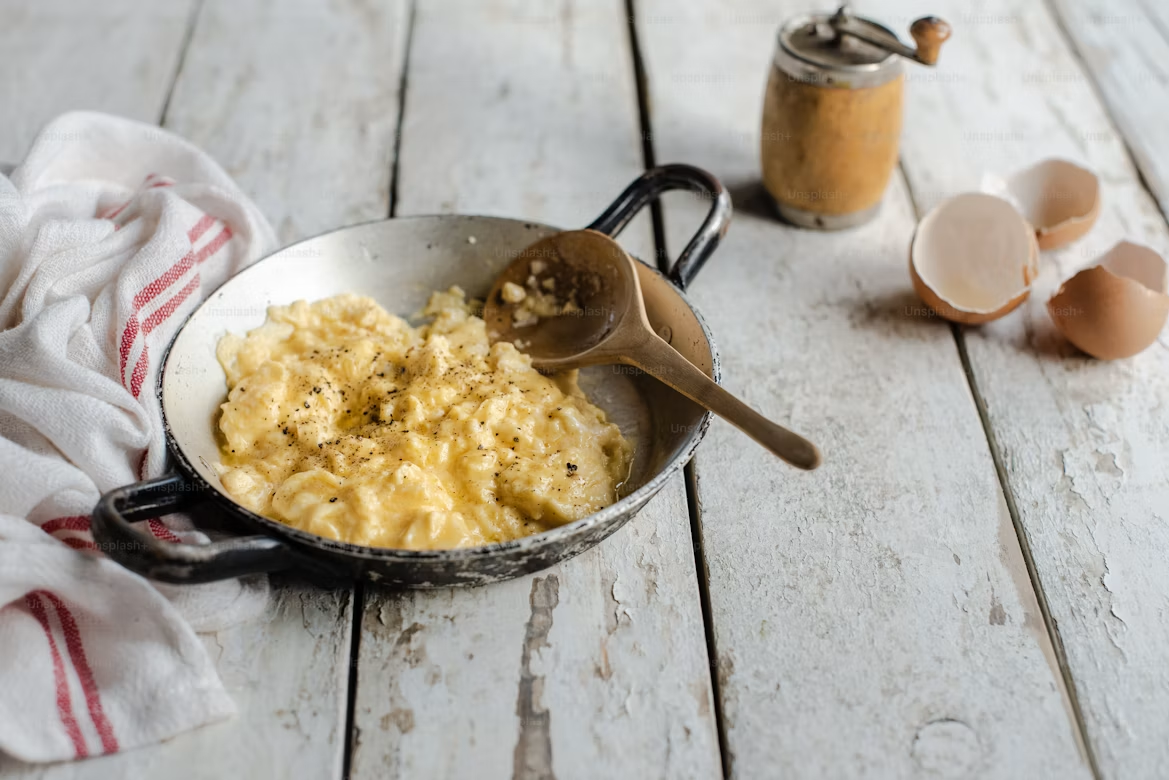
Gently stir during reheating to redistribute moisture evenly.
Because can you reheat scrambled eggs with cottage cheese involves dairy, prompt refrigeration is especially important to maintain safety and quality.
9. Reheating Scrambled Eggs: Method Comparison Table
| Method | Time | Best For | Texture Result | Safety Notes |
| Stovetop | 2–3 mins | Single servings | Best — moist and soft | Low heat, stir constantly |
| Microwave | 60–90 secs | Quick reheating | Good if done carefully | Medium power, stir between bursts |
| Air Fryer | 5–8 mins | Structured egg dishes | Can dry out loose eggs | Cover with foil, low temp (120–130°C) |
| Oven | 10–15 mins | Large batches | Good for baked dishes | Cover with foil, 150–160°C |
| Hot water bath | 5–10 mins | Texture preservation | Best overall texture | Maintain 74–80°C water temp |
| Crock pot | Not recommended | Not ideal | Poor — uneven heating | Risk of slow heating in danger zone |
All methods must ensure eggs are steaming hot throughout. Reheat only once.
10. Key Rules at a Glance
When asking can you reheat scrambled eggs, UK food safety guidance from the FSA can be summarised as follows:
Safety First
Heat scrambled eggs until visibly steaming throughout. Ideally, ensure a core temperature of 70°C for 2 minutes or 75°C for 30 seconds.
Shelf Life
- Fridge: up to 2 days at 5°C or below
- Freezer: up to 3 months (quality affected)
- Room temperature: max 2 hours
One Reheat Only
Scrambled eggs must only be reheated once. This applies whether you are asking can you reheat scrambled eggs from fridge or from frozen.
Avoid Overcooking
Low and slow heating preserves texture and prevents rubbery results.
Cool Quickly
Refrigerate within two hours of cooking in a shallow container.
11. Frequently Asked Questions
Q1: Can you reheat scrambled eggs safely?
Yes. When asking can you reheat scrambled eggs, it is safe if they were properly cooked, cooled within two hours, stored at 5°C or below, and reheated only once until steaming hot.
Q2: Can you reheat scrambled eggs in the microwave?
Yes. When considering can you reheat scrambled eggs in the microwave the next day, use medium power (50–60%), heat in short intervals, and stir frequently to ensure even heating.
Q3: Can you reheat scrambled eggs the next day?
Yes. Can you reheat scrambled eggs the next day is a common meal-prep question, and it is safe within two days of cooking if properly stored.
Q4: Can you reheat scrambled eggs in the air fryer?
Yes, but it is not ideal. When evaluating can you reheat scrambled eggs in the air fryer, note that dry circulating heat can make eggs rubbery unless carefully covered and heated at low temperature.
Q5: Can you reheat scrambled eggs for a baby?
Yes, but with strict care. Can you reheat scrambled eggs for baby requires full reheating to steaming hot, followed by cooling before serving, and never reheating more than once.
Q6: Can you reheat scrambled eggs with cottage cheese?
Yes. Can you reheat scrambled eggs with cottage cheese safely follows the same storage and reheating rules as plain scrambled eggs.
Q7: Can you reheat scrambled eggs in the microwave the next day?
Yes. Can you reheat scrambled eggs in the microwave the next day is safe if eggs are refrigerated properly and reheated evenly.
Q8: Can you reheat scrambled eggs from the fridge?
Yes — and this is the correct method. Can you reheat scrambled eggs from the fridge should always be done directly without leaving food at room temperature.
Q9: Can you reheat scrambled eggs in the oven?
Yes. When asking can you reheat scrambled eggs in the oven, use foil to retain moisture and heat until steaming hot throughout.
Q10: Can you reheat scrambled eggs in a crock pot?
Technically yes, but not recommended. Can you reheat scrambled eggs in a crock pot is unsafe if heating is too slow or uneven, increasing time in the danger zone.

12. Conclusion
The answer to can you reheat scrambled eggs is yes — safely and practically — when proper UK food safety guidelines are followed.
Whether you are asking can you reheat scrambled eggs from fridge, can you reheat scrambled eggs the next day, or even can you reheat scrambled eggs for baby, the core rules remain the same: refrigerate quickly, store correctly, reheat once, and ensure the food is steaming hot throughout.
According to the UK Food Standards Agency (FSA), leftovers should always be reheated only once, and proper temperature control is essential to reduce the risk of foodborne illness.
When done correctly, scrambled eggs remain a safe, convenient, and nutritious option for next-day consumption.
Sources: Food Standards Agency (food.gov.uk); NHS (nhs.uk, nhs.uk/best-start-in-life); Food Standards Scotland; Praxis42 food safety guidance.