Employability Soft Skills

- Lifetime Access
- All Levels
- PDF Certificate
Learn with Confidence









Overview
Employability Soft Skills
Employability Soft Skills is an employability skills course designed to help learners understand and develop workplace skills. The curriculum covers self-improvement, motivation, assertiveness, confidence, communication, time management and a growth mindset. It also explores leadership, critical thinking, problem solving, teamwork, negotiation, stress management, decision-making, influencing, adaptability, conflict resolution, planning, organisation, creativity and innovation. These areas reflect employability skills examples that can support learners across different workplaces and career stages. The course is relevant to people seeking to strengthen their professional capabilities, improve workplace interactions and build a broader foundation of transferable skills for employment and career development in work.
Key topics covered:
- Self-improvement, motivation, assertiveness, confidence and self-esteem
- Communication, time management and growth mindset
- Leadership, critical thinking, problem solving and teamwork
- Negotiation, stress management, decision-making and persuasion
- Adaptability, conflict resolution, planning, organisation, creativity and innovation
Course Overview
Employability skills are the transferable capabilities people use to work effectively, communicate with others, solve problems and adapt to changing workplace demands. This employability skills course brings together personal development and workplace-focused topics, including communication, leadership, teamwork, negotiation, critical thinking, decision-making, time management, adaptability and conflict resolution. The curriculum is relevant across business, administration, customer service, sales, management, hospitality and other people-focused working environments. It may be particularly useful for jobseekers, career changers, existing employees and learners preparing for greater responsibility and wider workplace challenges. Roles such as customer service assistant, sales representative, administrator and business project manager rely on combinations of communication, organisation, teamwork, problem solving and adaptability. The course can help learners understand how to improve employability skills and recognise the practical behaviours that support effective and confident workplace performance. It does not guarantee employment or replace role-specific qualifications, professional training, qualifications or experience where these are required in different workplace settings.
Description
This employability skills training programme develops personal and workplace capabilities through 18 modules. Learners begin with self-improvement and motivation before exploring assertiveness, confidence, communication, time management and growth mindset. The course then progresses into leadership, critical thinking, problem solving, teamwork, negotiation and stress management. Later modules address decision-making, influencing and persuasion, adaptability, conflict resolution, planning and organisation, creativity and innovation. This progression connects personal effectiveness with interpersonal and workplace skills, giving learners a structured way to explore employability skills and how they can be strengthened. The curriculum is designed to support practical understanding rather than promising a specific occupational outcome.
Course Curriculum
Module 1: Introduction to Self-Improvement
This module introduces self-improvement and establishes the foundation for developing personal and professional capabilities.
Main learning topics:
- Self-improvement
- Personal development
- Personal effectiveness
- Workplace development
Module 2: How to Motivate Yourself
Explore self-motivation and its importance when working towards personal and professional goals.
Main learning topics:
- Self-motivation
- Motivation
- Personal goals
- Maintaining motivation
Module 3: Grow Assertiveness
Develop awareness of assertiveness and how it can contribute to confident and effective workplace interactions.
Main learning topics:
- Assertiveness
- Confident communication
- Expressing views
- Professional interactions
Module 4: Self Confidence and Self Esteem
This module focuses on self-confidence and self-esteem as important areas of personal development.
Main learning topics:
- Self-confidence
- Self-esteem
- Personal belief
- Professional confidence
Module 5: Improve Your Communication Skills
Explore communication skills and their importance when working with colleagues, customers and other professional contacts.
Main learning topics:
- Communication skills
- Workplace communication
- Clear communication
- Interpersonal communication
Module 6: Manage Your Time Properly
Learn about effective time management and its role in organising work and responsibilities.
Main learning topics:
- Time management
- Organisation
- Managing responsibilities
- Work planning
Module 7: Cultivate Growth Mindset
This module explores the concept of a growth mindset and its relationship with personal development and learning.
Main learning topics:
- Growth mindset
- Personal development
- Learning
- Continuous improvement
Module 8: All about Leadership Skills
Explore leadership skills and their relevance to working effectively with people and taking responsibility.
Main learning topics:
- Leadership skills
- Leadership
- Responsibility
- Working with others
Module 9: Think Critically and Solve Problem
Develop awareness of critical thinking and problem-solving as important workplace capabilities.
Main learning topics:
- Critical thinking
- Problem solving
- Analysis
- Decision-making
Module 10: Learn Teamwork and Collaboration
This module focuses on teamwork and collaboration and their importance in professional environments.
Main learning topics:
- Teamwork
- Collaboration
- Working with colleagues
- Shared objectives
Module 11: Negotiate Effectively
Explore negotiation skills and their application when managing discussions, interests and workplace situations.
Main learning topics:
- Negotiation
- Communication
- Agreement
- Professional relationships
Module 12: Stress Management
Learn about stress management as part of maintaining effective personal and workplace performance.
Main learning topics:
- Stress management
- Managing stress
- Workplace wellbeing
- Personal effectiveness
Module 13: Being Competent to Decide Yourself
This module focuses on developing the ability to make decisions independently and confidently.
Main learning topics:
- Decision-making
- Independence
- Personal judgement
- Competence
Module 14: Influencing and Persuasion Skills
Explore influencing and persuasion skills and their relevance to professional communication and workplace relationships.
Main learning topics:
- Influencing
- Persuasion
- Communication
- Professional relationships
Module 15: Adaptability and Flexibility
Develop awareness of adaptability and flexibility as important capabilities for changing workplace circumstances.
Main learning topics:
- Adaptability
- Flexibility
- Workplace change
- Personal effectiveness
Module 16: Know How to Resolve Conflicts
This module introduces conflict resolution and its importance when dealing with disagreements and workplace challenges.
Main learning topics:
- Conflict resolution
- Workplace conflict
- Communication
- Problem solving
Module 17: Planning and Organizing Skills
Explore planning and organising skills that can support effective management of tasks and responsibilities.
Main learning topics:
- Planning
- Organisation
- Task management
- Work organisation
Module 18: Being Creative and Innovative
The final module explores creativity and innovation as workplace capabilities that can support new ideas and approaches.
Main learning topics:
- Creativity
- Innovation
- New ideas
- Creative thinking
Who Is This Course For?
Jobseekers
The course is relevant to jobseekers who want to understand what are employability skills and identify the personal and workplace capabilities commonly used across employment settings.
Career Changers
People changing careers can use the course to develop broader transferable skills, including communication, adaptability, teamwork, organisation, problem solving and decision-making.
Existing Employees
Employees looking to strengthen their workplace capabilities may benefit from studying areas such as leadership, negotiation, influencing, stress management and conflict resolution.
Customer Service Professionals
Customer service roles rely heavily on communication, teamwork, problem solving, negotiation and conflict resolution. The course can provide relevant foundational knowledge in these areas.
Administrators and Business Support Professionals
Administration and business support roles require organisation, planning, communication, teamwork and time management. These are directly reflected in the curriculum.
Sales Professionals
Sales-related work can involve communication, negotiation, influencing, persuasion, adaptability and relationship management. The course provides learning across several of these areas.
Aspiring Team Leaders and Managers
Learners interested in progression towards leadership responsibilities can explore leadership, communication, decision-making, negotiation, conflict resolution and teamwork.
Beginners Developing Professional Skills
The course can also suit learners who want a structured introduction to employability skills training before entering or progressing within the workplace.
Requirements
No formal entry requirements have been supplied for the Employability Soft Skills course.
The curriculum begins with Introduction to Self-Improvement and progresses through personal, interpersonal and workplace skills. Previous qualifications, professional experience, GCSEs, A levels or professional registration have not been specified as requirements.
Learners interested in improving their employability skills can therefore use the supplied curriculum as a foundation for exploring personal effectiveness and transferable workplace capabilities.
Skills You Can Develop
Self-Improvement — The opening module develops awareness of self-improvement as a foundation for personal and professional development.
Self-Motivation — The motivation module focuses on developing the ability to motivate yourself.
Assertiveness — Learners explore assertiveness as a capability for communicating confidently and effectively.
Communication — The communication module develops understanding of effective communication in professional environments.
Time Management — Learners explore how to manage time and organise responsibilities effectively.
Leadership — The leadership module introduces skills associated with taking responsibility and working effectively with others.
Critical Thinking and Problem Solving — Learners develop knowledge of critical thinking and problem-solving approaches.
Teamwork and Collaboration — The curriculum develops understanding of working collaboratively with others.
Negotiation — Learners explore negotiation as a workplace communication skill.
Decision-Making — The course addresses independent decision-making and personal judgement.
Influencing and Persuasion — Learners develop awareness of influencing and persuasion skills.
Adaptability and Flexibility — The curriculum explores responding effectively to changing circumstances.
Conflict Resolution — Learners study conflict resolution as a workplace interpersonal skill.
Planning and Organisation — Learners explore planning, organisation and effective management of responsibilities.
Creativity and Innovation — The final module develops awareness of creative and innovative thinking.
Learning Outcomes
By completing the course, learners should be able to:
- Explain the importance of self-improvement in personal and professional development.
- Describe approaches to developing self-motivation.
- Recognise the role of assertiveness, self-confidence and self-esteem in professional interactions.
- Explain the importance of effective communication and time management.
- Describe the value of a growth mindset for personal development.
- Identify key areas of leadership, critical thinking, problem solving and teamwork.
- Explain the purpose of negotiation, stress management and independent decision-making.
- Recognise how influencing and persuasion skills can contribute to workplace interactions.
- Describe the importance of adaptability, flexibility and conflict resolution.
- Identify the role of planning, organisation, creativity and innovation in professional environments.
Career Paths
The course develops transferable employability skills rather than qualifying learners for a specific occupation. The following roles have a genuine connection with the curriculum because they involve combinations of communication, organisation, teamwork, problem solving, adaptability, negotiation or leadership.
Customer Service Assistant
Typical UK Salary: £20,000 to £30,000 per year, based on the National Careers Service.
How the course is relevant:
Customer service work involves communication, teamwork, problem solving and handling customer interactions. The course covers communication, negotiation, influencing, conflict resolution and stress management, which can provide relevant foundational knowledge.
Sales Representative
Typical UK Salary: £23,000 to £50,000 per year, based on the National Careers Service.
How the course is relevant:
Sales representatives use communication, negotiation, influencing and persuasion when working with customers and businesses. These areas are directly represented in the course curriculum.
Administrator
Typical UK Salary: £21,000 to £28,000 per year for an admin assistant, according to the National Careers Service.
How the course is relevant:
Administration involves organisation, communication and managing responsibilities. The course’s time management, planning and organising, communication, teamwork and problem-solving modules can support foundational workplace knowledge relevant to administrative environments.
Customer Services Manager
Typical UK Salary: £27,000 to £50,000 per year, based on the National Careers Service.
How the course is relevant:
Customer services managers coordinate customer support operations and work with teams. The course covers leadership, communication, teamwork, negotiation, conflict resolution, decision-making and influencing, which are relevant areas of workplace development.
Business Project Manager
Typical UK Salary: £29,000 to £75,000 per year, based on the National Careers Service.
How the course is relevant:
Business project managers organise people and resources and plan work to meet objectives. The course includes planning and organising, time management, teamwork, leadership, problem solving, decision-making, adaptability and communication.
Salary figures are indicative and can vary according to location, employer, experience, responsibilities and sector. Completing this course does not guarantee employment or automatically qualify learners for any of these roles. Some positions require additional qualifications, training and/or professional experience.
FAQs
1. What are employability skills?
Employability skills are transferable skills that can help people work effectively in different professional environments. Examples include communication, teamwork, problem solving, time management, leadership, adaptability and organisation.
2. What is an employability skills course?
An employability skills course provides structured learning around transferable personal and workplace capabilities. This course covers 18 areas, including communication, leadership, teamwork, negotiation, problem solving, adaptability, planning and creativity.
3. How can I improve my employability skills?
You can improve employability skills by developing areas such as communication, assertiveness, time management, teamwork, critical thinking, problem solving, negotiation, adaptability and leadership. These areas are covered throughout this course.
4. What are some examples of employability skills?
Examples include communication, teamwork, leadership, problem solving, critical thinking, negotiation, time management, adaptability, conflict resolution, planning, organisation, creativity and innovation.
5. What will I learn on the Employability Soft Skills course?
You will study self-improvement, motivation, assertiveness, confidence, communication, time management, growth mindset, leadership, critical thinking, problem solving, teamwork, negotiation, stress management, decision-making, persuasion, adaptability, conflict resolution, planning, organisation, creativity and innovation.
6. Who should take an employability skills course?
The course can be useful for jobseekers, career changers, existing employees, aspiring team leaders and learners who want to strengthen transferable workplace skills. It is also relevant to people interested in business, administration, customer service and sales environments.
7. Which careers can employability skills support?
Employability skills can be relevant across many occupations. Based on this curriculum, relevant areas include customer service, administration, sales and management, where communication, organisation, teamwork, problem solving and adaptability are commonly useful.
8. Why are communication skills important for employability?
Communication skills help people interact with colleagues, customers and other professional contacts. This course includes a dedicated module on improving communication skills alongside related topics such as assertiveness, negotiation, influencing and conflict resolution.
9. Are leadership skills employability skills?
Yes. Leadership is one of the skills areas covered by this course. The curriculum includes a dedicated module, All about Leadership Skills, alongside teamwork, communication, decision-making and influencing.
10. Can employability skills help with career progression?
Developing transferable skills can support professional development because capabilities such as communication, leadership, teamwork, problem solving, organisation and adaptability are relevant across many workplace environments. However, career progression also depends on the specific role, experience, qualifications and employer requirements.
Course Content
Module 1 – Introduction to Self-Improvement
-
Introduction to Self-Improvement
00:00
Module 2 – How to Motivate Yourself
Module 3 – Grow Assertiveness
Module 4 – Self Confidence and Self Esteem
Module 5 – Improve Your Communication Skills
Module 6 – Manage Your Time Properly
Module 7 – Cultivate Growth Mindset
Module 8 – All about Leadership Skills
Module 9 – Think Critically and Solve Problem
Module 10 – Learn Teamwork and Collaboration
Module 11 – Negotiate Effectively
Module 12 -Stress Management
Module 13 – Being Competent to Decide Yourself
Module 14 – Influencing and Persuasion Skills
Module 15 – Adaptability and Flexibility
Module 16 – Know How to Resolve Conflicts
Module 17 – Planning and Organizing Skills
Module 18 – Being Creative and Innovative

Hear from Our Successful Learners


The experience has been excellent from the start to the present. The support team is proactive and always helpful with any queries or requests.

I've taken several courses through Reed and have been completely satisfied with each one. The pricing is outstanding.

I've completed numerous courses through Reed and have been fully satisfied with each one. The courses are excellent.

I'm truly impressed by One Education's remarkable ability to understand its learners and go the extra mile for them.

I had been searching for a Level 3 course for a while—it felt like mission impossible. Discovering that Reed offers a wide range of career-focused providers was a pleasant surprise.

The course was incredibly insightful and easy to navigate. I truly enjoyed it—thank you so much.


Booking was simple and the course content was clear and well structured from day one.

Great value for money and the certificate arrived quickly after I finished my assessment.

Customer support answered my questions the same day. Would definitely recommend to a friend.

Flexible learning that fit around my job. The video lessons were easy to follow.

Second course I've taken with them now. Consistent quality every time.

Clear instructions, fair pricing, and the exam prep really helped me pass first time.
Frequently Asked Questions
Get Your Certificate Today
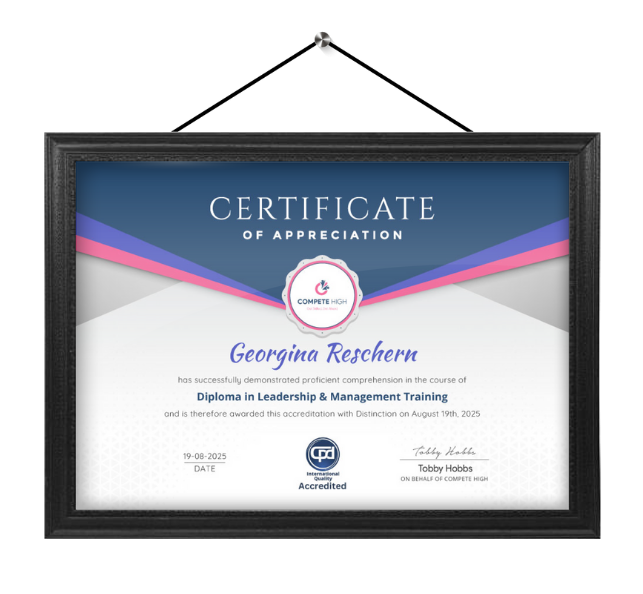
Celebrate your achievement with a CPD-IQ accredited certificate from Compete High! Perfect for showcasing your skills, boosting your career, and enhancing your professional profile. Choose the format that works best for you: PDF Certificate (£9.99) – Download instantly to add to your portfolio, résumé, LinkedIn, or share on social media. Printed Hard Copy (£29.99) – A beautifully designed certificate delivered to your door, ready to proudly display in your office or home. Both PDF & Printed Hard Copy (£31.99) – Get the best of both worlds!
Order Now