Level 1, 2, 3 Designated Safeguarding Lead Training
- Lifetime Access
- All Levels
- PDF Certificate
Learn with Confidence








Overview
Overview
Level 1, 2, 3 Designated Safeguarding Lead Training
Level 1, 2, 3 Designated Safeguarding Lead Training provides foundational knowledge for learners interested in safeguarding children and supporting safer environments. The course explores child abuse, creating safe environments, identifying and reporting concerns, responding to disclosures, and supporting children affected by abuse. It is relevant to people researching what is a designated safeguarding lead, designated safeguarding lead training, DSL safeguarding training, or safeguarding lead career pathways. Learners can develop awareness of key safeguarding themes and the responsibilities associated with recognising concerns and supporting child victims. The curriculum offers an introduction to safeguarding knowledge for learners seeking professional development in child-centred environments.
- Understanding Child Abuse
- Creating Safe Environments for Children
- Identifying and Reporting Child Abuse
- Responding to Disclosures of Child Abuse
- Supporting Child Victims of Abuse
Course Overview
Level 1, 2, 3 Designated Safeguarding Lead Training introduces safeguarding knowledge for people interested in child protection, education, childcare, youth services, and other child-centred environments. Learners study the nature of child abuse, ways to create safer environments, identifying and reporting abuse, responding to disclosures, and supporting child victims. These topics are relevant to people searching for what is a designated safeguarding lead, designated safeguarding lead training online, DSL safeguarding training, or designated safeguarding lead refresher training. The course can help learners understand safeguarding concepts and develop knowledge that may be relevant to roles such as Designated Safeguarding Lead, Deputy Designated Safeguarding Lead, Safeguarding Officer, or other child-focused support positions. Current UK vacancies show that salaries vary considerably by employer, setting, location, experience, and responsibility, so this course should be viewed as foundational learning rather than a guarantee of appointment or earnings. Additional workplace training, experience, or employer-specific requirements may apply.
Description
This course develops an understanding of safeguarding children, progressing from recognising child abuse to creating safe environments and responding to concerns. Learners explore how abuse may be identified and reported, how disclosures can be handled appropriately, and how child victims may be supported. The curriculum is relevant to learners exploring designated safeguarding lead roles, safeguarding lead responsibilities, DSL safeguarding training, and designated safeguarding lead refresher training. Each module focuses on an area of safeguarding knowledge, allowing learners to build an informed foundation around child protection and safer environments. The course supports professional development without claiming regulated status or guaranteed employment.
Course Curriculum
Module 1: Understanding Child Abuse
This module introduces the subject of child abuse and provides foundational knowledge for recognising the safeguarding concerns that can affect children.
Main learning topics: Child abuse, safeguarding concerns, child protection, recognising abuse.
Module 2: Creating Safe Environments for Children
This module focuses on the importance of creating environments where children can be protected and supported.
Main learning topics: Safe environments, child safety, safeguarding, protective environments.
Module 3: Identifying and Reporting Child Abuse
This module explores the identification and reporting of child abuse, helping learners understand the importance of recognising concerns and taking appropriate reporting action.
Main learning topics: Identifying abuse, reporting child abuse, safeguarding concerns, child protection.
Module 4: Responding to Disclosures of Child Abuse
This module examines how to respond when a child discloses abuse, focusing on appropriate responses within a safeguarding context.
Main learning topics: Disclosures, responding to abuse, safeguarding responses, child protection.
Module 5: Supporting Child Victims of Abuse
This module focuses on supporting children who have experienced abuse and developing awareness of the importance of appropriate safeguarding support.
Main learning topics: Child victims, support, safeguarding, child welfare.
Who Is This Course For?
This course is suitable for learners interested in safeguarding children and developing foundational knowledge relevant to child-centred environments. It may be useful for people exploring the role of a Designated Safeguarding Lead, Deputy Designated Safeguarding Lead, Safeguarding Officer, or other safeguarding-related positions. It can also support teachers, childcare workers, youth workers, education support staff, and individuals considering careers where understanding child protection is relevant. Learners researching what is a designated safeguarding lead, DSL safeguarding training, or designated safeguarding lead refresher training may find the curriculum particularly relevant. The course should not be treated as automatically qualifying someone for a regulated role or replacing employer-specific safeguarding requirements.
Requirements
No formal entry requirements are provided in the supplied course information. The curriculum does not specify previous qualifications, GCSEs, A-levels, professional registration, work experience, or other mandatory prerequisites. Learners should therefore refer to the course provider for any current enrolment conditions not included in the supplied information. Anyone intending to undertake a specific Designated Safeguarding Lead role should also check the requirements of the relevant employer and setting, as responsibilities and expectations can vary.
Skills You Can Develop
Child Abuse Awareness — Develop knowledge of child abuse and the safeguarding concerns addressed throughout the curriculum.
Safe Environment Awareness — Understand the importance of creating safe environments for children.
Abuse Identification — Develop awareness of identifying potential child abuse concerns.
Reporting Awareness — Understand the importance of reporting child abuse within a safeguarding context.
Disclosure Response — Develop knowledge of appropriate responses to disclosures of child abuse.
Child Support Awareness — Understand key considerations when supporting child victims of abuse.
Safeguarding Knowledge — Build a broader foundation across child protection, safe environments, reporting, disclosures, and victim support.
Learning Outcomes
- Understand the fundamental subject of child abuse within a safeguarding context.
- Recognise the importance of creating safe environments for children.
- Identify key safeguarding concerns associated with child abuse.
- Explain the importance of identifying and reporting child abuse.
- Describe the main considerations involved in responding to disclosures of child abuse.
- Develop awareness of appropriate safeguarding responses to disclosures.
- Understand the importance of supporting child victims of abuse.
- Recognise the relationship between child protection and safe environments.
- Develop foundational knowledge relevant to Designated Safeguarding Lead responsibilities.
- Demonstrate an understanding of the main safeguarding topics covered across the course.
Career Paths
Designated Safeguarding Lead
Typical UK Salary: Approximately £28,000–£39,000 as an indicative average salary range reported by Tes for the DSL role; individual vacancies vary considerably.
How the course is relevant: The curriculum directly covers child abuse, creating safe environments, identifying and reporting abuse, responding to disclosures, and supporting child victims. These subjects are relevant to safeguarding-focused responsibilities. Specific employers may require additional experience, training, or qualifications.
Safeguarding Officer
Typical UK Salary: Current UK vacancies show substantial variation. For example, recent Tes listings include safeguarding-related roles around £30,000–£42,000, depending on the position, location, and working arrangement.
How the course is relevant: The course develops foundational knowledge of child abuse, reporting, disclosures, safe environments, and supporting children, which may be relevant to safeguarding support work.
Deputy Designated Safeguarding Lead
Typical UK Salary: Recent UK vacancies include examples such as £28,757–£32,079 and £32,460–£35,582, illustrating how pay varies by employer and role.
How the course is relevant: Knowledge of identifying and reporting abuse, responding to disclosures, and supporting child victims can be relevant to deputy safeguarding responsibilities. Employers may set additional requirements.
Safeguarding Manager / Operational Safeguarding Lead
Typical UK Salary: A recent UK vacancy for a Safeguarding Manager/Operational Designated Safeguarding Lead advertised £45,267–£53,440 per year.
How the course is relevant: The course provides introductory knowledge across several core safeguarding subjects, which may contribute to broader professional development. Senior safeguarding positions commonly require substantial relevant experience and employer-specific competencies.
Salary figures above are indicative examples from UK salary information and current job advertisements, not guaranteed earnings. Pay can change according to location, employer, experience, seniority, contract type, and responsibilities.
UK Safeguarding Salary Comparison Table (2026)
The following table compares indicative UK salary information with examples of advertised salaries for safeguarding-related roles. It provides a practical overview of how annual earnings may differ by responsibilities, employer, working pattern and location.
|
Safeguarding Career Role |
Indicative UK Salary Guidance |
Advertised Salary Example (2026) |
Example Employer / Source |
|
Designated Safeguarding Lead (DSL) |
£28,000–£39,000 |
£35,975–£38,381 actual annual salary; £40,958–£43,697 full-time equivalent |
Bristol Brunel Academy / Eteach |
|
Safeguarding Officer |
Approximately £30,000–£42,000 based on selected vacancy examples |
£32,870–£35,912 full-time equivalent |
Luminate Education Group / GOV.UK Teaching Vacancies |
|
Deputy Designated Safeguarding Lead (DDSL) |
Role-dependent; examples in the original salary guidance range from £28,757–£35,582 |
£35,312.86–£36,798.40 actual annual salary; £38,937–£40,575 full-time equivalent |
Harris Academy Tottenham / GOV.UK Teaching Vacancies |
|
Safeguarding Manager / Operational Designated Safeguarding Lead |
No single representative UK-wide salary range established here |
£45,267–£53,440 per annum |
St Brendan’s Sixth Form College / Indeed |
Understanding the salary information
- Indicative salary guidance: Provides general context or selected vacancy examples. It should not be interpreted as an official national pay scale for every safeguarding position.
- Actual annual salary: Represents the salary payable under the advertised working pattern, which may include term-time-only arrangements.
- Full-time equivalent (FTE): Shows the annualised salary for the full-time working pattern used by the employer and may differ from the employee’s actual earnings.
- Salary variation: Pay depends on responsibilities, geographical location, organisation type, relevant experience, qualifications and contracted working hours.
- Career development: Higher-paying safeguarding leadership positions generally require experience, relevant professional competencies and responsibilities beyond introductory safeguarding knowledge.
Salary data note: Figures reflect sources and advertised examples identified for 2026. They are not guaranteed earnings, and published vacancies, salaries and employment conditions can change. Completion of this course does not independently establish eligibility for any listed position.
FAQs
- What is a Designated Safeguarding Lead (DSL)?
A Designated Safeguarding Lead (DSL) is a person with specific responsibility for safeguarding and child protection within an organisation, particularly in educational settings. The role involves overseeing safeguarding concerns, supporting appropriate reporting and referral procedures, and helping maintain a safe environment for children. Exact responsibilities depend on the organisation and applicable safeguarding requirements.
- What does Level 1, 2, 3 Designated Safeguarding Lead Training cover?
This Designated Safeguarding Lead Training covers five core safeguarding subjects: understanding child abuse, creating safe environments for children, identifying and reporting child abuse, responding to disclosures, and supporting child victims of abuse. The modules introduce safeguarding knowledge relevant to child protection and safeguarding responsibilities in child-centred environments.
- Is this DSL safeguarding training suitable for beginners?
Yes, the course content is suitable for learners beginning their understanding of safeguarding and child protection. It introduces foundational subjects such as recognising abuse, reporting concerns and responding to disclosures. The supplied curriculum does not specify mandatory previous qualifications or professional experience, although learners should confirm any enrolment requirements with the course provider.
- What is the difference between a safeguarding lead and a Designated Safeguarding Lead?
A Designated Safeguarding Lead is a formally assigned safeguarding role with defined responsibilities within a particular setting. The term safeguarding lead may be used more broadly to describe someone overseeing safeguarding activities. In schools and colleges, the DSL role carries particular responsibilities under applicable safeguarding guidance, while terminology and duties can vary across other organisations.
- Does this course qualify me for a Designated Safeguarding Lead job?
Completing this course can help develop foundational safeguarding knowledge, but it does not automatically qualify someone for a Designated Safeguarding Lead position. Employers may require relevant professional experience, additional safeguarding training, specific qualifications and an understanding of applicable safeguarding procedures. Learners should check the requirements for their intended role.
- Can this course be used as Designated Safeguarding Lead refresher training?
The course revisits fundamental safeguarding topics, including child abuse, reporting concerns, disclosures and supporting children. These subjects may be useful for learners refreshing their safeguarding knowledge. However, the supplied course information does not confirm that it is a formally recognised DSL refresher programme or that it fulfils any employer-specific refresher training requirement.
- Can this course help with Designated Safeguarding Lead jobs in the UK?
The course can support professional development by introducing child protection, safeguarding concerns, reporting responsibilities and appropriate responses to disclosures. This knowledge may be relevant to Designated Safeguarding Lead, Deputy DSL, Safeguarding Officer and related child-focused positions. Employment eligibility depends on the employer’s experience, qualification and training requirements.
- What are the main responsibilities of a Designated Safeguarding Lead?
A Designated Safeguarding Lead is generally responsible for coordinating safeguarding arrangements, managing safeguarding concerns, supporting referrals to relevant agencies, maintaining appropriate safeguarding records and helping staff understand child protection procedures. Responsibilities may also include working with children, families and external professionals. The exact duties depend on the organisation and the safeguarding framework that applies.
- What is the difference between Level 1, Level 2 and Level 3 safeguarding training?
Level 1, Level 2 and Level 3 are commonly used by training providers to describe different depths of safeguarding learning, but their definitions are not universally standardised across all sectors. Introductory learning generally focuses on awareness, while more advanced training may address increased responsibilities and safeguarding decision-making. This course is titled Level 1, 2, 3 Designated Safeguarding Lead Training, but its supplied curriculum does not establish separate regulated awards for each level.
- How much does a Designated Safeguarding Lead earn in the UK?
Tes reports an indicative average salary range of approximately £28,000–£39,000 for a Designated Safeguarding Lead in the UK. Individual advertised salaries can fall outside this range depending on experience, employer, location and working arrangements. Senior operational safeguarding and management positions may offer higher salaries but usually involve additional responsibilities and experience requirements.
- What skills can I develop through Designated Safeguarding Lead training?
This course can help learners develop child abuse awareness, knowledge of safeguarding concerns, understanding of reporting procedures, awareness of appropriate disclosure responses and knowledge of supporting children affected by abuse. It also introduces the importance of creating protective environments and recognising safeguarding responsibilities in child-focused settings.
- Who should consider Designated Safeguarding Lead training?
Designated Safeguarding Lead training may be relevant to teachers, childcare workers, youth workers, education support staff, safeguarding personnel and individuals interested in child protection roles. It may also benefit people exploring professional development or careers involving responsibility for children’s safety and welfare. Suitability for a specific workplace role depends on the organisation’s requirements.
- Why is safeguarding training important for teachers and childcare professionals?
Safeguarding training helps teachers and childcare professionals understand child protection concerns, recognise possible signs of abuse, respond appropriately when concerns are raised and understand the importance of reporting procedures. This knowledge supports safer environments for children and helps professionals understand their safeguarding responsibilities within their working setting.
- Can I study Designated Safeguarding Lead training online?
Designated Safeguarding Lead training is available through online learning providers, although course formats and employer acceptance vary. The supplied information for this particular course does not confirm its delivery format. Learners seeking an online Designated Safeguarding Lead course should check the provider’s delivery arrangements, learning materials and any relevant workplace training requirements before enrolling.
- Is Designated Safeguarding Lead training mandatory in UK schools?
UK school and college safeguarding arrangements include requirements for designated safeguarding leadership and appropriate training, as set out in applicable statutory guidance. In England, Designated Safeguarding Leads are expected to receive suitable training and maintain up-to-date knowledge. This particular course should not automatically be treated as satisfying those requirements without confirmation from the employer or relevant organisation.
- How does Designated Safeguarding Lead training support career development?
Designated Safeguarding Lead training can strengthen foundational knowledge of child protection, safeguarding awareness and responding to concerns. These subjects are relevant to professional development in education, childcare, youth services and safeguarding support. Progression into safeguarding leadership may require practical experience, further training and additional competencies appropriate to the role.
- What is the difference between a Designated Safeguarding Lead and a Deputy DSL?
A Designated Safeguarding Lead has overall designated responsibility for the safeguarding function within the relevant setting, while a Deputy Designated Safeguarding Lead supports the DSL and may carry out delegated safeguarding duties. Both roles require suitable knowledge and experience. The precise distribution of responsibilities is determined by the organisation and applicable safeguarding guidance.
- What should I look for when choosing a Designated Safeguarding Lead course?
When choosing a Designated Safeguarding Lead course, learners should consider the curriculum, relevance to their workplace, course delivery format, provider information and whether the training meets any employer-specific safeguarding expectations. Important subjects include identifying abuse, reporting concerns, responding to disclosures and supporting children. Learners needing formal workplace compliance should confirm acceptance with their employer before enrolling.
Course Content
Module 1_ Understanding Child Abuse
-
Understanding Child Abuse
00:00
Module 2_ Creating Safe Environments for Children
Module 3_ Identifying and Reporting Child Abuse
Module 4_ Responding to Disclosures of Child Abuse
Module 5_ Supporting Child Victims of Abuse

Hear from Our Successful Learners


The experience has been excellent from the start to the present. The support team is proactive and always helpful with any queries or requests.

I've taken several courses through Reed and have been completely satisfied with each one. The pricing is outstanding.

I've completed numerous courses through Reed and have been fully satisfied with each one. The courses are excellent.

I'm truly impressed by One Education's remarkable ability to understand its learners and go the extra mile for them.

I had been searching for a Level 3 course for a while—it felt like mission impossible. Discovering that Reed offers a wide range of career-focused providers was a pleasant surprise.

The course was incredibly insightful and easy to navigate. I truly enjoyed it—thank you so much.


Booking was simple and the course content was clear and well structured from day one.

Great value for money and the certificate arrived quickly after I finished my assessment.

Customer support answered my questions the same day. Would definitely recommend to a friend.

Flexible learning that fit around my job. The video lessons were easy to follow.

Second course I've taken with them now. Consistent quality every time.

Clear instructions, fair pricing, and the exam prep really helped me pass first time.
Frequently Asked Questions
Get Your Certificate Today
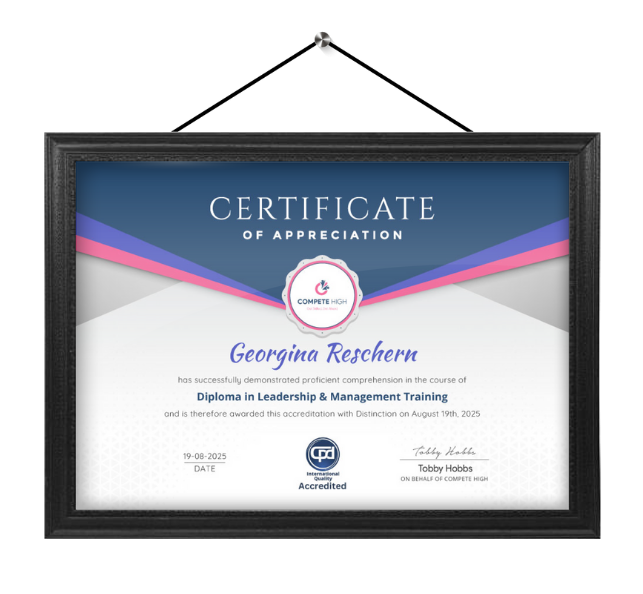
Celebrate your achievement with a CPD-IQ accredited certificate from Compete High! Perfect for showcasing your skills, boosting your career, and enhancing your professional profile. Choose the format that works best for you: PDF Certificate (£9.99) – Download instantly to add to your portfolio, résumé, LinkedIn, or share on social media. Printed Hard Copy (£29.99) – A beautifully designed certificate delivered to your door, ready to proudly display in your office or home. Both PDF & Printed Hard Copy (£31.99) – Get the best of both worlds!
Order Now