Search

Building Essential Job Skills for Young Adults and Teenagers

Building Essential Job Skills for Young Adults and Teenagers Hero Imgs
£425.00 25
Save Over 70% - Offer Ends soon
Take this course ⟲ 14-Day Money-Back Guarantee
  • Lifetime Access
  • All Levels
  • PDF Certificate certificate_fill
GET ACCESS TO ALL 1200+ COURSES FOR ONLY £99 . Get Now

Learn with Confidence

IOAS High Quality Assurance
AoHT Member
CPD QE Member
International Quality Scheme
CPD Accredited Provider
Disability Confident Committed
Incensu Registered
14 Days Money Back Guarantee
Lifetime Access
SSL Secure
CPD Accredited Provider

Overview

Building Essential Job Skills for Young Adults and Teenagers

The Building Essential Job Skills for Young Adults and Teenagers course introduces learners to the knowledge and practical preparation needed to approach employment with greater confidence. It explores the UK workplace, communication, CVs, job applications, job searching and career planning. Learners also study interview skills, professional behaviour, time management, money and employment, digital and practical job skills, and personal development. Whether you are exploring jobs for 13-year-olds in the UK, preparing for your first part-time role when eligible, or planning future office work, this course provides a structured starting point for understanding employment and preparing for future opportunities.

  • Understanding the UK workplace and professional expectations

  • Communication skills and interview preparation

  • CV writing and job applications

  • Job searching and career planning

  • Money, digital skills and personal organisation

Course Overview

Finding suitable work involves more than searching for vacancies. Young people need to understand workplace expectations, communicate clearly, prepare applications and plan realistic next steps. This course brings these essential job skills together in a structured learning programme for teenagers and young adults exploring employment. The curriculum covers CVs, interviews, professional behaviour, time management, money and employment, digital skills and career progression.

These topics are relevant to learners considering future opportunities in retail, customer service, hospitality, administration and other entry-level work areas. They can also help learners prepare for apprenticeships, work experience applications and further training, depending on age and eligibility. For anyone using a job finder for 13-year-olds or researching jobs for 13-year-olds in the UK, understanding local child-employment rules is important before applying. The course focuses on foundational knowledge and preparation; it does not guarantee employment or replace role-specific training, experience or required qualifications.

Description

Build a clearer understanding of how to prepare for employment with a course covering the key stages of early career development. Begin by exploring the UK workplace and communication, then move into CVs, applications, job searching and interview preparation. Learn about professional behaviour, personal organisation and time management, alongside money and employment. The curriculum also introduces digital and practical job skills before considering personal development and career progression. These connected topics help learners understand how preparation, conduct and planning relate to working life. Whether exploring future retail, customer service or office opportunities, learners can use this foundation to identify areas for further development and prepare more thoughtfully for their next steps.

Course Curriculum

Module 1: Understanding the UK Workplace

This module introduces the UK workplace and helps learners understand the environment, expectations and basic principles associated with employment. It provides a starting point for exploring how people prepare for and participate in working life.

Main learning topics:

  • The UK workplace

  • Workplace expectations

  • Understanding employment environments

  • Preparing for working life

Module 2: Communication Skills

This module explores communication as an essential part of employment. Learners consider how communication supports interactions with colleagues, employers and other people in workplace settings.

Main learning topics:

  • Workplace communication

  • Communicating with colleagues

  • Communicating with employers

  • Clear and appropriate communication

Module 3: CVs and Job Applications

This module introduces CVs and job applications as key parts of the recruitment process. Learners explore how these documents are used when applying for opportunities and preparing to present their experience and skills.

Main learning topics:

  • CV preparation

  • Job application processes

  • Presenting skills and experience

  • Preparing application information

Module 4: Job Searching and Career Planning

This module focuses on finding employment opportunities and thinking about future career directions. It is relevant to learners researching a job finder for 13-year-olds, jobs for teenagers or opportunities they may pursue when eligible.

Main learning topics:

  • Job searching

  • Exploring employment opportunities

  • Career planning

  • Considering future career directions

Module 5: Interview Skills

This module introduces interview preparation and the skills involved in communicating with employers during recruitment. Learners explore how interview skills fit into the process of applying for work.

Main learning topics:

  • Interview preparation

  • Interview communication

  • Understanding the interview process

  • Presenting yourself to employers

Module 6: Professionalism and Workplace Behaviour

This module explores professional conduct and behaviour in the workplace. Learners consider why appropriate behaviour matters when working with colleagues, interacting with employers and adapting to workplace expectations.

Main learning topics:

  • Professionalism

  • Workplace behaviour

  • Workplace expectations

  • Appropriate conduct at work

Module 7: Personal Organisation and Time Management

This module focuses on organising personal responsibilities and managing time. These topics can help learners understand how planning and organisation relate to completing tasks and balancing different commitments.

Main learning topics:

  • Personal organisation

  • Time management

  • Planning tasks and responsibilities

  • Managing commitments

Module 8: Money and Employment

This module introduces the relationship between money and employment. It provides a starting point for understanding pay and employment-related financial considerations, including questions young people may have when researching their first job.

Main learning topics:

  • Money and employment

  • Understanding pay

  • Financial considerations when working

  • Employment-related money questions

Module 9: Digital and Practical Job Skills

This module explores digital and practical skills relevant to preparing for work. It encourages learners to consider the role of these skills in job searching and in different workplace environments.

Main learning topics:

  • Digital job skills

  • Practical job skills

  • Using skills in employment contexts

  • Preparing for workplace tasks

Module 10: Personal Development and Career Progression

This final module considers personal development and the idea of progressing through a career. Learners explore how ongoing development and career planning can support their thinking about future employment and learning opportunities.

Main learning topics:

  • Personal development

  • Career progression

  • Reviewing development needs

  • Planning future steps

Who Is This Course For?

This course is designed for young adults and teenagers who want to understand employment and prepare for future opportunities. It may be useful for:

  • Teenagers exploring their first job: Learn about CVs, job applications, interviews and workplace expectations before applying for suitable opportunities.

  • Young people researching jobs for 13-year-olds in the UK: Understand job searching and career planning while checking the local rules that determine whether particular work is permitted at their age.

  • School and college learners: Build foundational knowledge of employment and consider possible career directions.

  • First-time jobseekers: Explore how to prepare applications, communicate with employers and approach interviews.

  • Learners considering apprenticeships or work experience: Develop a clearer understanding of applications, professional behaviour and planning.

  • Young adults exploring retail, customer service, hospitality or office work: Study skills that may be relevant to these employment areas.

  • People reconsidering their career direction: Use the career-planning topics to organise ideas about future work and further learning.

The course provides introductory knowledge. Employers may also expect relevant qualifications, experience, role-specific skills or other requirements depending on the vacancy.

Requirements

No formal entry requirements have been provided in the supplied course information. The curriculum is introductory in scope, making the subject matter relevant to learners who are beginning to explore employment and career planning.

Learners should check the course provider’s enrolment information for any additional requirements before registering. This course should not be assumed to provide a recognised qualification, licence or professional registration unless the provider explicitly confirms this.

For younger learners, age and local employment rules are particularly important. In the UK, the types of work permitted for children and the minimum age for ordinary part-time employment can depend on the nation and local council rules. Check official guidance before applying for work.

Skills You Can Develop

Workplace Awareness — Understand the UK workplace and the expectations associated with employment.

Communication Skills — Explore how to communicate appropriately with employers and other people in a work environment.

CV and Application Preparation — Develop knowledge of how CVs and job applications contribute to the recruitment process.

Job-Searching Skills — Understand how to explore vacancies and identify opportunities relevant to your interests and eligibility.

Career Planning — Consider career options and organise ideas about possible future employment.

Interview Preparation — Learn about preparing for interviews and communicating with potential employers.

Professional Behaviour — Recognise the importance of professionalism and appropriate workplace conduct.

Time Management — Explore ways to organise tasks, manage time and balance responsibilities.

Employment and Money Awareness — Develop an introductory understanding of money-related considerations in employment.

Digital and Practical Job Awareness — Explore the digital and practical skills that may be relevant when preparing for work.

Learning Outcomes

By the end of the course, learners should be able to:

  1. Explain the purpose of understanding the UK workplace when preparing for employment.

  2. Identify the importance of communication skills in workplace settings.

  3. Describe the role of CVs and job applications in applying for work.

  4. Explain how job searching can support the identification of employment opportunities.

  5. Outline the purpose of interview preparation during recruitment.

  6. Recognise examples of professionalism and appropriate workplace behaviour.

  7. Describe how personal organisation and time management relate to responsibilities.

  8. Explain the relationship between money and employment at an introductory level.

  9. Identify digital and practical job skills that may be relevant to working life.

  10. Describe how personal development and career planning can inform future steps.

Career Paths

The course provides foundational knowledge about employment preparation. It does not guarantee a job or replace the qualifications, experience or role-specific training an employer may require. The following roles are examples of areas where the course topics may be relevant.

Retail Sales Assistant

Typical UK Salary: Approximately £19,000–£27,000 a year, from starter to experienced levels.

How the course is relevant: Communication, professional behaviour, job applications and interview preparation are relevant to seeking retail roles. Some retail positions involve serving customers, handling payments or replenishing shelves. However, the course does not specifically train learners in shelf stacking or retail operations.

Customer Service Assistant

Typical UK Salary: Approximately £20,000–£30,000 a year, from starter to experienced levels.

How the course is relevant: The communication, professionalism, CV and interview modules cover foundational topics that may help learners prepare to apply for customer service roles. Employers may also expect customer service experience or additional role-specific skills.

Administrative Assistant

Typical UK Salary: Approximately £21,000–£28,000 a year, from starter to experienced levels.

How the course is relevant: CV preparation, communication, digital job skills, organisation and time management relate to applying for office-based work. Administrative roles may also require proficiency with particular software, accurate record-keeping and relevant qualifications or experience.

Future Career and Apprenticeship Opportunities

Learners may also use their knowledge when exploring apprenticeships, work experience or further training in business, retail, hospitality and administration. Eligibility depends on the opportunity, age, employer and any required qualifications. Salary information above is indicative, not a prediction of earnings after completing this course.

FAQs

1. What is the Building Essential Job Skills for Young Adults and Teenagers course?

It is a course covering foundational employment preparation, including communication, CVs, job applications, job searching, interview skills, workplace behaviour, time management, money and employment, digital skills and career planning.

2. What jobs can a 13-year-old get in the UK?

The options depend on the local rules and the type of work. GOV.UK states that children can generally work part-time from age 14, while some local council areas allow certain work from age 13. Permitted work, working hours and permit requirements must be checked with the relevant local council.

3. What is the minimum wage for a 13-year-old in the UK?

School-aged children under 16 are not entitled to the statutory National Minimum Wage. This means there is no statutory minimum hourly rate specifically for a 13-year-old. Pay arrangements and whether the work itself is permitted are separate issues, so check the official guidance before accepting a job.

4. Are there shelf-stacking jobs or online jobs for 13-year-olds?

Do not assume that shelf stacking, online work or any advertised job is automatically permitted at age 13. Local child-employment rules determine which types of work are allowed, and online vacancies may have their own minimum-age conditions. Check the employer’s requirements and your local council’s guidance before applying.

Teenagers can start by learning how to prepare a CV, complete job applications, search for suitable opportunities, communicate with employers and prepare for interviews. Understanding professional behaviour, time management and employment-related money matters can also help them plan their next steps. These are the main areas covered by this course.

Course Content

Module 1_ Understanding the UK Workplace

  • Understanding the UK Workplace
    00:00

Module 2_ Communication Skills

Module 3_ CVs and Job Applications

Module 4_ Job Searching and Career Planning

Module 5_ Interview Skills

Module 6_ Professionalism and Workplace Behaviour

Module 7_ Personal Organisation and Time Management

Module 8_ Money and Employment

Module 9_ Digital and Practical Job Skills

Module 10_ Personal Development and Career Progression

Hear from Our Successful Learners

reviews.io
Harry Rose
Harry Rose
★★★★★

The experience has been excellent from the start to the present. The support team is proactive and always helpful with any queries or requests.

Archer Evans
Archer Evans
★★★★★

I've taken several courses through Reed and have been completely satisfied with each one. The pricing is outstanding.

Zane John
Zane John
★★★★☆

I've completed numerous courses through Reed and have been fully satisfied with each one. The courses are excellent.

Oliver Ross
Oliver Ross
★★★★★

I'm truly impressed by One Education's remarkable ability to understand its learners and go the extra mile for them.

Melvin Olson
Melvin Olson
★★★★★

I had been searching for a Level 3 course for a while—it felt like mission impossible. Discovering that Reed offers a wide range of career-focused providers was a pleasant surprise.

Lillie Marsh
Lillie Marsh
★★★★★

The course was incredibly insightful and easy to navigate. I truly enjoyed it—thank you so much.


Trustpilot
Sophie Turner
Sophie Turner

Booking was simple and the course content was clear and well structured from day one.

Daniel Hughes
Daniel Hughes

Great value for money and the certificate arrived quickly after I finished my assessment.

Priya Patel
Priya Patel

Customer support answered my questions the same day. Would definitely recommend to a friend.

James Whitfield
James Whitfield

Flexible learning that fit around my job. The video lessons were easy to follow.

Anna Kowalski
Anna Kowalski

Second course I've taken with them now. Consistent quality every time.

Marcus Reid
Marcus Reid

Clear instructions, fair pricing, and the exam prep really helped me pass first time.

Frequently Asked Questions

Once you enrol, you will receive access to your course online. You can log in and study at a time and place that suits you, using a computer, tablet or compatible mobile device.

You can study at your own pace, giving you the flexibility to complete your course around your existing work, family and other commitments.

Yes. Compete High courses are delivered online, allowing you to access your learning materials from wherever you are.

Where a certificate is included with the course, you will be able to obtain your certificate after successfully completing the required course requirements. Certificate availability can vary by course.

Course accreditation, certification and awarding arrangements vary depending on the individual course. Please check the course description for the specific details applicable to the course you are interested in.

Get Your Certificate Today

Team success

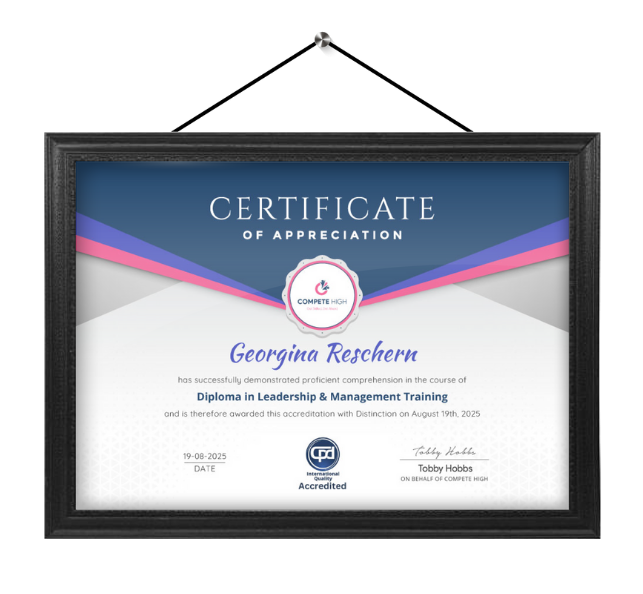
Celebrate your achievement with a CPD-IQ accredited certificate from Compete High! Perfect for showcasing your skills, boosting your career, and enhancing your professional profile. Choose the format that works best for you: PDF Certificate (£9.99) – Download instantly to add to your portfolio, résumé, LinkedIn, or share on social media. Printed Hard Copy (£29.99) – A beautifully designed certificate delivered to your door, ready to proudly display in your office or home. Both PDF & Printed Hard Copy (£31.99) – Get the best of both worlds!

Order Now