The Importance of Food Hygiene in Restaurants and Catering
The importance of food hygiene is difficult to overstate in....

The importance of food hygiene is difficult to overstate in any business that prepares, handles, stores or serves food. A restaurant may have an attractive menu and provide excellent customer service, but weak hygiene controls can still lead to contaminated food, allergen incidents, enforcement action and lasting reputational damage. Catering businesses face the same risks, often with the added challenge of transporting food, working at temporary venues, and serving large numbers of people within a short period.
Quick Overview
This guide explains the importance of food hygiene, including food hygiene definitions, UK regulations, HACCP-based food safety management, the 4 Cs of hygiene, daily checks, inspection ratings and common mistakes businesses should avoid.
This guide covers:
✅ What food hygiene is and why it is important for restaurants and catering businesses
✅ The difference between food hygiene, food safety and wider food safety management systems
✅ Why good hygiene practices help prevent contamination, protect customers and support legal compliance
✅ Key UK food hygiene responsibilities, including HACCP, inspections and hygiene ratings
✅ Essential food hygiene practices, including cleaning, cooking, chilling, cross-contamination control and allergen management
✅ How daily checks, staff training and effective management systems help businesses maintain safe food operations
The importance of food hygiene extends far beyond keeping a kitchen looking clean. It involves a system of practical controls covering people, premises, equipment, ingredients, temperatures, allergens, cleaning, waste, pests and management oversight. This article explains what food hygiene means, why it matters, the main UK legal responsibilities, the 4 Cs, food safety management, inspection ratings, daily checks, and the mistakes that commonly undermine otherwise capable businesses.
What Is Food Hygiene and Why Is It Important?
Learn what food hygiene is, why it is important, and how effective hygiene practices help restaurants and catering businesses keep food safe, comply with UK regulations and protect customers.
What Is Food Hygiene?
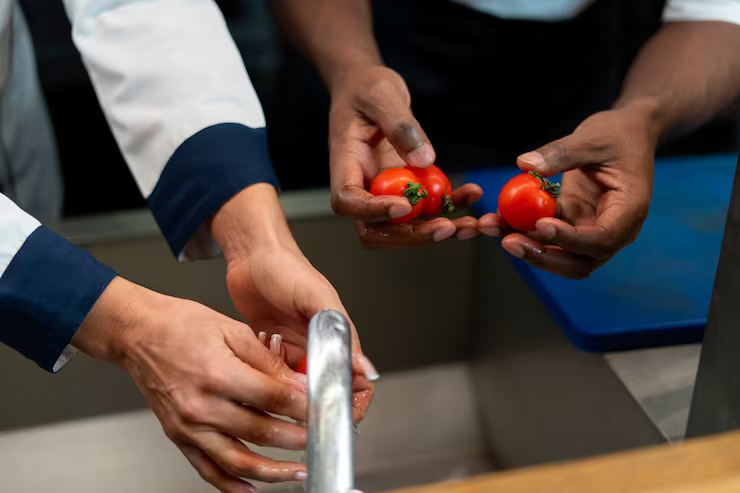
A useful food hygiene definition is the set of conditions, controls and working practices used to keep food safe from contamination throughout receiving, storage, preparation, cooking, cooling, transport and service. It includes handwashing, suitable work clothing, effective cleaning, separation of raw and ready-to-eat foods, temperature control, safe waste disposal, pest prevention and accurate allergen management. Understanding the importance of food hygiene begins with recognising that these controls work together to reduce food safety risks at every stage of the food chain.
When people ask what is food hygiene, they sometimes think only of wiping surfaces or wearing gloves. Those activities may form part of hygiene, but neither is sufficient on its own. A surface can look clean while still carrying harmful microorganisms, and gloves can spread contamination when they are not changed correctly. Effective hygiene depends on staff understanding the risks, following documented procedures consistently, and applying good practices every day.
In practical terms, food hygiene in restaurants connects every stage of the operation. Deliveries must come from suitable suppliers and arrive in acceptable condition. Chilled and frozen items must be put away promptly. Raw ingredients must be kept away from ready-to-eat food. Cooking, cooling and reheating must follow validated methods. Utensils, probes, cloths and food-contact surfaces must be cleaned appropriately. These controls must continue even during busy service periods to maintain safe food and consistent standards.
Food Hygiene vs Food Safety
Food hygiene and food safety are closely connected, but the terms are not identical. Food hygiene mainly concerns the practices and conditions that prevent contamination and harmful bacterial growth. Food safety is broader. It includes hygiene but also covers matters such as chemical and physical hazards, allergens, supplier controls, traceability, labelling, recalls and the design of the business’s overall food safety management system. Understanding this distinction reinforces the importance of food hygiene as one essential part of a wider food safety approach.
Why Food Hygiene Matters in Restaurants and Catering
The question why is food hygiene important has several connected answers. Food businesses have a duty to serve food that is safe, but effective controls also protect the organisation’s continuity, finances and reputation. The importance of food hygiene is reflected not only in legal compliance but also in customer confidence, operational efficiency and the prevention of avoidable food safety incidents.
Prevents foodborne illness. Poor temperature control, inadequate cooking, contaminated equipment and unsafe handling can allow harmful bacteria or viruses to reach customers. A single failure can affect many people when food is prepared in batches or served at an event.
Protects vulnerable customers. Children, older people, pregnant people and those with weakened immune systems may suffer more serious consequences from foodborne illness. Customers with food allergies also depend on accurate information and careful control of cross-contact.
Ensures legal compliance. UK food businesses must manage hazards, maintain hygienic premises, supervise and train staff appropriately, and operate food safety procedures based on HACCP principles. The precise legislation and enforcement arrangements differ across the UK, so operators should follow the guidance and legal requirements that apply in the nation where they trade.
Builds customer trust. A strong hygiene rating, visibly clean premises, knowledgeable staff and confident allergen communication reassure customers. Hygiene ratings are not scores for food quality or taste, but they are public indicators of the standards observed during an inspection.
Reduces food waste and costs. Correct stock rotation, storage and temperature control reduce spoilage, rejected stock and disruption. Good controls also help managers maintain consistent standards across different shifts, demonstrating the long-term importance of food hygiene for both food safety and business performance.
UK Food Hygiene Laws and Responsibilities
Understanding the importance of food hygiene includes knowing the UK laws, regulatory responsibilities and standards that help food businesses protect customers and remain legally compliant.
Food Standards Agency and Food Standards Scotland
The importance of food hygiene is reflected in the UK’s food safety framework. The Food Standards Agency is responsible for food safety and related consumer protection work in England, Wales and Northern Ireland, while Food Standards Scotland performs the corresponding national role in Scotland. Local authorities carry out much of the day-to-day enforcement for restaurants, cafés, takeaways and caterers, although arrangements differ for certain approved establishments and specialist activities.
The importance of food hygiene is also reflected in the regulations, guidance and rating arrangements that apply across the UK. Businesses should understand the food hygiene regulations for restaurants and catering operations that apply in the nation where they trade. A caterer operating in more than one UK nation should check the requirements for each place of operation to ensure ongoing compliance.
Food Hygiene Rating Scheme
The importance of food hygiene is demonstrated through the Food Hygiene Rating Scheme, which applies in England, Wales and Northern Ireland. Following inspection, eligible businesses receive a rating from 0 to 5. A rating of 5 means hygiene standards are very good, while 0 means urgent improvement is necessary. The rating is based on hygienic food handling, the physical condition of the premises and facilities, and the management of food safety. It is not a review of the menu, service or culinary quality.
| Rating | Meaning |
| 5 | Very good |
| 4 | Good |
| 3 | Generally satisfactory |
| 2 | Improvement necessary |
| 1 | Major improvement necessary |
| 0 | Urgent improvement necessary |
The importance of food hygiene is also reflected in how inspection results are communicated to the public. Display rules differ across the UK. Businesses in Wales and Northern Ireland are legally required to display their rating prominently, while display is encouraged but not currently compulsory in England. Scotland uses the Food Hygiene Information Scheme rather than the 0-to-5 FHRS system. Its published outcomes include statuses such as “Pass” and “Improvement Required”, alongside “Awaiting Inspection” where applicable.
A food hygiene rating for restaurants is valuable because customers can check it publicly before deciding where to eat. The importance of food hygiene extends beyond the inspection itself, as a rating reflects the standards observed at the time of inspection and does not remove the need for consistent food hygiene practices in restaurants every day.
HACCP Requirements
The importance of food hygiene is reinforced through the legal requirement for restaurants and caterers to operate a food safety management system based on Hazard Analysis and Critical Control Point (HACCP) principles. HACCP is a structured method for identifying hazards, deciding where control is essential, setting limits, monitoring performance, taking corrective action, verifying that the system works and keeping suitable records.
The importance of food hygiene means that the system should be proportionate to the business’s size, menu, processes and risks. Safer Food, Better Business and CookSafe provide practical frameworks that support food hygiene in catering and restaurant operations while helping businesses implement HACCP principles effectively.

Legal Responsibilities of Food Businesses
The importance of food hygiene is reflected in the legal responsibility placed on every food business operator to ensure that food placed on the market is safe. Managers must translate that duty into suitable premises, equipment, systems, supervision and staff competence while maintaining effective food hygiene practices in restaurants and catering environments.
The importance of food hygiene also extends to staff competence. Importantly, food handlers are not universally required to hold a particular food hygiene certificate. Instead, businesses must be able to demonstrate that staff have suitable skills, knowledge, instruction or training for their work. Training may come from a course, supervised workplace instruction, self-study or relevant experience, but it must be current, appropriate to the person’s responsibilities and supported by effective supervision. Records can also help demonstrate what has been completed.
The importance of food hygiene is demonstrated through consistent day-to-day management. Completing a course alone does not prove practical competence or legal compliance. A trained employee still requires role-specific induction, observation, feedback and supervision. Likewise, an online certificate cannot replace an effective food safety management system, suitable premises or the consistent application of food hygiene in catering and restaurant operations.
The 4 Cs of Food Hygiene: Essential Best Practices
The 4 Cs—cleaning, cooking, chilling and avoiding cross-contamination—provide a practical framework for restaurant food hygiene and catering operations. The importance of food hygiene is reflected in each of these areas, as effective controls help businesses prevent contamination, protect customers and maintain safe food handling standards. Although the 4 Cs are easy to remember, each requires clear procedures, staff awareness and consistent management.
Cleaning
Personal Hygiene
The importance of food hygiene begins with effective personal hygiene practices. Staff should wash their hands thoroughly at the correct times, including before handling food, after using the toilet, after touching raw meat or fish, after handling waste, after cleaning, after breaks and whenever contamination may have occurred. Hand sanitiser is not a substitute for effective handwashing where hands can be washed properly. Gloves are also not a replacement for good hand hygiene and can transfer contamination when they are not used correctly.
Food handlers should wear suitable, clean clothing, keep hair controlled and cover cuts appropriately. Managers should also have a clear fitness-to-work procedure in place. Staff suffering from relevant symptoms or infections may contaminate food, water and surfaces, so illness must be reported and managed in line with current official guidance.
Cleaning and Sanitising
The importance of food hygiene is also demonstrated through effective cleaning and sanitising procedures. Cleaning removes food, grease and visible dirt, while disinfection or sanitising reduces microorganisms to safer levels when the correct product, concentration, contact time and method are used. A quick spray followed by immediate wiping may not achieve the manufacturer’s required contact time.
A written cleaning schedule should identify what is cleaned, how it is cleaned, which chemicals and equipment are used, how often the task is completed and who is responsible. High-touch items require particular attention, including fridge handles, taps, switches, probe thermometers, reusable cloths, door seals and controls on cooking equipment.
Pest Control
The importance of food hygiene extends to effective pest prevention because pests can contaminate ingredients, packaging and equipment. Prevention requires good maintenance, sealed entry points, controlled waste management, stock checks and regular cleaning. Pest control contractors may provide support, but management remains responsible for recording sightings, taking action and disposing of affected food safely.
Cooking
Safe Cooking Temperatures
The importance of food hygiene is especially clear during cooking, as harmful microorganisms are controlled only when food reaches an effective time-and-temperature combination. The FSA gives 70°C for two minutes as one example, with equivalent combinations including 75°C for 30 seconds. A clean, suitable probe can be used to check the centre or thickest part of the food.
Cooking methods should reflect the type of food, portion size and equipment being used. Visual checks may be unreliable, so probes should be cleaned, protected and checked regularly for accuracy.
Safe Reheating
The importance of food hygiene also applies to reheating processes. Reheating must be carried out rapidly and thoroughly using equipment designed for the task. Hot-holding equipment should not be relied upon to reheat cold food unless it is specifically designed and validated for this purpose.
A food safety system should define whether food may be reheated, the maximum number of reheating cycles, the required temperature checks, the action to take when limits are missed and the records that must be maintained. Reheated food should be served promptly or held under controlled conditions.
Chilling
Safe Food Storage
The importance of food hygiene continues throughout storage because chilled storage slows bacterial growth but does not remove all hazards. Deliveries should be checked and placed into suitable storage promptly. Raw foods should be covered and stored below ready-to-eat foods to prevent leaks causing contamination. Prepared foods should be labelled clearly with relevant production, opening or use-by information.
Dry stores are also an important part of catering food hygiene. They should be clean, dry, organised and protected from pests. Food should be raised off the floor where appropriate, packaging should remain intact and stock should be rotated so older suitable stock is used first.
For mobile food hygiene for catering businesses, transport is an essential part of storage control. Insulated containers, refrigerated vehicles or other validated methods may be required. Caterers should consider loading times, journey length, outdoor temperature, delays, service periods and the management of leftovers.
Temperature Control
The importance of food hygiene relies on maintaining effective temperature controls during receiving, storage, cooking, cooling, reheating and service. Businesses should define safe limits and ensure refrigeration equipment can maintain required conditions even during busy periods. Many businesses set equipment at 5°C or below to provide a margin beneath the commonly applied 8°C maximum for chilled food requiring temperature control, while checking the exact requirements applicable to their jurisdiction and processes.
Fridge displays are useful monitoring tools, but they may not show the actual temperature of newly delivered food or a cooling batch. Managers should understand when a calibrated probe check is required and what corrective action should be taken if limits are exceeded.
Cross-Contamination
Colour-Coded Equipment
The importance of food hygiene includes preventing cross-contamination through effective separation methods. Using separate, colour-coded chopping boards and utensils can make controls easier to follow. However, colour coding is only effective when staff understand the system, equipment is maintained properly and items are cleaned correctly after use.
Where possible, raw and ready-to-eat foods should be separated by space, equipment or time. The FSA’s E. coli guidance highlights the need for adequate separation and warns that complex equipment can be difficult to clean effectively between raw and ready-to-eat uses.
Safe Food Handling
The importance of food hygiene is reinforced through safe food handling practices. Cross-contamination can occur through hands, cloths, packaging, sinks, taps, knives, probes, aprons, phones and delivery boxes. A kitchen can therefore fail to maintain safe standards even when separate chopping boards are available.
Managers should assess how food and people move through the premises. Raw deliveries should not pass over uncovered ready-to-eat food. Dirty equipment should not enter clean preparation areas. Reusable cloths require controlled use and appropriate laundering or replacement. Damaged boards, seals and work surfaces should be repaired because they are more difficult to clean effectively.
Allergen Management
The importance of food hygiene also includes effective allergen management. Allergen control is both a food information duty and a practical food safety responsibility. UK food businesses must provide information about regulated allergens used as ingredients and manage allergens effectively during preparation. For non-prepacked restaurant and takeaway food, information may be provided in permitted ways, but current FSA best practice encourages written allergen information supported by a conversation.
Recipes, supplier specifications and allergen matrices must remain accurate and up to date. Staff should never guess allergen information. Separate utensils, handwashing, cleaning procedures, labelled storage and controlled cooking oil may be necessary to prevent allergen cross-contact. When a business cannot safely meet a customer’s request, it should communicate this clearly rather than make an unsupported “allergen-free” claim.
Food Safety Management in Restaurants and Catering
Understand how food safety management systems, HACCP principles, staff training and record keeping help restaurants and catering businesses maintain safe food standards.
What Is a Food Safety Management System?
A food hygiene definition refers to the conditions, practices and procedures used to keep food safe from contamination during preparation, storage, cooking, transport and service. The importance of food hygiene is reflected in having a structured food safety management system with clear procedures, responsibilities, checks and records to control hazards effectively. A food safety management system should represent what actually happens in the kitchen, rather than what management assumes happens.
For food hygiene in restaurants, the importance of food hygiene can be seen through controls covering supplier approval, deliveries, storage, preparation, cooking, cooling, reheating, hot holding, allergen requests, cleaning, staff illness, pest control, waste management, maintenance and product withdrawal. For food hygiene for catering businesses, the importance of food hygiene also extends to transport, temporary premises, water supply, outdoor service, equipment set-up, power failures and the safe handling of unused food. These measures demonstrate why is food safety and hygiene important for protecting customers and maintaining consistent standards.
Applying HACCP
The importance of food hygiene is reinforced through HACCP, which begins by examining each process step and identifying what could go wrong. Hazards may be microbiological, chemical, physical or allergenic. Businesses then identify suitable controls and determine which points require the greatest level of monitoring to keep food safe.
The importance of food hygiene also means that HACCP systems must include clear corrective actions. These should explain what happens to affected food, how the cause of a problem is investigated and how future failures are prevented. The system should be reviewed after operational changes, incidents or repeated failures to ensure it continues to control risks effectively.
Staff Training and Responsibilities
The importance of food hygiene depends on staff understanding their responsibilities and applying safe working practices consistently. Training should match the role being carried out. A new server may need knowledge of allergen communication, hand hygiene and safe service procedures. A chef needs controls for raw food handling, cooking, cooling, reheating and cleaning. A supervisor needs sufficient knowledge to verify records, investigate failures and prevent unsafe service.
Competehigh offers online food hygiene learning that may support knowledge development. The importance of food hygiene means businesses should select training by checking that the content matches the learner’s role and should combine online study with workplace induction, practical supervision and assessment. A completion certificate is evidence of learning activity, but it is not automatic proof of occupational competence, regulatory approval or full compliance.
Monitoring and Record Keeping
The importance of food hygiene is also demonstrated through accurate monitoring and record keeping. Records should be proportionate, meaningful and useful for managing food safety risks. Typical examples include delivery checks, fridge temperatures, cooking or cooling checks, cleaning completion, allergen updates, staff training, pest sightings and corrective actions.
The importance of food hygiene is reflected in maintaining reliable records that support effective decision-making and demonstrate that controls are being managed properly. Copied or unrealistically perfect readings can undermine confidence in a food safety system. Good records should reflect real operations, including problems identified and the actions taken by staff to resolve them.
How to Improve Your Food Hygiene Rating
Learn how restaurants and catering businesses can improve their food hygiene rating through effective hygiene practices, staff training, accurate records and strong food safety management.
What Inspectors Look For
A food hygiene definition includes the practices, procedures and controls used to prevent contamination and keep food safe throughout preparation, storage, cooking and service. The importance of food hygiene is reflected in how food businesses maintain these standards every day, not just during inspections. The three broad FHRS areas are hygienic food handling, the physical condition of the premises and facilities, and confidence in food safety management. Inspectors may observe practices, inspect storage areas and equipment, review documentation, question staff and assess whether management controls are followed in practice.
A business seeking a strong food hygiene rating for restaurants should therefore avoid focusing only on visible cleaning before an inspection. The importance of food hygiene is demonstrated through consistent systems, as inspectors consider whether controls are embedded, understood and maintained effectively over time. This also shows why is food safety and hygiene important for protecting customers and building trust.
Preparing for an Inspection
The importance of food hygiene means that the best preparation for an inspection is routine compliance rather than last-minute improvements. Managers should regularly review their operation as an inspector might by checking handwashing facilities, raw and ready-to-eat food separation, fridge capacity, probe use, damaged surfaces, chemical storage, waste management, pest evidence, allergen records and staff knowledge.
The importance of food hygiene is also reflected in maintaining accurate and accessible documentation. Records should be current and easy to retrieve when needed. Staff should understand their responsibilities and know who is in charge when the usual manager is absent. Any previous inspection actions should be completed, documented and reviewed to confirm that improvements have been effective.
Common Reasons Businesses Lose Marks
The importance of food hygiene becomes clear when considering the common reasons businesses receive lower ratings. Ratings can be affected by unsafe food handling, poor cleaning standards, structural defects, weak pest control, missing or unreliable records, inadequate temperature checks, outdated allergen information and poor management oversight. These issues can increase risks to customers and indicate weaknesses in the business’s food safety system.
The importance of food hygiene is also demonstrated through consistency. A common problem is that procedures exist on paper but are not understood or followed by staff in practice. Effective food safety depends on employees being able to explain procedures, demonstrate safe working methods and apply controls correctly during everyday operations.
Daily Food Hygiene Checklist for Restaurants and Caterers
A food hygiene definition includes the practices, procedures and controls used to keep food safe throughout preparation, storage, cooking, service and handling. The importance of food hygiene is reflected in applying these controls consistently every day. A daily checklist should be tailored to the premises and HACCP system. The following structure can help managers review essential controls while ensuring that paperwork supports, rather than replaces, real observation and good practice.
Before Opening
The importance of food hygiene begins before service starts, with checks that confirm the premises and equipment are ready for safe food handling.
- Confirm that handwashing facilities have soap, warm water and hygienic drying materials.
- Check chilled and frozen storage, signs of pests, cleaning standards and the condition of food.
- Verify that allergen information, recipes and labels are accurate and up to date.
- Ensure probes, sanitiser and colour-coded equipment are clean, available and ready for use.
During Food Preparation
The importance of food hygiene is demonstrated through careful preparation practices that reduce the risk of contamination and protect customers. This also highlights why is food safety and hygiene important in busy food environments.
- Separate raw and ready-to-eat food, equipment and preparation tasks.
- Wash hands at the required times and manage illness or injuries correctly.
- Record critical cooking, cooling or other checks required by the food safety management system.
- Protect prepared food from contamination and ensure it is labelled clearly.
Throughout Service
The importance of food hygiene remains essential during service, when pressure and customer demand can increase the risk of mistakes. Staff must continue following established procedures and maintain safe standards.
- Maintain safe holding conditions and prevent contamination from bare hands or unsuitable utensils.
- Follow the agreed allergen-order procedure and confirm special meals correctly during handover.
- Remove waste, spillages and dirty equipment without contaminating clean areas.
- Take immediate action when a control limit is missed and never record a false compliant result.
End-of-Day Closing Checks
The importance of food hygiene continues after service finishes, as effective closing procedures help prepare the business for the next operating period. Accurate checks and corrective actions support ongoing food safety management.
- Dispose of unsafe or unidentified food and store suitable leftovers correctly.
- Complete the cleaning schedule, including high-touch and hard-to-reach areas.
- Remove waste securely and check for signs of pests or maintenance problems.
- Review incomplete records, corrective actions and issues that require attention during the next shift.
Common Food Hygiene Mistakes to Avoid
A food hygiene definition includes the practices, procedures and controls used to prevent contamination and keep food safe throughout preparation, storage, cooking and service. The importance of food hygiene is demonstrated by avoiding common mistakes that can increase risks to customers, affect compliance and damage a business’s reputation. Understanding these risks also explains why is food safety and hygiene important for every food business.
Poor Staff Training
The importance of food hygiene depends on staff having the correct knowledge, skills and confidence to carry out their roles safely. Generic induction alone is not enough when employees perform different tasks. Training should be understood, applied and refreshed regularly. Managers should observe working practices, ask questions and correct unsafe shortcuts to ensure procedures are followed correctly.
Weak HACCP Implementation
The importance of food hygiene is reflected in having a HACCP system that works in practice, not just on paper. A downloaded template cannot control hazards unless it matches the actual menu, equipment, processes and risks of the business. Procedures should identify meaningful limits, appropriate monitoring methods and realistic corrective actions. Changes to suppliers, equipment, ingredients or dishes should trigger a review of the system.
Inadequate Record Keeping
The importance of food hygiene also includes maintaining accurate and useful records. Too few records may make it difficult to demonstrate that controls are effective, while excessive paperwork can create unnecessary administration without improving safety. Businesses should keep records that support food safety decisions and ensure entries are accurate, completed at the correct time and regularly reviewed.
Poor Cleaning Schedules
The importance of food hygiene is closely linked to effective cleaning practices. A schedule that simply states “clean kitchen daily” is too vague to provide reliable control. It should identify individual items, cleaning methods, products, frequency and responsibility. Managers should verify cleaning results rather than assume that a completed signature automatically means the task has been carried out effectively.
Failing to Prepare for Inspections
The importance of food hygiene becomes clear when preparing for official inspections. Last-minute cleaning cannot compensate for weak food safety management, poor staff knowledge or missing controls. Untrained staff, incomplete records, damaged premises and outdated allergen information can reveal long-term issues. The strongest approach is to maintain good standards every day and operate each shift as though an inspection could take place.
Frequently Asked Questions
Is food hygiene training a legal requirement in the UK?
A food hygiene definition includes the practices, procedures and controls used to keep food safe and prevent contamination during handling, preparation, storage and service. The importance of food hygiene is reflected in ensuring that food handlers receive supervision, instruction or training appropriate to their work.
However, not all food handlers are required to hold a specific food hygiene certificate. Businesses must be able to demonstrate that staff are competent for their duties. A course can support this process, but workplace instruction and supervision remain essential.
How often are restaurants inspected?
The importance of food hygiene is reflected in the way official food safety controls are applied through risk-based inspections. There is no single inspection interval that applies to every restaurant. Businesses presenting higher risks are generally visited more frequently than lower-risk businesses. FSA guidance describes inspection frequencies that may range from around every six months for higher-risk premises to every two or three years for lower-risk premises, although local programmes and individual circumstances can affect timing.
What food hygiene rating should a restaurant aim for?
The importance of food hygiene is demonstrated through the standards assessed under the Food Hygiene Rating Scheme (FHRS). A restaurant should aim for a rating of 5, which means hygiene standards are very good. A rating of 3 is generally satisfactory but provides less assurance than ratings of 4 or 5. Scotland operates the Food Hygiene Information Scheme (FHIS) rather than the 0-to-5 FHRS system.
Who enforces food hygiene laws in the UK?
The importance of food hygiene is supported by a clear enforcement structure across the UK. Local authorities carry out most inspections and enforcement activities for restaurants and catering businesses. The Food Standards Agency oversees relevant arrangements in England, Wales and Northern Ireland, while Food Standards Scotland performs the national role in Scotland. Certain specialist premises may involve other competent authorities.
How can a business improve its food hygiene rating?
The importance of food hygiene can be seen in the steps businesses take to improve and maintain their standards. A business should address every issue identified by an inspecting officer, strengthen daily hygiene practices, repair structural defects, update its HACCP-based system, train staff and verify that improvements are effective. The business can then discuss the appropriate reinspection or rerating process with the relevant local authority.
What is the difference between food hygiene and food safety?
The importance of food hygiene becomes clearer when understanding the relationship between food hygiene and food safety. Food hygiene focuses on the practices and conditions that prevent contamination and harmful bacterial growth. Food safety is broader and includes hygiene, allergens, chemical and physical hazards, traceability, labelling, supplier controls and incident management.
Does an online food hygiene course make a restaurant legally compliant?
The importance of food hygiene means that compliance depends on more than completing a training course. Online learning can improve knowledge, but legal compliance depends on the complete operation, including suitable premises, safe processes, supervision, HACCP-based procedures, allergen controls, maintenance, monitoring and corrective action. A certificate demonstrates learning activity but does not replace these responsibilities.
What records should a restaurant or caterer keep?
The importance of food hygiene is also demonstrated through accurate and meaningful record keeping. Records should reflect the hazards and controls relevant to the business. They may include delivery checks, temperature monitoring, cooking, cooling, cleaning, allergen management, training, pest control and corrective-action records. The priority should be useful, honest evidence that supports food safety decisions rather than unnecessary paperwork.

Conclusion
The importance of food hygiene lies in its direct effect on customer safety, legal compliance and the reliability of a food business. Strong food hygiene in restaurants combines clean premises with competent staff, safe temperature control, separation of raw and ready-to-eat foods, accurate allergen management and an effective HACCP-based system. Effective catering food hygiene applies the same principles while also managing transport, temporary venues and high-volume service.
The importance of food hygiene means that businesses should treat hygiene as an everyday management responsibility rather than something to focus on only before an inspection. Clear procedures, proportionate records, practical training and prompt corrective action help create the confidence that inspectors and customers expect. This explains why is food safety and hygiene important: it protects people first while supporting trust, business continuity and responsible growth.