Digital Marketing Level 1, 2, 3 with SEO, Email Marketing, PPC & More

- Lifetime Access
- All Levels
- PDF Certificate
Learn with Confidence









Overview
Digital Marketing Level 1, 2, 3 with SEO, Email Marketing, PPC & More
Digital Marketing Level 1, 2, 3 with SEO, Email Marketing, PPC & More provides broad, structured knowledge of modern digital marketing across search, content, email, paid advertising, analytics and social media. Learners explore how customers move through the buying journey, how content and copy can support campaigns, and how platforms including Facebook, Instagram, LinkedIn, YouTube, TikTok and others can be used for marketing. The course also covers Google Ads, Google Analytics, automation, affiliate and influencer marketing, conversion rate optimisation, data privacy and data-driven decision making. It can support learners developing practical marketing knowledge for employment, freelance work or further professional development.
You will study:
-
Digital marketing fundamentals, growth hacking, customer journeys and content marketing.
-
SEO, email marketing, Google Ads, Google Analytics and paid social advertising.
-
Marketing across major social platforms, including Facebook, Instagram, LinkedIn, TikTok and YouTube.
-
Copywriting, branding, mobile-first marketing, conversion rate optimisation and A/B testing.
-
Automation, data privacy, customer retention, analytics and data-driven marketing decisions.
Course Overview
Digital marketing brings together a wide range of activities designed to attract audiences, communicate value and support customer relationships through digital channels. This comprehensive course introduces learners to the core principles before progressing into SEO, email marketing, content, social media, paid advertising, analytics and conversion optimisation.
The curriculum covers an unusually broad range of platforms, from Facebook, Instagram, LinkedIn and YouTube to TikTok, Pinterest, Reddit, Quora, Twitch, Discord, Telegram and WhatsApp. Learners also examine copywriting, platform-specific content, branding, customer behaviour, marketing automation, affiliate and influencer marketing, crisis management and customer retention.
The course can be useful for beginners, aspiring digital marketers, business owners, freelancers and professionals who want to strengthen their digital marketing knowledge. It provides a structured foundation across multiple areas rather than focusing on a single marketing channel.
Description
This digital marketing course takes learners from fundamental concepts through to more advanced campaign, optimisation and data-driven topics. It explores how businesses can use search engines, email, social platforms, paid advertising, content and video to reach and engage audiences.
Learners study SEO, Google Ads, Google Analytics, Facebook Ads, copywriting, social media strategy, A/B testing and conversion rate optimisation. The curriculum also addresses automation, data privacy, customer retention, loyalty programmes, affiliate marketing, influencer marketing and crisis management.
For learners interested in becoming an online marketing expert, the course offers broad exposure to the terminology, strategies and channels used across modern digital marketing. It can also provide useful knowledge for people considering marketing roles, freelance services or business promotion.
Course Curriculum
Module 1: Introduction to Digital Marketing
Introduces the fundamental principles of digital marketing and establishes the foundation for the rest of the course.
Main learning topics:
-
Digital marketing fundamentals
-
Online marketing channels
-
Digital audiences
-
Marketing objectives
-
Digital campaign foundations
Module 2: Growth Hacking
Explores growth-focused approaches to digital marketing and methods for identifying opportunities to expand audience reach and engagement.
Main learning topics:
-
Growth-focused marketing
-
Audience growth
-
Experimentation
-
Digital acquisition
-
Growth opportunities
Module 3: Customer Journey
Examines how customers interact with businesses throughout different stages of their journey.
Main learning topics:
-
Customer journey stages
-
Customer touchpoints
-
Audience behaviour
-
Digital interactions
-
Customer experience
Module 4: Content Marketing
Introduces content as a core part of digital marketing and explores how businesses can communicate with their audiences through useful and relevant content.
Main learning topics:
-
Content marketing principles
-
Content planning
-
Audience-focused content
-
Digital content formats
-
Content distribution
Module 5: Search Engine Optimisation
Introduces SEO and how search visibility can support digital marketing objectives.
Main learning topics:
-
SEO fundamentals
-
Search visibility
-
Search-focused content
-
Keyword relevance
-
Organic digital marketing
Module 6: Email Marketing
Explores email as a direct digital marketing channel for communicating with customers and audiences.
Main learning topics:
-
Email marketing fundamentals
-
Email communication
-
Campaign planning
-
Audience engagement
-
Email-based customer relationships
Module 7: Facebook Marketing
Examines Facebook as a social media marketing platform and its role in reaching and engaging audiences.
Main learning topics:
-
Facebook marketing
-
Audience engagement
-
Content publishing
-
Facebook campaigns
-
Social media communication
Module 8: Instagram Marketing
Explores Instagram marketing and the use of visual content to communicate with audiences.
Main learning topics:
-
Instagram marketing
-
Visual content
-
Audience engagement
-
Platform-specific communication
-
Instagram campaigns
Module 9: Twitter Marketing
Introduces marketing through Twitter and the use of short-form social communication.
Main learning topics:
-
Twitter marketing
-
Short-form content
-
Audience engagement
-
Social conversations
-
Platform-specific content
Module 10: YouTube Marketing
Explores YouTube as a video marketing platform and its role in digital audience development.
Main learning topics:
-
YouTube marketing
-
Video content
-
Audience engagement
-
Video-based communication
-
Digital visibility
Module 11: LinkedIn Marketing
Examines LinkedIn marketing for professional audiences, businesses and brand communication.
Main learning topics:
-
LinkedIn marketing
-
Professional audiences
-
Business communication
-
Brand visibility
-
Professional content
Module 12: Pinterest Marketing
Introduces Pinterest as a visual discovery and marketing platform.
Main learning topics:
-
Pinterest marketing
-
Visual content
-
Content discovery
-
Audience engagement
-
Platform-specific marketing
Module 13: Snapchat Marketing
Explores Snapchat as part of a broader social media marketing strategy.
Main learning topics:
-
Snapchat marketing
-
Social content
-
Audience engagement
-
Platform communication
-
Digital campaigns
Module 14: Threads Marketing
Introduces Threads marketing and its place within modern social media activity.
Main learning topics:
-
Threads marketing
-
Social conversations
-
Short-form communication
-
Audience engagement
-
Platform-specific content
Module 15: WhatsApp Marketing
Examines WhatsApp as a communication and marketing channel.
Main learning topics:
-
WhatsApp marketing
-
Customer communication
-
Audience engagement
-
Direct messaging
-
Relationship building
Module 16: Reddit Marketing
Explores Reddit as a community-based platform and considers how marketing communication can work within online communities.
Main learning topics:
-
Reddit marketing
-
Online communities
-
Audience participation
-
Community-focused communication
-
Content engagement
Module 17: Quora Marketing
Introduces Quora marketing and the use of knowledge-focused content to engage audiences.
Main learning topics:
-
Quora marketing
-
Question-based content
-
Audience engagement
-
Knowledge sharing
-
Digital visibility
Module 18: TikTok Marketing
Explores TikTok as a short-form video marketing platform.
Main learning topics:
-
TikTok marketing
-
Short-form video
-
Audience engagement
-
Social content
-
Platform-specific strategy
Module 19: Twitch Marketing
Introduces Twitch and its potential role in digital audience and community engagement.
Main learning topics:
-
Twitch marketing
-
Live digital content
-
Audience interaction
-
Community engagement
-
Digital communication
Module 20: Discord Marketing
Explores Discord as a community-oriented digital communication platform.
Main learning topics:
-
Discord marketing
-
Online communities
-
Audience communication
-
Community engagement
-
Digital relationships
Module 21: Telegram Marketing
Examines Telegram as a digital communication and audience engagement channel.
Main learning topics:
-
Telegram marketing
-
Direct communication
-
Audience communities
-
Content sharing
-
Customer engagement
Module 22: Copywriting
Introduces copywriting principles used to communicate messages clearly and encourage audience action.
Main learning topics:
-
Copywriting fundamentals
-
Marketing messages
-
Persuasive communication
-
Audience-focused writing
-
Digital copy
Module 23: Adjusting Copywriting for Various Platforms
Explores how marketing copy can be adapted according to the requirements and audiences of different digital platforms.
Main learning topics:
-
Platform-specific copy
-
Tone and messaging
-
Audience adaptation
-
Social media copy
-
Digital communication
Module 24: Importance of Design in Social Media Marketing
Examines the role of design and visual communication in social media marketing.
Main learning topics:
-
Social media design
-
Visual communication
-
Brand presentation
-
Content appearance
-
Audience attention
Module 25: Mobile-First Marketing
Introduces mobile-first approaches to digital marketing and considers how audiences interact with marketing content on mobile devices.
Main learning topics:
-
Mobile-first principles
-
Mobile audiences
-
Digital content
-
User experience
-
Mobile marketing
Module 26: Google Ads
Explores paid search advertising through Google Ads.
Main learning topics:
-
Google Ads fundamentals
-
Paid search
-
Advertising campaigns
-
Target audiences
-
Paid digital marketing
Module 27: Google Analytics
Introduces analytics and the use of data to understand digital marketing activity.
Main learning topics:
-
Google Analytics
-
Marketing data
-
Audience information
-
Performance measurement
-
Digital insights
Module 28: Facebook Ads
Examines paid advertising through Facebook.
Main learning topics:
-
Facebook Ads
-
Paid social advertising
-
Audience targeting
-
Campaign activity
-
Advertising performance
Module 29: Developing the Perfect Social Media Strategy with Posting Frequency
Explores how businesses can structure social media activity and consider appropriate posting frequency.
Main learning topics:
-
Social media strategy
-
Content scheduling
-
Posting frequency
-
Audience engagement
-
Consistent social activity
Module 30: Branding, Positioning and Customer Behaviour
Examines how branding and positioning relate to customer perceptions and behaviour.
Main learning topics:
-
Branding
-
Market positioning
-
Customer behaviour
-
Brand communication
-
Audience perceptions
Module 31: Social Media, Content Marketing, Paid Advertising and Email Marketing
Brings together several major digital marketing channels and examines how they can work as part of a wider marketing approach.
Main learning topics:
-
Social media marketing
-
Content marketing
-
Paid advertising
-
Email marketing
-
Integrated digital marketing
Module 32: Affiliate Marketing
Introduces affiliate marketing and its role within the wider digital marketing environment.
Main learning topics:
-
Affiliate marketing
-
Partner-based promotion
-
Digital referrals
-
Audience acquisition
-
Marketing relationships
Module 33: Influencer Marketing
Explores influencer marketing and collaboration with online creators and audiences.
Main learning topics:
-
Influencer marketing
-
Creator partnerships
-
Audience engagement
-
Brand communication
-
Digital promotion
Module 34: Digital Marketing Automation Tools
Introduces automation tools and their potential role in streamlining digital marketing activities.
Main learning topics:
-
Marketing automation
-
Digital tools
-
Workflow efficiency
-
Automated communication
-
Marketing processes
Module 35: Crisis Management in Digital Marketing
Examines the importance of responding appropriately to challenges and crises within digital marketing environments.
Main learning topics:
-
Digital marketing crises
-
Reputation considerations
-
Communication
-
Response planning
-
Brand protection
Module 36: A/B Testing and Conversion Rate Optimisation
Introduces testing and conversion optimisation techniques used to evaluate and improve digital marketing performance.
Main learning topics:
-
A/B testing
-
Conversion rate optimisation
-
Performance comparison
-
User response
-
Marketing optimisation
Module 37: Data Privacy and Compliance in Digital Marketing
Explores the importance of responsible data handling, privacy and compliance within digital marketing.
Main learning topics:
-
Data privacy
-
Digital compliance
-
Responsible data use
-
Customer information
-
Privacy considerations
Module 38: Data-Driven Decision Making
Examines how marketing data can inform decisions and help businesses evaluate digital activity.
Main learning topics:
-
Marketing data
-
Performance analysis
-
Data interpretation
-
Evidence-based decisions
-
Digital insights
Module 39: Customer Retention and Loyalty Programs
Explores approaches to maintaining customer relationships and encouraging ongoing engagement.
Main learning topics:
-
Customer retention
-
Loyalty programmes
-
Customer relationships
-
Engagement
-
Long-term marketing
Module 40: Video Marketing
Examines video as a digital marketing format and its role in audience communication.
Main learning topics:
-
Video marketing
-
Video content
-
Audience engagement
-
Digital storytelling
-
Video-based campaigns
Assignment: Final Assignment
The course concludes with a final assignment designed to consolidate learning from the programme.
Who Is This Course For?
This course may be suitable for:
-
Beginners who want to develop a broad understanding of digital marketing.
-
Learners interested in an online digital marketing course covering multiple channels.
-
Aspiring digital marketing executives and marketing professionals.
-
Business owners who want to understand SEO, social media, email and paid advertising.
-
Freelancers interested in developing digital marketing knowledge for client work.
-
Content creators who want to understand marketing strategy and audience engagement.
-
Professionals looking to expand their existing marketing knowledge.
-
Learners interested in becoming an online marketing expert across SEO, email, content and social media.
-
People exploring career opportunities in marketing, advertising and digital communications.
-
Learners seeking CPD in digital marketing as part of their wider professional development.
The course is broad rather than limited to one platform or specialism, making it relevant to learners who want exposure to multiple areas of digital marketing.
Requirements
No specific academic or professional prerequisites have been provided for this course.
For the best learning experience, learners should have:
-
An interest in digital marketing and online communication.
-
Basic familiarity with using the internet and digital devices.
-
A willingness to study different marketing channels and concepts.
-
Access to a suitable device and internet connection for online learning.
-
An interest in applying digital marketing concepts to businesses, brands, projects or professional development.
The course should not be presented as automatically replacing a degree, regulated qualification or employer-specific professional requirement.
Skills You Can Develop
Through the curriculum, learners can develop knowledge and practical understanding in areas including:
-
Digital marketing fundamentals
-
Growth hacking concepts
-
Customer journey analysis
-
Content marketing
-
Search engine optimisation
-
Email marketing
-
Social media marketing
-
Social media strategy
-
Copywriting
-
Platform-specific content creation
-
Mobile-first marketing
-
Google Ads
-
Facebook Ads
-
Google Analytics
-
Branding and positioning
-
Customer behaviour
-
Affiliate marketing
-
Influencer marketing
-
Marketing automation
-
Crisis management
-
A/B testing
-
Conversion rate optimisation
-
Data privacy and compliance
-
Data-driven decision making
-
Customer retention and loyalty
-
Video marketing
Learning Outcomes
By the end of the course, learners should be able to:
-
Explain the fundamental principles and purpose of digital marketing.
-
Describe how customer journeys influence digital marketing activity.
-
Explain the role of SEO, content marketing and email marketing.
-
Identify how different social media platforms can be used for marketing.
-
Explain fundamental approaches to Google Ads and Facebook Ads.
-
Understand the role of Google Analytics and marketing data in evaluating performance.
-
Apply principles of copywriting and adapt marketing communication for different platforms.
-
Explain the importance of branding, positioning, customer behaviour and social media strategy.
-
Understand A/B testing, conversion rate optimisation, automation and data-driven decision making.
-
Recognise the importance of data privacy, customer retention, loyalty and responsible digital marketing.
Career Paths & Requirements
A digital marketing course can provide relevant knowledge for a range of marketing, advertising, communications and content-related roles. However, completing this course does not guarantee employment, a particular salary or progression into a regulated profession. Employers may require additional qualifications, experience, portfolios or platform-specific knowledge depending on the role.
Digital Marketing Executive / Marketing Executive
Typical UK salary: £23,000 starter to £50,000 experienced.
How this course may be relevant: The National Careers Service lists “Digital marketing executive”, “marketing officer” and “online marketing officer” as alternative titles for marketing executive. The role involves promoting products, services or brands, making the course’s coverage of SEO, social media, email, content, advertising and analytics particularly relevant.
Advertising Account Executive
Typical UK salary: £24,000 starter to £40,000 experienced.
How this course may be relevant: Advertising account executives manage relationships between advertising agencies and clients. The course’s coverage of advertising, copywriting, customer journeys, branding, paid advertising and campaign performance can provide useful background knowledge for learners considering this area.
Marketing Manager
Typical UK salary: £30,000 to £65,000.
How this course may be relevant: The National Careers Service identifies marketing managers as professionals who plan how products, services or brands are promoted and oversee marketing activity. This course can provide foundational knowledge across many of the channels and concepts encountered in digital marketing.
Market Research Executive
Typical UK salary: £20,000 starter to £36,000 experienced.
How this course may be relevant: The role involves helping clients understand people’s views about products, services and issues. The course’s customer journey, customer behaviour, analytics and data-driven decision-making content may provide useful complementary knowledge.
Market Researcher
Typical UK salary: £24,000 starter to £28,000 experienced.
How this course may be relevant: Market researchers investigate what people think about products, services and issues. Modules covering customer behaviour, analytics, data and digital audiences may be relevant to learners exploring this broader marketing research environment.
Public Relations Officer
Typical UK salary: £22,000 starter to £40,000 experienced.
How this course may be relevant: PR officers manage the public image and reputation of organisations and individuals. Content on social media, copywriting, branding, crisis management and audience communication can provide useful supporting knowledge for this type of career.
Salary note: The figures above are indicative UK ranges from National Careers Service job profiles and can vary by experience, location, employer, sector and responsibilities. They should not be interpreted as salaries guaranteed by completing this course.
FAQs
1. What will I learn on the Digital Marketing Level 1, 2, 3 course?
You will learn about SEO, email marketing, content marketing, social media, Google Ads, Facebook Ads, Google Analytics, copywriting, automation, conversion rate optimisation, data privacy and more.
2. Does this digital marketing course cover SEO and PPC?
Yes. The course includes a dedicated Search Engine Optimisation module, along with Google Ads and Facebook Ads, providing knowledge of organic search and paid digital advertising.
3. Which social media platforms are covered in the course?
The course covers Facebook, Instagram, Twitter, YouTube, LinkedIn, Pinterest, Snapchat, Threads, WhatsApp, Reddit, Quora, TikTok, Twitch, Discord and Telegram.
4. Who is this digital marketing course suitable for?
It can be suitable for beginners, aspiring digital marketers, business owners, freelancers, content creators and professionals who want to develop broader digital marketing knowledge.
5. Can this course help me develop a career in digital marketing?
The course can support your understanding of key digital marketing areas and may be relevant to roles such as digital marketing executive, marketing executive, advertising and content-related positions. Employment depends on experience, skills and employer requirements.
Course Content
Module 1 Introduction to Digital Marketing
-
Introduction to Digital Marketing
23:37 -
Transcript of Module 1
00:00 -
Optional Assignment Submission Procedure
00:00 -
Optional Assignment
00:00
Module 2 Growth Hacking
Module 3 Customer Journey
Module 4 Content Marketing
Module 5 Search Engine Optimisation
Module 6 Email Marketing
Module 7 Facebook Marketing
Module 8 Instagram Marketing
Module 9 Twitter Marketing
Module 10 YouTube Marketing
Module 11 LinkedIn Marketing
Module 12 Pinterest Marketing
Module 13 Snapchat Marketing
Module 14 Threads Marketing
Module 15 WhatsApp Marketing
Module 16 Reddit Marketing
Module 17 Quora Marketing
Module 18 TikTok Marketing
Module 19 Twitch Marketing
Module 20 Discord Marketing
Module 21 Telegram Marketing
Module 22 Copywriting
Module 23 Adjusting Copywriting for various platforms
Module 24 Importance of design in Social Media Marketing
Module 25 Mobile-first Marketing
Module 26 Google Ads
Module 27 Google Analytics
Module 28 Facebook Ads
Module 29 Developing the Perfect Social Media Strategy with Posting Frequency
Module 30 Branding, Positioning and Customer Behaviour
Module 31 Social Media, Content Marketing, Paid Advertising and Email Marketing
Module 32 Affiliate Marketing
Module 33 Influencer Marketing
Module 34 Digital Marketing Automation Tools
Module 35 Crisis Management in Digital Marketing
Module 36 A_B Testing and Conversion Rate Optimization
Module 37 Data Privacy and Compliance in Digital Marketing
Module 38 Data-Driven Decision Making in Digital Marketing
Module 39 Customer Retention and Loyalty Programs
Module 40 Video Marketing
Assignment

Hear from Our Successful Learners


The experience has been excellent from the start to the present. The support team is proactive and always helpful with any queries or requests.

I've taken several courses through Reed and have been completely satisfied with each one. The pricing is outstanding.

I've completed numerous courses through Reed and have been fully satisfied with each one. The courses are excellent.

I'm truly impressed by One Education's remarkable ability to understand its learners and go the extra mile for them.

I had been searching for a Level 3 course for a while—it felt like mission impossible. Discovering that Reed offers a wide range of career-focused providers was a pleasant surprise.

The course was incredibly insightful and easy to navigate. I truly enjoyed it—thank you so much.


Booking was simple and the course content was clear and well structured from day one.

Great value for money and the certificate arrived quickly after I finished my assessment.

Customer support answered my questions the same day. Would definitely recommend to a friend.

Flexible learning that fit around my job. The video lessons were easy to follow.

Second course I've taken with them now. Consistent quality every time.

Clear instructions, fair pricing, and the exam prep really helped me pass first time.
Frequently Asked Questions
Get Your Certificate Today
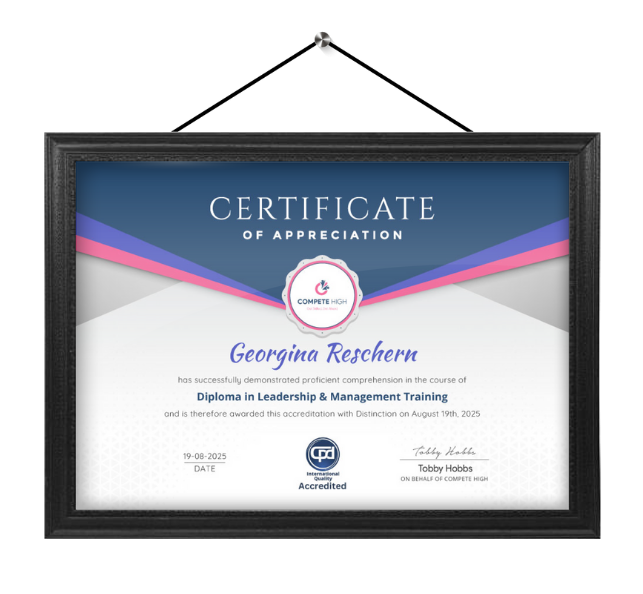
Celebrate your achievement with a CPD-IQ accredited certificate from Compete High! Perfect for showcasing your skills, boosting your career, and enhancing your professional profile. Choose the format that works best for you: PDF Certificate (£9.99) – Download instantly to add to your portfolio, résumé, LinkedIn, or share on social media. Printed Hard Copy (£29.99) – A beautifully designed certificate delivered to your door, ready to proudly display in your office or home. Both PDF & Printed Hard Copy (£31.99) – Get the best of both worlds!
Order Now