Property Law Level 3 Training

- Lifetime Access
- All Levels
- PDF Certificate
Learn with Confidence










Overview
Property Law Level 3 Training
Property Law Level 3 Training provides learners with foundational knowledge of key property and land law concepts. The course begins with an introduction to property law before exploring land law principles, including rights and interests, registered and unregistered land, co-ownership, leases and bailment. Learners also study property law licensing, mortgage law and insurance for property maintenance. This property law course may be useful for learners interested in property, legal administration, conveyancing or related professional environments. It provides a structured introduction to important legal concepts surrounding property ownership, interests, occupation, financing and maintenance. The course is educational and does not itself provide professional legal authorisation.
Key areas covered include:
-
Introduction to property law and land law principles
-
Property rights and interests
-
Registered and unregistered land
-
Co-ownership, leases and bailment
-
Mortgages and property maintenance insurance
Course Overview
Property Law Level 3 Training is designed to introduce learners to important concepts within property and land law. Across eight modules, the course progresses from fundamental property law principles to specific topics involving ownership, land registration, leases, mortgages and property maintenance insurance.
Learners explore rights and interests in land, registered and unregistered land, co-ownership, leases and bailment. The curriculum also includes modules titled Property Law License, The Mortgage Law and Insurance for Property Maintenance.
This property law diploma-style course may be relevant to learners interested in property-related legal knowledge, conveyancing, legal administration and the wider property sector. It can provide a useful foundation for further study or professional development.
The course does not automatically qualify learners as solicitors, licensed conveyancers or other regulated legal professionals.
Description
Property Law Level 3 Training provides structured learning across eight property-law topics. The curriculum introduces the principles of property law before progressing into land rights and interests, registered and unregistered land, co-ownership, leases and bailment.
Learners then explore property law licensing, mortgage law and insurance for property maintenance. Together, these subjects provide an overview of several important concepts relevant to property ownership, occupation, financing and maintenance.
This property law course may appeal to learners considering further study or careers connected with property and legal services. It may also help existing professionals develop broader awareness of property-law terminology and concepts.
The course should be regarded as educational training rather than a professional legal qualification.
Course Curriculum
Module 1: Introduction to Property Law
This module introduces the subject of property law and provides the foundation for the topics covered throughout the course.
Main learning topics:
-
Introduction to property law
-
Basic property-law concepts
-
Property and land
-
Foundations of property law
-
Introduction to legal property principles
Module 2: Land Law Principles – Rights and Interests
This module introduces land law principles relating to rights and interests in property.
Main learning topics:
-
Land law principles
-
Rights in land
-
Interests in land
-
Property rights
-
Legal interests relating to property
Module 3: Registered and Unregistered Land
This module explores registered and unregistered land as distinct areas of land-law study.
Main learning topics:
-
Registered land
-
Unregistered land
-
Land registration concepts
-
Differences between registered and unregistered land
-
Property records and land interests
Module 4: Co-Ownership in Property
This module focuses on co-ownership and the legal relationship between individuals who share ownership of property.
Main learning topics:
-
Co-ownership
-
Shared property ownership
-
Property interests
-
Rights associated with co-owned property
-
Co-ownership principles
Module 5: Leases and Bailment
This module introduces leases and bailment as areas of property-law study.
Main learning topics:
-
Leases
-
Bailment
-
Property occupation
-
Legal relationships involving property
-
Key concepts relating to leases and bailment
Module 6: Property Law License
This module covers the subject identified in the curriculum as Property Law License.
Main learning topics:
-
Property law licensing
-
Licensing concepts
-
Property-related legal requirements
-
Relationship between property law and licensing
-
Key terminology relating to property licensing
Module 7: The Mortgage Law
This module introduces mortgage law and its relationship with property.
Main learning topics:
-
Mortgage law
-
Mortgages and property
-
Property financing
-
Legal interests associated with mortgages
-
Mortgage-related property concepts
Module 8: Insurance for Property Maintenance
This module explores insurance in the context of property maintenance.
Main learning topics:
-
Property maintenance insurance
-
Insurance considerations for property
-
Property maintenance
-
Risk and insurance concepts
-
Relationship between insurance and property maintenance
Who Is This Course For?
Property Law Level 3 Training may be suitable for:
-
Individuals interested in a property law course
-
Learners searching for a property law diploma
-
Individuals interested in property and land law
-
Aspiring property professionals
-
Learners considering conveyancing as a career area
-
Legal administration professionals
-
Property administration professionals
-
Estate and property sector employees
-
Individuals interested in further legal study
-
Learners wanting foundational knowledge of property law
-
Professionals seeking to broaden their understanding of property-related legal concepts
The course may also be useful for learners who want to explore property law before deciding whether to pursue more formal legal or conveyancing training.
Requirements
No specific academic or professional prerequisites are stated in the supplied course information.
Learners should ideally have:
-
An interest in property and legal subjects
-
Basic English comprehension
-
A willingness to study legal terminology
-
The ability to work through structured learning materials
-
Access to a suitable device and internet connection
Previous legal or property-sector experience is not specified as a requirement.
Skills You Can Develop
The course can help learners develop foundational knowledge and understanding relating to:
-
Property law terminology
-
Land law principles
-
Property rights and interests
-
Registered land
-
Unregistered land
-
Co-ownership
-
Leases
-
Bailment
-
Property licensing concepts
-
Mortgage law
-
Property financing concepts
-
Property maintenance insurance
-
Legal and property-sector research
-
Understanding property-related legal concepts
These areas may provide useful background knowledge for further study or work in property and legal environments.
Learning Outcomes
By the end of Property Law Level 3 Training, learners should be able to:
-
Explain the basic principles of property law.
-
Describe key concepts relating to land-law rights and interests.
-
Distinguish between registered and unregistered land at a foundational level.
-
Explain the basic concept of co-ownership in property.
-
Describe key concepts associated with leases and bailment.
-
Develop an understanding of property-law licensing concepts.
-
Explain foundational concepts relating to mortgage law.
-
Describe the role of insurance in property maintenance.
-
Recognise important terminology used within property and land law.
-
Apply foundational property-law knowledge as a basis for further learning or professional development.
Career Paths
Property law knowledge can be relevant to several legal and property-sector career pathways. However, the supplied curriculum is an educational introduction to property law and does not provide the professional qualification or regulatory requirements needed for regulated legal roles.
Licensed Conveyancer
Typical UK salary: £25,000–£65,000 per year, according to the National Careers Service.
How This Course May Be Relevant: The course covers land law principles, property rights and interests, registered and unregistered land, co-ownership, leases and mortgages. These subjects are relevant to the broader area of property law and conveyancing.
The National Careers Service states that becoming a licensed conveyancer involves approved professional qualifications and relevant routes such as CLC qualifications or apprenticeships.
Paralegal
Typical UK salary: £20,000–£40,000 per year, according to the National Careers Service.
How This Course May Be Relevant: The course can provide foundational property-law knowledge that may be relevant to legal support work involving property-related matters.
Specific paralegal roles vary considerably, and employers may require additional qualifications, experience and legal knowledge.
Solicitor
Typical UK salary: £30,000–£80,000 per year, according to the National Careers Service.
How This Course May Be Relevant: Property law is one area of legal knowledge that may be relevant to solicitors working with property-related matters. The course can provide introductory subject knowledge for learners considering further legal education.
However, becoming a solicitor requires a recognised qualification and professional route. The National Careers Service states that qualification involves requirements including the Solicitors Qualifying Examination and qualifying work experience.
Legal Secretary
Typical UK salary: £24,000–£40,000 per year, according to the National Careers Service.
How This Course May Be Relevant: Legal secretarial work can involve supporting legal professionals with administrative tasks. Knowledge of property-law terminology may be useful in a legal office dealing with property matters.
Estate Agent
Typical UK salary: £23,000–£40,000 per year, according to the National Careers Service.
How This Course May Be Relevant: Estate agents work with property sales and lettings. Foundational knowledge of property law may help learners understand some of the legal concepts surrounding property transactions, although estate agency involves additional commercial, customer-service and property skills.
Career note: Salary figures are indicative and vary by experience, location, employer, sector and responsibilities. Completing this course does not guarantee employment, a particular salary or professional legal status.
Frequently Asked Questions
1. What is Property Law Level 3 Training?
Property Law Level 3 Training is an educational course covering property law, land rights and interests, registered and unregistered land, co-ownership, leases, bailment, mortgages and property maintenance insurance.
2. What will I learn on this property law course?
You will study key property and land-law concepts, including rights and interests, registered and unregistered land, co-ownership, leases, bailment, property licensing, mortgage law and property maintenance insurance.
3. Is this a property law diploma?
The course is titled Property Law Level 3 Training and its supplied course link uses “diploma-in-property-law”. However, learners should check the provider’s current certificate or award information for the exact qualification awarded on completion.
4. Can this course help me become a property lawyer?
The course can provide foundational knowledge relevant to property law, but it does not by itself qualify you as a property lawyer or licensed conveyancer. Regulated legal careers require additional recognised qualifications, training and professional requirements.
5. Is this property law course suitable for beginners?
Yes. The curriculum begins with an introduction to property law before progressing to land rights, registration, co-ownership, leases, mortgages and insurance, providing a structured introduction to the subject.
Course Content
Module 01 Introduction to Property Law
-
Introduction to Property Law
00:00
Module 02 Land Law Principles- Rights and Interests
Module 03 Registered and Unregistered Land
Module 04 Co-Ownership in Property
Module 05 Leases and Bailment
Module 06 Property Law License
Module 07 The Mortgage Law
Module 08 Insurance for Property Maintenance

Hear from Our Successful Learners


The experience has been excellent from the start to the present. The support team is proactive and always helpful with any queries or requests.

I've taken several courses through Reed and have been completely satisfied with each one. The pricing is outstanding.

I've completed numerous courses through Reed and have been fully satisfied with each one. The courses are excellent.

I'm truly impressed by One Education's remarkable ability to understand its learners and go the extra mile for them.

I had been searching for a Level 3 course for a while—it felt like mission impossible. Discovering that Reed offers a wide range of career-focused providers was a pleasant surprise.

The course was incredibly insightful and easy to navigate. I truly enjoyed it—thank you so much.


Booking was simple and the course content was clear and well structured from day one.

Great value for money and the certificate arrived quickly after I finished my assessment.

Customer support answered my questions the same day. Would definitely recommend to a friend.

Flexible learning that fit around my job. The video lessons were easy to follow.

Second course I've taken with them now. Consistent quality every time.

Clear instructions, fair pricing, and the exam prep really helped me pass first time.
Frequently Asked Questions
Get Your Certificate Today
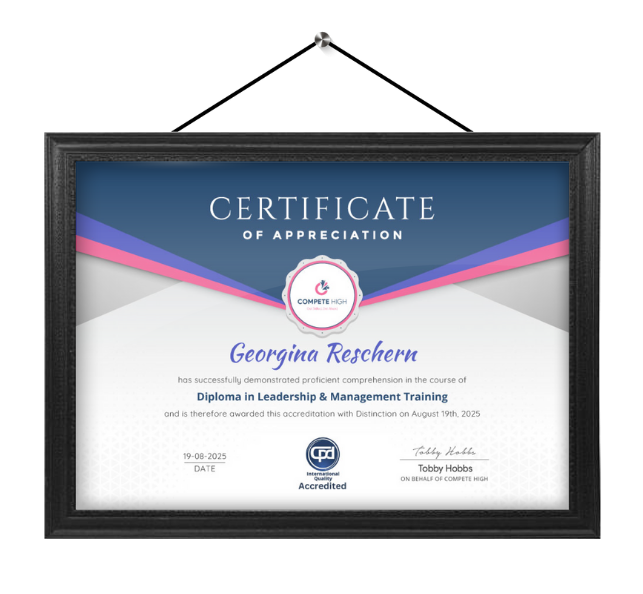
Celebrate your achievement with a CPD-IQ accredited certificate from Compete High! Perfect for showcasing your skills, boosting your career, and enhancing your professional profile. Choose the format that works best for you: PDF Certificate (£9.99) – Download instantly to add to your portfolio, résumé, LinkedIn, or share on social media. Printed Hard Copy (£29.99) – A beautifully designed certificate delivered to your door, ready to proudly display in your office or home. Both PDF & Printed Hard Copy (£31.99) – Get the best of both worlds!
Order Now