How to Reheat Food Safely: The Complete Guide
Quick Answer: How to Reheat Food Safely Why Reheating Food....

Quick Answer: How to Reheat Food Safely
- Store safely: Cool leftovers and place them in the fridge (8°C or below) within two hours of cooking.
- Reheat only once: Never reheat leftovers multiple times.
- Hit the right temperature: The safe reheating temperature in the UK is 75°C (82°C in Scotland) at the core.
- Check for cold spots: Ensure the food is visibly steaming hot all the way through.
- Serve immediately: Eat the food as soon as it reaches a safe temperature.
Why Reheating Food the Right Way Matters
There is something deeply satisfying about a pot of leftover curry or a tray of yesterday’s roast sitting in the fridge, ready to be brought back to life. For busy families, reheating leftovers is not just convenient — it is one of the most practical ways to reduce food waste and stretch the weekly shop a little further.
But heating food up and reheating food safely are not the same thing. Done carelessly, reheated leftovers can harbour harmful bacteria that cause food poisoning. Done correctly, they can taste just as good — sometimes better — than the night before.
This guide covers everything a home cook needs to know: the right safe reheating temperatures, the best methods for every type of food, and the safety rules set out by the Food Standards Agency (FSA). Whether you are using a microwave, an oven, an air fryer, or a trusty saucepan on the hob, you will find step-by-step guidance here.
Can You Reheat Leftover Food? (How to Reheat Food Nicely)
Yes — almost any cooked food can be safely reheated, as long as it was stored properly in the first place. This guide on how to reheat food nicely will help you keep leftovers both safe and enjoyable.
The key starting point is correct storage. Hot food should be cooled down as quickly as possible and placed in the fridge within two hours of cooking. The Food Standards Agency advises cooling food to 8°C or below for refrigerated storage. Once food has been stored safely, it can be reheated and enjoyed without issue.
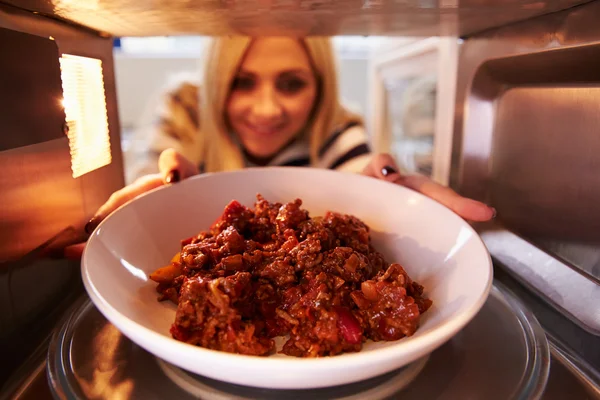
However, not all reheating methods suit all foods. Matching the right appliance to the dish is what separates a soggy, rubbery disappointment from a genuinely enjoyable second meal. Understanding a few simple principles will transform the way you approach your leftovers — especially when learning how to reheat food nicely.
Read more: [Can You Reheat Food? The Ultimate UK Food Safety Guide]
What is the Safe Reheating Temperature in the UK?
The safe reheating temperature in England, Wales, and Northern Ireland is a minimum core temperature of 75°C.
This is the single most important number to know. Harmful bacteria — including Salmonella, E. coli, and Listeria — multiply rapidly in what food safety experts call the “danger zone.” The Food Standards Agency defines this danger zone as between 8°C and 60°C. When food is reheated to 75°C throughout, bacteria are reduced to levels that are safe to consume.
Note for Scottish residents: Scotland has a slightly higher requirement under its own food hygiene regulations: food must reach a minimum core temperature of 82°C.
The most reliable way to check is with a probe food thermometer inserted into the thickest part of the dish. If you do not have a thermometer, the FSA offers a practical alternative: the food should be visibly steaming hot all the way through, with no cold spots remaining.
Tips for Checking Your Food is Hot Enough
- The knife test: Pierce the centre of thick dishes (like a lasagne or cottage pie) with a clean knife, then press it to your wrist — it should feel uncomfortably hot.
- Visual check: Cut through the thickest part and check there are no cool or lukewarm patches.
- Stir well: Stir soups, sauces, and curries thoroughly and look for steam rising consistently from the whole dish, not just the edges.
Food Safety Temperature Chart
| Stage | Temperature | Guidance |
| Fridge storage | 8°C or below | Food Standards Agency recommendation; most home fridges should target 5°C |
| Freezer storage | -18°C or below | Prevents bacterial growth indefinitely |
| The Danger Zone | 8°C – 60°C | Bacteria multiply rapidly; minimise time food spends here |
| Safe reheating (England, Wales, N. Ireland) | 75°C minimum | Food Standards Agency standard for home and catering |
| Safe reheating (Scotland) | 82°C minimum | Scottish food hygiene regulations |
| Hot holding (after reheating) | 63°C or above | For buffets; never use hot-holding equipment to reheat |
| Serving and eating | Immediately | Eat as soon as food reaches safe temperature |
Read more: [What Temperature Should You Reheat Food? 2026 UK Guide]
How Many Times Can You Reheat Food?
You Should Only Reheat Food Once
The FSA is clear on this point: reheating means cooking again, not simply warming up, and it should only happen a single time. This is an important part of how to reheat food nicely while keeping it safe to eat. Every time food cools down after being heated, it passes back through the danger zone, giving any surviving bacteria the opportunity to multiply. Reheating a second time does not reliably undo that bacterial growth — and some toxins produced by bacteria are heat-resistant.
The practical solution is portion control. Rather than reheating an entire pot of soup and putting the leftovers back in the fridge, take out only what you plan to eat right now. This is one of the simplest habits for how to reheat food nicely without compromising safety.
Read more: [How Many Times Can You Reheat Food: UK Guide]
A Special Warning About Reheating Rice
Reheating rice deserves its own section because it carries a specific risk: How to Cook and Store Rice Safely.
Uncooked rice can contain spores of a bacterium called Bacillus cereus. According to the FSA’s home food fact checker, these spores can survive the cooking process. If cooked rice is then left at room temperature for too long, those spores can germinate and produce toxins. Crucially, these toxins are heat-resistant — meaning that even if you reheat the rice thoroughly to 75°C, you may not destroy the toxins that have already formed.
How to Store and Reheat Rice Safely
- Cool it quickly: Chill cooked rice as quickly as possible — ideally within one hour. Spread it in a shallow container to speed up cooling.
- Refrigerate promptly: Keep rice in the fridge and use it within one day.
- Reheat only once: You should never reheat rice more than once. Ensure it is steaming hot all the way through.
- Never leave rice sitting out: The longer cooked rice sits at room temperature, the more likely it is that bacteria or toxins will make it unsafe to eat.
(The same caution applies to other starchy foods like cooked pasta and potatoes.)

The Best Methods for Reheating Food: How to Reheat Food in a Microwave
Best for: Soups, curries, stews, casseroles, and saucy pasta dishes.
The microwave is the fastest option, but it is notorious for uneven heating. A few simple adjustments improve results and support how to reheat food nicely.
Step-by-Step Instructions:
- Transfer your food to a microwave-safe dish. Remove any metal lids or foil.
- Add a splash of liquid (water, stock, or sauce) to prevent drying out.
- Cover the dish with a microwave-safe lid or a damp sheet of kitchen paper to trap steam.
- Heat on full power in short bursts — start with two minutes, then check and stir.
- Stir the food thoroughly halfway through to eliminate cold spots.
- Leave the dish to stand for one to two minutes before eating so heat can distribute evenly.
Read more: [How to Reheat Food Without a Microwave: The Ultimate UK Food Safety Guide]
How to Reheat Food on the Hob
Best for: Soups, stocks, stews, pasta sauces, rice (with added liquid), curries, and beans.
Step-by-Step Instructions:
- Choose a saucepan or frying pan that is appropriately sized.
- Add a small amount of liquid if the dish is prone to drying out.
- Set the heat to low or medium. Resist the temptation to use high heat.
- Stir frequently, particularly for thick dishes like dhal or bolognese.
- Cover the pan with a lid to trap steam.
- Continue heating until the food is visibly steaming and a probe thermometer reads at least 75°C (82°C in Scotland).
How to Reheat Food in an Oven or OTG
Best for: Lasagne, casseroles, roasted meats, gratins, baked pasta, pies, and bread-based dishes.
Step-by-Step Instructions:
- Preheat your oven to 150°C–175°C (fan).
- Place your food in an oven-safe dish.
- Cover the dish tightly with aluminium foil to trap moisture and prevent drying out.
- Reheat for 20–30 minutes depending on depth and density.
- After 20 minutes, remove the foil and check the temperature at the centre.
- For a crisp, golden top, leave the foil off for the final five to ten minutes.
How to Reheat Food in an Air Fryer
Best for: Fried chicken, chips, chicken wings, pizza, spring rolls, and anything with a crunchy coating.
Step-by-Step Instructions:
- Preheat the air fryer to 175°C.
- Arrange food in a single layer in the basket. Do not stack pieces.
- Reheat for three to five minutes, depending on thickness.
- Shake the basket halfway through.
- Check that the food is piping hot all the way through (75°C core temperature).
Read more: [Can You Reheat Food in an Air Fryer: The Ultimate Guide]
How to Reheat Chinese Takeaway
Chinese takeaway is one of the most popular leftovers in British households [can you reheat chinese food]. Handling it properly is part of how to reheat food nicely, especially because of its mixed textures.
- Noodles and fried rice: Best reheated in a wok or non-stick frying pan over medium heat with a splash of water or soy sauce.
- Fried and battered dishes: Use an air fryer at 175°C for 3–4 minutes, or a preheated oven at 175°C (fan) for 8–10 minutes. Never microwave if you want to preserve crispness.
- Soups and saucy dishes: Reheat on the hob over low–medium heat, or in the microwave using the stirring technique.
Important note: Always transfer takeaway food out of its original cardboard or polystyrene containers before reheating.
Read more: [Can You Reheat Chinese Food? The Safe Way to Do It]
Quick Reference: Best Reheating Methods by Food Type
This quick guide brings together the most practical principles of how to reheat food nicely, helping you match the right method to each type of leftover.
| Food Type | Best Method | Target Temperature |
| Soups, stews, curries | Hob or microwave | 75°C (steaming hot throughout) |
| Pizza and bread | Air fryer or oven | 175°C appliance temp |
| Fried foods (chicken, chips) | Air fryer | 175°C appliance temp |
| Lasagne, casseroles, pies | Oven (covered with foil) | 150°C–175°C appliance temp |
| Rice and pasta | Hob (with added liquid) | 75°C (steaming hot throughout) |
| Takeaway — fried | Air fryer | 175°C appliance temp |
| Takeaway — soups/sauces | Hob or microwave | 75°C (steaming hot throughout) |
| Large batch stews/meats | Instant Pot | 75°C (steaming hot throughout) |
| Single-serving leftovers | Toaster oven | 150°C–160°C appliance temp |
Frequently Asked Questions (FAQ)
Is it safe to reheat food that has been in the fridge for four days?
As a general rule, most cooked leftovers stored correctly at 8°C or below are safe to eat within two to three days. Some dishes — such as well-seasoned stews or curries with higher acidity — can last up to four days. However, if the food smells off, has an unusual colour, or shows any sign of mould, it should be discarded immediately.
Can you reheat food that was frozen and then defrosted?
Yes — but only if it was defrosted safely in the fridge, not at room temperature. Food that has been defrosted in the fridge can be reheated once. Never refreeze food that has already been defrosted unless it has been reheated to a safe temperature first and then frozen again immediately.
Can you put hot food straight in the fridge?
Yes — and you should. Food should be cooled as quickly as possible and placed in the fridge within two hours of cooking. To speed up cooling, divide large portions into smaller shallow containers. This supports both safety and how to reheat food nicely later on.
Why does reheated chicken sometimes cause food poisoning?
Cooked chicken must reach 75°C at its thickest point during reheating. Because of its dense muscle structure, the inside can remain underheated while the outside appears piping hot. Always use a probe thermometer when reheating chicken pieces, and cut into the thickest part to check there are no pink or cool patches.
Conclusion
Reheating leftovers well is one of those small kitchen skills that pays dividends every week. When you understand which appliance suits which dish, you stop dreading the leftovers drawer and start looking forward to it — a key part of how to reheat food nicely.
Above all, remember the role of temperature. Reaching a core temperature of at least 75°C (82°C in Scotland) all the way through is not optional; it is the standard set by the Food Standards Agency to keep food safe.
Reheat once, eat straight away, cool leftovers quickly, and store them at the right temperature. Follow those principles alongside the method-specific guidance in this article, and your leftovers will be just as safe — and just as satisfying — as a freshly cooked meal.
Food safety guidance in this article is based on recommendations from the Food Standards Agency (FSA). For the most up-to-date advice, visit www.food.gov.uk.